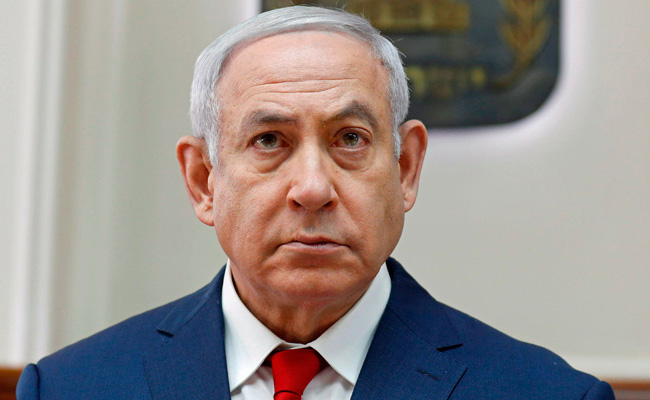
Ajman: Gulf Medical University 'Global Alumni Summit 2020' recognizes global achievers
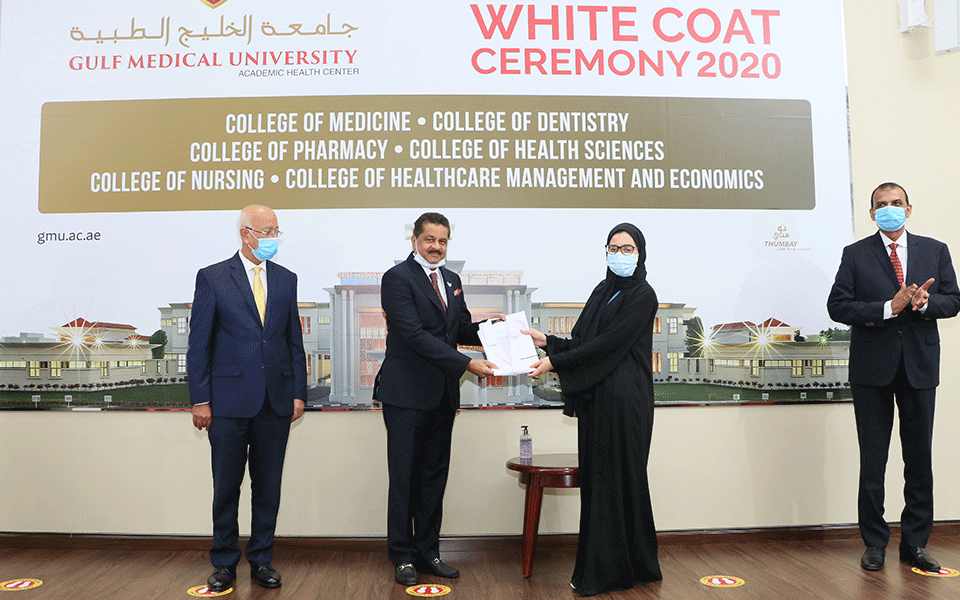
“Alumni are the reflection of our past, representation of our present and link to our future,” says Chancellor
17 cohorts, 16 convocations and 1800 alumni all over the world in various top positions
Ajman: Gulf Medical University (GMU), Ajman recognized the most outstanding accomplishments of its alumni at the ‘GMU Global Alumni Summit 2020’ organized by the GMU Students Affairs Department, held at Thumbay Medicity on 29th February 2020.
The event brought together GMU alumni from around the world, joined by the academic leadership of GMU, faculty, staff and students, in a celebration of the significant contributions of the alumni community to their communities and professions. The event recognized their most outstanding achievements. The awards in honor of the GMU Achievers were presented by Dr. Thumbay Moideen, Founder, President Board of Trustees, GMU who also officially released the Alumni E-newsletter and the Alumni Portal.
In his welcome address, Prof. Manda Venkatramana, Vice Chancellor – Academics mentioned that GMU’s alumni now has 1803 graduates, with 70% females and 30% male graduates, spread across the world, with UAE nationals constituting 10% of the alumni, GCC nationals 7%, other Arabs 14%, Asians 44%, Africans 16% and other nationals 10%.
Addressing the alumni, Prof. Hossam Hamdy, the Chancellor of GMU outlined the significant achievements of the University in recent times. The Chancellor also announced several benefits for the alumni, including scholarships for post-graduate programs, adjunct faculty positions at GMU, employment opportunities and full access to GMU’s e-library learning resources. “You are our best ambassadors offering invaluable advocacies across your personal and professional networks. You are the reflection of GMU’s past, representation of its present and the link to its future,” he said to the alumni.
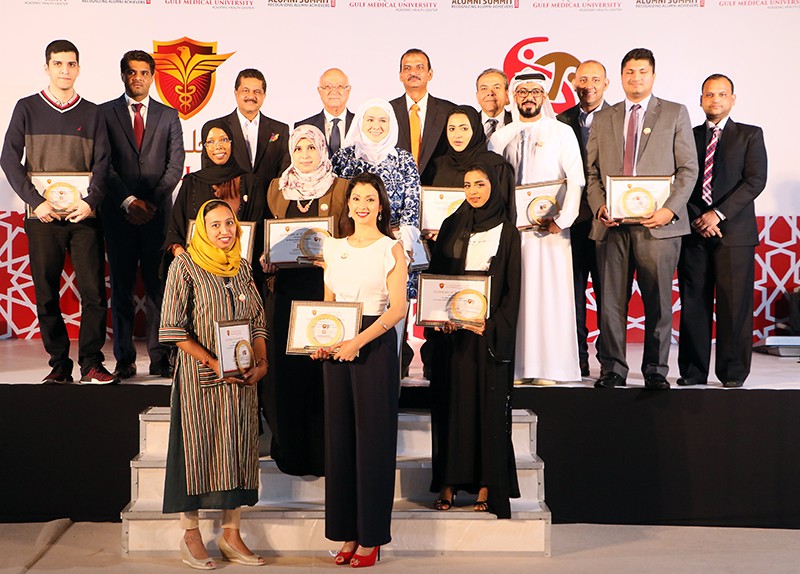
Awards were presented to the following alumni achievers:
Healthcare: Government Service UAE - Dr. Noha Yaseen, Consultant Cardiologist, Al Qasimi Hospital, Sharjah; Dr. Asma Abdillahi Ali, CCAD, Semi-Government by Mubdhala, Abu Dhabi government; Ms. Ayesha Mohammed Abdulla Kajoor Al Nuaimi.
Healthcare: Research - Dr. Ahmad Ashraf Fakhri Ghazal.
Healthcare Delivery System: Entrepreneurship – Dr. Ismail Sayeed, Founder & CEO, ViOS; Ms. Jameela Arif Hussain; Dr. Sheetal Bambhani.
Healthcare Delivery System: Private Sector / Leadership - Dr. Shihad Khader, Chief Operating Officer, Thumbay Hospital Fujairah; Dr. Meera Obaid AlSalami.
Healthcare Delivery System: NGO / Humanitarian Service - Dr. Faraj Khalid Faraj Mohamed Almehairbi.
Arts: Dr. Marwa Abdulwahid Alalwani, Dentist, Munich Dental Clinic.
The awardees recounted their experiences as GMU students, and explained how those experiences continue to enrich their professional lives even today. They thanked Dr. Thumbay Moideen for creating such a wonderful university which shaped their lives and career achievements. Current GMU students entertained their alumni with various talent performances.
Let the Truth be known. If you read VB and like VB, please be a VB Supporter and Help us deliver the Truth to one and all.
Bengal govt directs schools to mandatorily include singing of Vande Mataram in morning assemblies
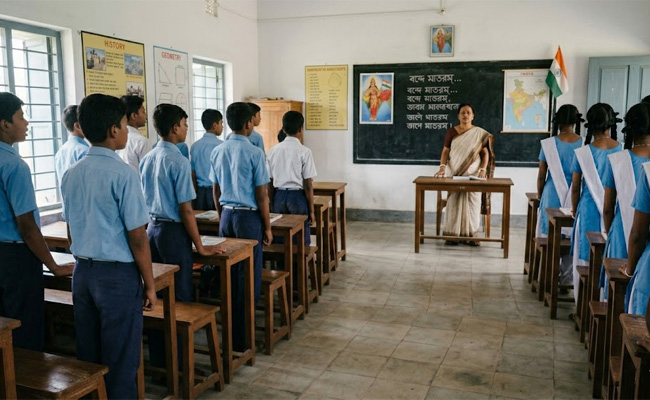
Kolkata (PTI): The West Bengal government has directed all state-run and aided schools to mandatorily include the singing of Vande Mataram during morning assemblies with immediate effect, according to an official communication issued by the School Education department.
The directive states that every student must participate in the singing the national song at the start of the school day. Heads of institutions have been instructed to ensure strict compliance.
"The singing of Vande Mataram during morning assembly prayers prior to the start of classes should be made mandatory so that Vande Mataram should be sung by all students in all schools in the state with immediate effect," the Director of Education specified in a communication to state-run and state-aided school heads on May 13.
The move comes shortly after the Union government initiated steps to strengthen provisions related to respect for national symbols, including a proposed amendment to the Prevention of Insults to National Honour Act, 1971, making obstruction to the singing of Vande Mataram a punishable offence.
A school education department official indicated on Thursday that the song is to be performed at the beginning of the assembly session.
School authorities have also been asked to document the proceedings, including video recordings, as proof of implementation, he said.
Earlier, schools in the state traditionally sang only the national anthem, Jana Gana Mana, composed by Rabindranath Tagore.
In recent years, the previous TMC government had introduced 'Banglar Mati Banglar Jol', also penned by Tagore in 1905 during protests against the partition of Bengal, as the state song.
The national song Vande Mataram, written by Bankim Chandra Chattopadhyay, now adds to the list, raising questions among sections of teachers about the duration and sequencing of both the national anthem and the national song within the limited assembly time.
Headmaster of Hindu School Subhrojit Dutta told PTI, "Once our students attend classes after summer vacation, they will sing Vande Mataram along with the National anthem Jana Gana Mana during the assembly before classes."
"Our students had already been told about the historical significance of Vande Mataram on the occasion of its 150th year, and they had been asked to recite the lines and memorise it at home before this notice was issued. So once they join school, they will sing the national song along with the national anthem," he added.
A left-run teacher representative body spokesperson said further clarity is awaited regarding whether all songs are to be sung daily and how they are to be accommodated within the existing schedule.