
Firhad Hakim elected as first muslim mayor of Kolkata
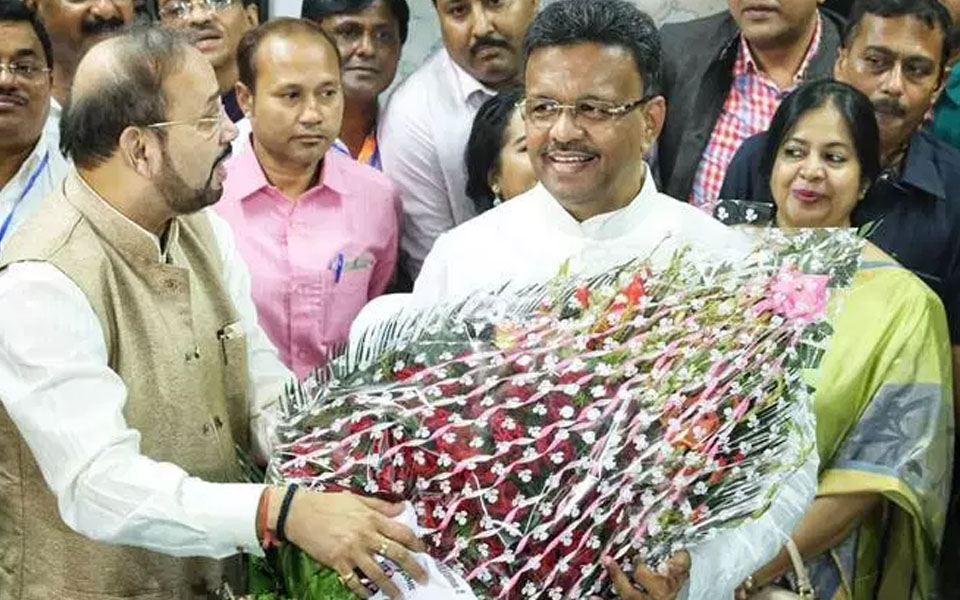
Kolkata, Dec 3: West Bengal minister Firhad Hakim on Monday became the first Muslim since independence to be elected as the Kolkata mayor.
Hakim secured 121 votes in the 144-member Kolkata Municipal Corporation (KMC) to win the mayoral election. BJP's Meena Devi Purohit bagged five votes, while 12 Left Front and two Congress councillors had boycotted the election.
The result of the election, conducted through secret ballots, was announced by the civic body's municipal secretary, Harihar Prasad Mondal. It was necessitated following the resignation of Sovan Chatterjee from the post on November 22.
Hakim, who also holds the portfolio of municipal affairs, said his victory was also a "moral defeat" for the BJP.
Purohit had claimed last week that she would receive more votes than her party's strength in the KMC, hinting at a possibility of cross-voting. The election results, however, indicated that there was no cross-voting.
The TMC has 122 seats in the KMC House, the Left Front 14, the BJP five, the Congress two, while one seat is vacant. Sources said one TMC councillor gave the election a miss due to ill-health.
After being elected the 29th mayor of the city since independence, Hakim said he should be known by his work and not by his religion and spelt out various development initiatives.
"I will work for the development and beautification of the city. I will work towards making the city pollution-free," he said.
Hakim said the people would get tax rebates if they took up efforts to plant trees in their houses. He also stressed on waste management and recycling to keep the city clean.
The new mayor also announced a WhatsApp number, asking the citizens to inform about their problems and come up with suggestions to improve the municipal services.
Steps would be taken to ensure that there was no waterlogging in the city during heavy rainfall, he said.
Last week, CPI(M) councillor Bilquis Begum had moved the Calcutta High Court challenging Hakim's candidature in the mayoral polls on the ground that he was not a councillor from any ward of the civic body. The high court had on Friday refused to stay the election.
Hakim, was chosen as the mayor designate by the Trinamool Congress (TMC) councillors on November 22 in the presence of West Bengal Chief Minister Mamata Banerjee.
Talking to media after the announcement of the poll results, Hakim's predecessor Chatterjee extended his best wishes to the new mayor. "I am sure the KMC will function well under the leadership of the new mayor," he said.
Let the Truth be known. If you read VB and like VB, please be a VB Supporter and Help us deliver the Truth to one and all.
PM meets vice president on Tamil new year
_vb_51.jpeg)
New Delhi (PTI): Prime Minister Narendra Modi on Tuesday called on Vice President C P Radhakrishnan to greet him on Tamil new year Puthandu.
Modi reached the vice president's official residence here and offered prayers on the occasion of Puthandu.
"Called on Vice President Thiru C P Radhakrishnan Ji and conveyed greetings on the special occasion of Puthandu. Praying for a wonderful year ahead, filled with good health and happiness," Modi posted on X.
The vice president said he was happy to meet Modi at Uprashtrapati Bhawan and exchange greetings on Tamil Puthandu and Baisakhi.
"We prayed for a wonderful year ahead, with happiness, peace, and the well-being of all.
"We discussed how Tamil Puthandu showcases the wisdom of our ancestors and brings together tradition, family, spirituality, and a disciplined way of life," he posted on X.
Separately, Radhakrishnan greeted people on the occasion of Puthandu, Baisakhi, Rongali Bihu, Maha Bishuba Pana Sankranti, Poila Boishakh and Vishu.
"These vibrant festivals reflect the spirit of Ek Bharat Shreshtha Bharat and celebrate the rich cultural diversity of our nation," he said.
Radhakrishnan said the festivals mark new beginnings, the joy of harvest, and the enduring bond between people, nature, and tradition.
"May these occasions inspire harmony, prosperity and renewed hope to everyone's lives," he prayed.
_vb_10.jpeg)
_vb_10.jpeg)
_vb_43.jpeg)