Sonu Sood arranges chartered flight to ferry Odisha migrants from Kerala
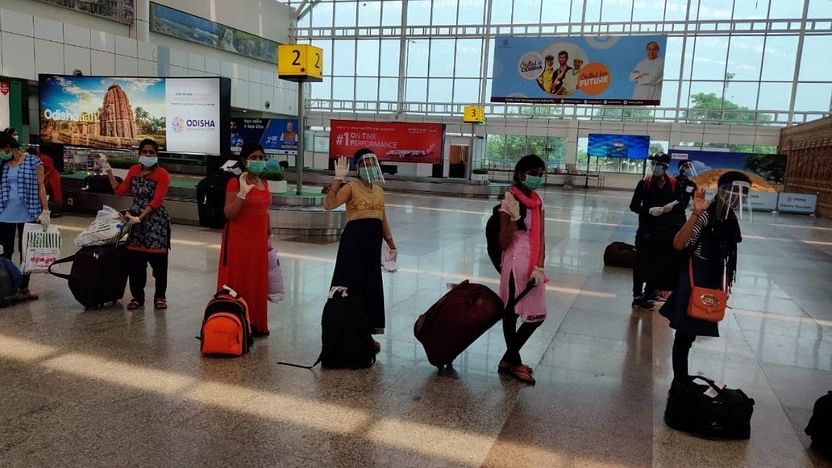
Mumbai/Bhubaneswar: Actor Sonu Sood on Friday came to the rescue of 167 migrants stuck in Kerala by arranging a special chartered flight to help them reach their home in Odisha.
The group, comprising 147 women and 20 men, was airlifted by an Air Asia chartered flight from Kochi to the Biju Patnaik International Airport in Bhubaneswar.
"When I decided to come forward in support of these migrant workers who have been stranded, all that I had in my mind was how I can help reunite them with their families and homes," Sonu said in a statement.
The Bollywood star thanked the national carrier for its "immediate response and interest in supporting this endeavor".
"AirAsia India has been very appreciative that this Umeed Ki Udan may be the first flight for many of them. The Allstars of AirAsia who have been part of this journey have been true COVID warriors and have done everything possible to make the guests onboard comfortable," Sonu added.
Anup Manjeshwar, Head, Sales & Distribution, AirAsia India, hailed the actor for starting the noble cause of helping the migrants.
"Mr. Sood's compassion and empathy with the plight of migrant workers has been inspiring and it has been a pleasure working with him to facilitate this fantastic initiative and give wings to the dreams of 147 women and 20 men who work with a clothing and stitching firm on today's flight," he added.
Rajya Sabha MP Amar Patnaik took to Twitter to thank Sood for his "noble efforts".
"@SonuSood Ji, your helping the Odia girls to return safely from Kerala is commendable. Kudos to your noble efforts. It's incredible to see how you are helping the needy reach their homes safely. More strength to you," Patnaik wrote on Twitter.
Amid the nationwide lockdown, the Odia women, most of whom were engaged in stitching and embroidery work in the textile sector in Kerala, had been trying to return for the last several weeks and finally, their plight was posted by someone on Twitter which led to Sood's help.
Initially, it was proposed to bring back the young women by bus or train but Sood offered to send them in a special plane, said an airline official.
The special flight carrying them from Kochi airport landed at Bhubaneswar airport on Friday, said an official.
"We are extremely thankful to Sonu Sood for making arrangements for our return to Odisha. We will be able to meet our family members after so many months," said one of the migrants.
As all the returnees hailed from Kendrapara, the state government had made adequate arrangements for their journey to the coastal district.
Kendrapara Collector Samarth Verma told PTI that the district administration had sent four buses to pick up the women from the Bhubaneswar airport. The returnees were offered food, water, and other necessities and traveled to Kendrapara by maintaining social distancing.
All of them have been placed in institutional quarantine. They will be under mandatory quarantine for seven days at the government-run facilities at the district headquarters town, he said.
Thereafter, they will have to be under home quarantine for another seven days, Verma added.
Sonu and his friend Neeti Goel have won hearts with their 'Ghar Bhejo' initiative.
The actor facilitated several buses for workers stuck in Mumbai due to the coronavirus-forced nationwide lockdown. The actor has transported workers to far off states such as Karnataka, Bihar, Jharkhand, and UP.
Recently, he launched a toll-free helpline to help migrants reaching their homes.
Let the Truth be known. If you read VB and like VB, please be a VB Supporter and Help us deliver the Truth to one and all.
3 Indians arrested in Canada for shooting outside home
Ottawa (PTI): Three Indian nationals have been arrested by Canadian police on an anti-extortion patrol and charged after bullets were fired at a home.
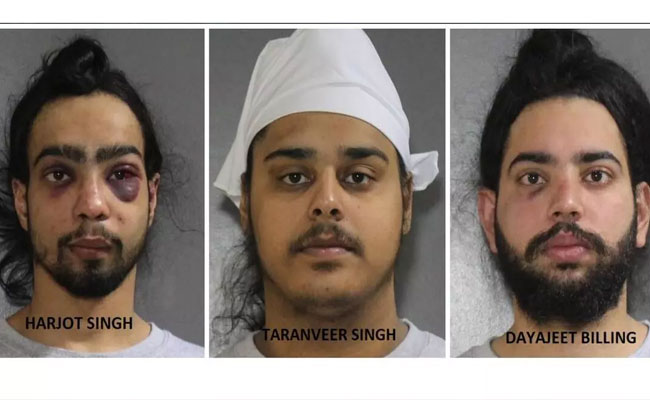
Harjot Singh (21), Taranveer Singh (19) and Dayajeet Singh Billing (21) face one count each of discharging a firearm, and all have been remanded in custody until Thursday, the Surrey Police Service (SPS) said in a statement on Monday.
The suspects were arrested by patrol officers after an early morning report of shots fired and a small fire outside a home in Surrey's Crescent Beach neighbourhood, the LakelandToday reported.
On February 1, 2026, the SPS members were patrolling in Surrey’s Crescent Beach neighbourhood when reports came in of shots being fired and a small fire outside a residence near Crescent Road and 132 Street.
The three accused were arrested by SPS officers a short time later, the statement said.
SPS’s Major Crime Section took over the investigation, and the three men have now been charged with Criminal Code offences, it said.
All three have been charged with one count each of discharging a firearm into a place contrary to section 244.2(1)(a) of the Criminal Code.
The investigation is ongoing, and additional charges may be forthcoming. All three have been remanded in custody until February 5, 2026.
The SPS has confirmed they are all foreign nationals and has engaged the Canada Border Services Agency, it said.
One of the suspects suffered injuries, including two black eyes, the media report said.
Surrey police Staff Sgt. Lindsey Houghton said on Monday that the suspect had refused to comply with instructions to get out of the ride-share vehicle and started to "actively resist."
"As we were trained, he was taken to the ground and safely handcuffed," said Houghton.
A second suspect with a black eye was also injured in the arrest after refusing to comply, Houghton said.
The arresting officers were part of Project Assurance, an initiative that patrols neighbourhoods that have been targeted by extortion violence.
Houghton said the Canada Border Services Agency (CBSA) is also involved because the men are foreign nationals, and the trio may face additional charges.
It's not clear if the men are in the country on tourist visas, a study permit, or a work permit, but Houghton said CBSA has started its own investigation into the men's status.
Surrey has seen a number of shootings at homes and businesses over the last several months, but there's been an escalation since the new year.