New Delhi, April 16: The 5G smartphone shipments are expected to grow a whopping 255 per cent by 2021, almost reaching 110 million units, a new report said on Tuesday.
According to Counterpoint Research, while the growth will be slow during the initial commercialisation phase in 2019, there will be an uptick in sales once countries shift from non-standalone to standalone 5G infrastructure.
"We also expect 5G chips to have a higher price point which will initially drive the cost of devices up. 5G capable devices will be premium only in the beginning. Also only a handful of countries will be deploying the first 5G infrastructure," Research Director Tom Kang said in a statement.
The US, Korea, China and Japan will be key markets for 5G infrastructure development and growth of smartphone sales.
"We are seeing some great initial developments happening in the US, South Korea, China, and Japan and expect growth to be concentrated in these countries due to their big roll-out plans for 5G starting in 2019," said Research Analyst Maurice Klaehne.
Other countries, especially in Europe, are more likely to leapfrog to standalone 5G as they will want to wait for concrete business cases to arise, before fully committing to the transition.
The overall handset market will slow to a CAGR of 1-2 per cent from 2018-2021 due to market saturation and product innovations that are not spurring growth.
"5G devices will begin gaining in share in the market, but overall transition to 5G could be slow and steady. Once we establish better 5G business cases and infrastructure, the market will begin seeing higher sales overall," noted Research Director Peter Richardson.
Let the Truth be known. If you read VB and like VB, please be a VB Supporter and Help us deliver the Truth to one and all.
Rickelton's ton in vain as SRH beat MI by 6 wickets
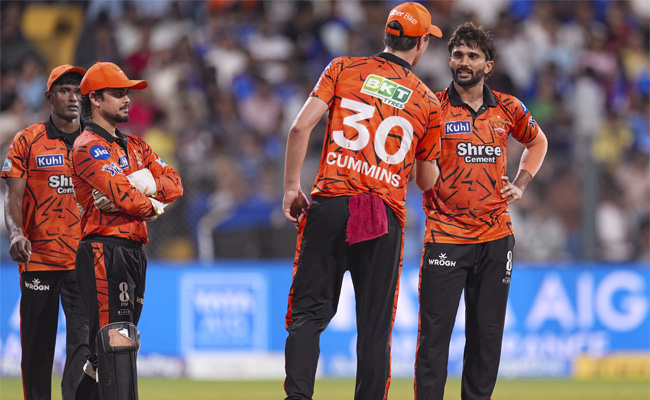
Mumbai (PTI): Ryan Rickelton's whirlwind unbeaten ton was overshadowed by Heinrich Klaasen's unbeaten 65 as Sunrisers Hyderabad defeated Mumbai Indians by six wickets in an IPL match here on Wednesday.
Chasing an imposing 244-run target, Travis Head (76 off 30) and Abhishek Sharma (45 off 24) shared 129 runs for the opening wicket to set the platform for SRH.
Klaasen (65 not out off 30 balls) then displayed his all-round hitting abilities to guide SRH home with the help of Nitish Kumar Reddy (21) and Salil Arora (30 not out off 10) in 18.4 overs.
Earlier, Rickelton's knock powered MI to 243 for five.
MI rode on a 93-run stand between Rickelton (123 not out off 55 balls) and Will Jacks (46 off 22) in 7.1 overs for the opening stand to power the side.
MI skipper Hardik Pandya scored a valuable 31 off 15 balls before being dismissed.
Praful Hinge (2/54), Eshan Malinga (1/29), Sakib Hasan (1/39) and Nitish Kumar Reddy (1/31) were the wicket-takers for SRH.
Brief Scores:
Mumbai Indian: 243 for 5 in 20 overs (Ryan Rickelton 123 not out; Praful Hinge 2/54).
Sunrisers Hyderabad: 249 for 4 in 18.4 overs (Travis Head 76, Heinrich Klaasen 65 not out; AM Ghazanfar 2/51).