About 92,700 BSNL,MTNL employees opt for voluntary retirement; firms to save Rs 8,800 crore annually
New Delhi, Dec 3: Nearly 92,700 employees of BSNL and MTNL have opted for voluntary retirement, which is expected to save about Rs 8,800 crore annually in salary bills for the debt-laden telecom companies.
Top officials of both state-run firms have said that the numbers have exceeded the target set for the voluntary retirement scheme (VRS), which closed on Tuesday.
In case of BSNL, over 78,300 employees opted for voluntary retirement which is over half of the company's total manpower. While as many as 14,378 employees of MTNL, accounting for 76 per cent of the total strength, opted for the VRS.
"Approximately 78,300 employees have opted for the VRS as per data received from all the circles till the closing of the scheme. Besides VRS applicants, around 6,000 employees have retired. This is as per our target. We were expecting reduction of 82,000 headcount," BSNL Chairman and Managing Director P K Purwar told PTI.
The company estimates that the reduction in employees strength will help the company reduce the wage bill by about 50 per cent to Rs 7,000 annually from Rs 14,000 crore at present, he said.
MTNL Chairman and Managing Director Sunil Kumar said that the PSU too has exceeded the target set for the VRS.
"14,378 employees have opted for VRS against target of 13,650 employees. This will reduce our annual salary bill from Rs 2,272 crore to Rs 500 crore. Now we are left with 4,430 employees which is sufficient to run our business," Kumar said.
Wages bill has been one of the prime reasons for both debt-ridden public sector units running in to loss. BSNL had posted a loss of Rs 14,904 crore and MTNL Rs 3,398 crore in 2018-19.
Total debt on both the companies stood at Rs 40,000 crore, of which half of the liability is on MTNL alone which operates in Delhi and Mumbai.
In case of BSNL, employee cost was around 75 per cent of the total revenue that company earned and 87 per cent at the MTNL that reduced ability of the PSUs to generate cash flows and invest in business expansion.
The government in October announced a revival package of Rs 68,751 crore for debt-ridden BSNL and MTNL which included Rs 17,169 crore on account of ex-gratia on VRS and Rs 12,768 crore due to preponement of pensionary benefits spread over a period of 10 years through budgetary allocation for VRS.
Under the scheme over 1 lakh BSNL and 16,300 employees at MTNL were eligible for VRS which was rolled out on November 4.
The revival package announced by the government also includes full cost of spectrum (excluding goods and services tax) of Rs 14,115 crore for BSNL and of Rs 6,295 crore for MTNL to be funded by the government through equity infusion and subscription to non-cumulative preference shares, respectively.
The GST component of Rs 3,674 crore on the cost of spectrum will also be funded through budgetary allocation from the government.
The government has also approved sovereign guarantee bonds of Rs 15,000 crore to be raised and serviced by BSNL and MTNL to meet their operational expenses.
Let the Truth be known. If you read VB and like VB, please be a VB Supporter and Help us deliver the Truth to one and all.
What is Iran’s 10-point plan? Key demands ahead of US talks in Islamabad
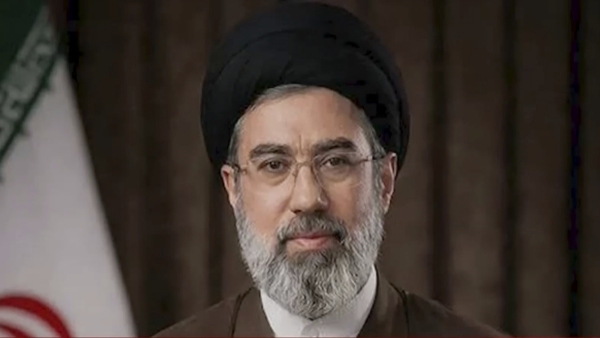
Tehran/Islamabad: Iran has outlined a 10-point plan as the basis for upcoming talks with the United States, expected to begin in Islamabad on April 11, according to a statement from the Iranian Supreme National Security Council.
The plan lays out Tehran’s key political, military and economic demands, and is being seen as a framework for negotiations following the recent escalation in the region.
Strait of Hormuz at the centre
A major focus of the plan is the Strait of Hormuz, a critical global shipping route. Iran has proposed “controlled passage through the Strait of Hormuz in coordination with the Iranian armed forces,” which it says would give the country a unique economic and geopolitical position.
The plan also calls for the “establishment of a safe transit protocol” in the Strait that would guarantee Iran’s dominance under an agreed mechanism.
Call to end conflict
Iran has demanded “the necessity of ending the war against all elements of the axis of resistance,” signalling its expectation that hostilities should stop not only in Iran but also involving allied groups in the region.
US troop withdrawal
Another key demand is the “withdrawal of US combat forces from all bases and deployment points in the region,” indicating Tehran’s long-standing position against American military presence in West Asia.
Sanctions relief and compensation
The plan places strong emphasis on economic measures. It calls for “full payment of Iran’s damages according to estimates,” along with “the lifting of all primary and secondary sanctions and resolutions of the Board of Governors and the Security Council.”
It also seeks “the release of all Iranian assets and properties frozen abroad,” which have been a major point of contention for years.
Binding global guarantee
Finally, Iran has demanded that all these terms be formally recognised through “a binding Security Council resolution,” suggesting it wants international legal backing to ensure enforcement.
What this means
The 10-point plan reflects Iran’s broader push for security guarantees, economic relief and regional influence. The upcoming talks in Islamabad are expected to test how far both sides are willing to negotiate on these demands.