Air Asia case: Tata Sons Board repose faith in Venkataramanan
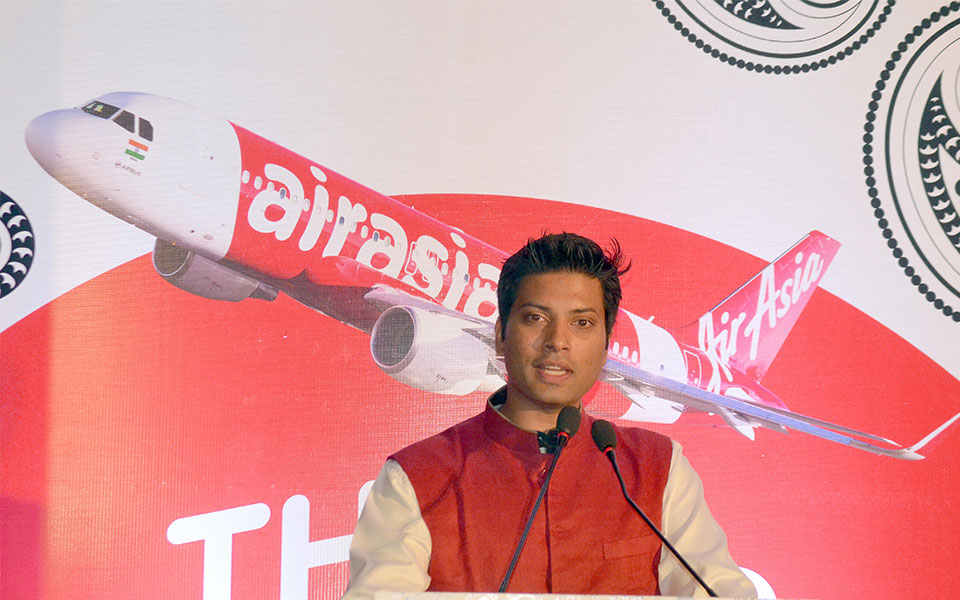
Mumbai, June 26: The board of Tata Sons on Tuesday reposed their faith in R. Venkataramanan, who is the non-executive director and a nominee of Tata Sons on the Board of Air Asia India.
A Tata Sons statement here said its board was updated on the issues concerning Air Asia India Ltd (AAIL) pertaining to the investigations being carried out by official agencies.
"In this context, the Board expressed satisfaction that AAIL was cooperating fully with agencies investigating this matter," it said.
"The Board is aware that prior audits and forensic reports were initiated by AAIL on some of the issues being currently investigated and based on such reports there have been no findings of any wrongdoing on the part of its nominee director R. Venkataramanan."
The development comes after AirAsia India Director Venkataramanan was accused among other things of violating FDI norms in giving effective management to a foreign entity through FIPB clearance in 2013. Venkataramanan has denied the charges.
Tata Sons holds a 49 per cent stake in Air Asia India which is a public limited company.
Earlier this month, the trustees of Tata Trusts, which hold a majority stake in Tata Sons, expressed their confidence in Venkataramanan.
Last month, the CBI has named AirAsia Group CEO Tony Fernandes and others in a criminal case of violating FDI norms in giving effective management to a foreign entity through the Foreign Investment Promotion Board's (FIPB) clearance in 2013 and attempt to bribe for tweaking rules to get a licence for its joint venture to operate international flights.
The CBI FIR also names "unknown public servants" of the Civil Aviation Ministry, the then Foreign Investment Promotion Board, Venkataramanan, Director AirAsia, the AirAsia Group Deputy CEO T. Kanagalingam alias Bo Lingam.
Let the Truth be known. If you read VB and like VB, please be a VB Supporter and Help us deliver the Truth to one and all.
Rickelton's ton in vain as SRH beat MI by 6 wickets
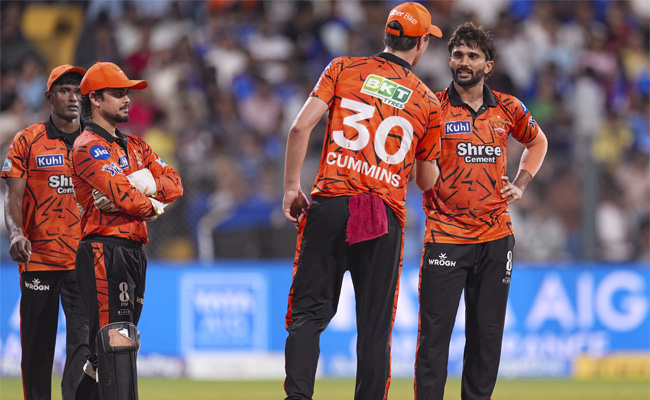
Mumbai (PTI): Ryan Rickelton's whirlwind unbeaten ton was overshadowed by Heinrich Klaasen's unbeaten 65 as Sunrisers Hyderabad defeated Mumbai Indians by six wickets in an IPL match here on Wednesday.
Chasing an imposing 244-run target, Travis Head (76 off 30) and Abhishek Sharma (45 off 24) shared 129 runs for the opening wicket to set the platform for SRH.
Klaasen (65 not out off 30 balls) then displayed his all-round hitting abilities to guide SRH home with the help of Nitish Kumar Reddy (21) and Salil Arora (30 not out off 10) in 18.4 overs.
Earlier, Rickelton's knock powered MI to 243 for five.
MI rode on a 93-run stand between Rickelton (123 not out off 55 balls) and Will Jacks (46 off 22) in 7.1 overs for the opening stand to power the side.
MI skipper Hardik Pandya scored a valuable 31 off 15 balls before being dismissed.
Praful Hinge (2/54), Eshan Malinga (1/29), Sakib Hasan (1/39) and Nitish Kumar Reddy (1/31) were the wicket-takers for SRH.
Brief Scores:
Mumbai Indian: 243 for 5 in 20 overs (Ryan Rickelton 123 not out; Praful Hinge 2/54).
Sunrisers Hyderabad: 249 for 4 in 18.4 overs (Travis Head 76, Heinrich Klaasen 65 not out; AM Ghazanfar 2/51).