Audi chief Rupert Stadler arrested in diesel emissions probe
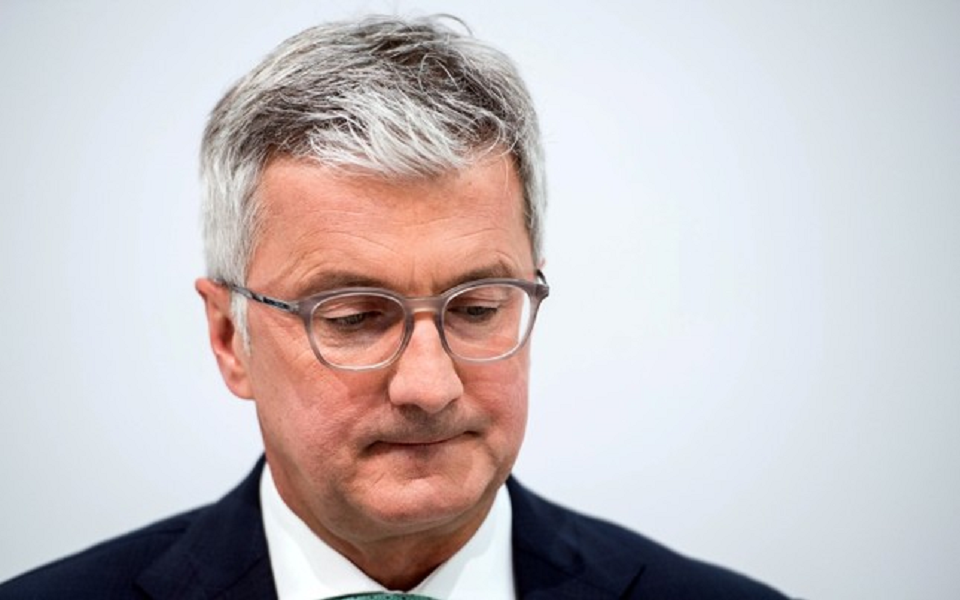
The chief executive of German carmaker Audi, Rupert Stadler, has been arrested in connection with an investigation into the diesel emissions scandal.
A spokesman for Volkswagen, which owns Audi, confirmed he was being held.
Munich prosecutors said they had acted because of a risk that Mr Stadler might seek to suppress evidence.
The scandal erupted three years ago, when it emerged that cars had been fitted with devices designed to cheat emissions tests.
The devices were initially found in VW's cars, but its Audi subsidiary has also been embroiled in the scandal.
Last month, it admitted that another 60,000 A6 and A7 models with diesel engines have emission software issues.
That is on top of the 850,000 recalled last year by Audi, of which only some have been found to require modification.
- Audi admits more diesel emission problems
- How VW tried to cover up the emissions scandal
- Ex-VW boss charged over diesel scandal
Munich prosecutors said Mr Stadler would be questioned by Wednesday, once he had spoken to his lawyers.
The so-called dieselgate emissions scandal first came to light in September 2015.
Volkswagen admitted that nearly 600,000 cars sold in the US were fitted with "defeat devices" designed to circumvent emissions tests.
The carmaker said it had installed software in 11 million diesel cars worldwide that could tell when they were being tested and cut their emissions.
On the open road, untested, the level of emissions would in practice be far higher - up to 40 times as bad as recorded under laboratory conditions.
Courtesy: BBC NEWS
Let the Truth be known. If you read VB and like VB, please be a VB Supporter and Help us deliver the Truth to one and all.
JPMorgan executive sued in New York over alleged sexual abuse, harassment by former colleague

New York: A senior executive at JPMorgan Chase has been sued by a former colleague in New York, with allegations of prolonged sexual abuse, racial harassment and workplace intimidation.
The civil suit was filed before the New York County Supreme Court, as reported by The Observer Post. It names Lorna Hajdini, an executive director at the bank, as the defendant. The complainant, identified as “John Doe,” is described as an Asian banker who worked in the leveraged finance division.
The complaint alleges that the misconduct began after the two started working together in early 2024. It states that the defendant allegedly used her senior position to pressure him into unwanted sexual encounters and threatened his career progression if he refused.
The lawsuit further alleges multiple incidents of coercion and claims that the harassment escalated into sexual assault, despite repeated objections.
It also includes allegations of racial harassment, stating that derogatory remarks were made about the complainant’s ethnicity and personal life. The complaint further alleges that the defendant admitted to drugging him on certain occasions and accessed his bank account without authorisation.
Two witnesses have been cited in the filing as corroborating parts of the complainant’s account, including hearing his protests during alleged incidents.
The complainant has stated that he reported the alleged misconduct internally in May 2025. He further alleges retaliation, including loss of system access, reprimands, and being placed on involuntary leave. He also claims he received threatening calls referencing his ethnicity and immigration status.
His counsel, Daniel J. Kaiser, said the complainant has suffered emotional trauma and professional setbacks, including a diagnosis of post-traumatic stress disorder.
Responding to the allegations, JPMorgan Chase denied any wrongdoing, stating that an internal investigation found no evidence to support the claims. The bank said that while several employees cooperated with the inquiry, the complainant did not participate in the process or provide supporting details.