Collapse of Silicon Valley Bank to impact Indian startup ecosystem, feel experts
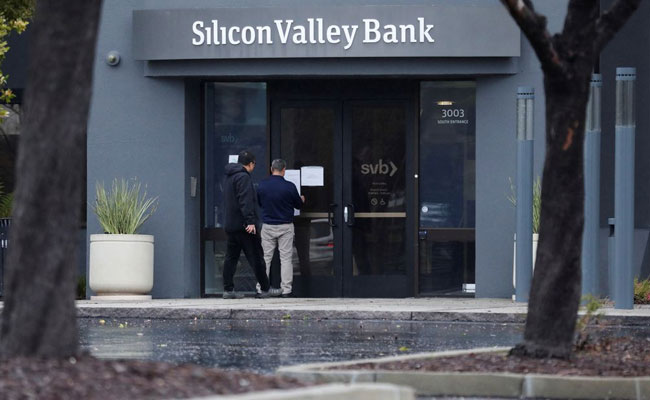
Washington (PTI): The collapse of Silicon Valley Bank, the largest vendor in the startup ecosystem, is likely to adversely impact the Indian startup scenario as well as it has injected a lot of uncertainty in the sector overnight, industry experts say.
"Hopefully the matter will get resolved, but I think it is a big hit for Indian startups," Ashu Garg, a prominent Silicon Valley-based venture capitalist and early-stage investor for over two decades, told PTI in an interview.
California-based Silicon Valley Bank (SVB), the 16th largest bank in the United States, was closed on Friday by the California Department of Financial Protection and Innovation which later appointed the Federal Deposit Insurance Corporation (FDIC) as its receiver.
The FDIC, in a statement, said as of December 31, 2022, the Silicon Valley Bank had approximately USD 209.0 billion in total assets and about USD 175.4 billion in total deposits. At the time of closing, the amount of deposits in excess of the insurance limits was undetermined. The number of uninsured deposits will be determined once the FDIC obtains additional information from the bank and customers.
"The reality is that the Silicon Valley Bank has been a real supporter of the Indian startup scene and has provided banking services. Most Indian startups that do business in the US use this bank because it is one of the few institutes willing to work with the Indian banks. A lot of the banking institutes do not want to work with overseas customers," Garg, an alumnus of IIT Delhi, said.
"So, SVB has been able to work with the Indian companies that do not have US employees. So if they (are gone), it will be very problematic for the Indian (companies)," he said in response to a question.
Over the past several years, SVB has been one of the most preferred choices of banking for startups and tech industry in the Silicon Valley, mainly because of its understanding of the industry and flexibility in many aspects suiting the startup ecosystem.
Given that every third startup in the Silicon Valley is founded by Indian-Americans, experts feel a significantly large number of these founders would be impacted as early as next week in terms of even making basic payments and giving paychecks to their employees.
Similarly, a large number of Indian startups which do not have even an employee or an office in the US had opened up their accounts in the Silicon Valley Bank as it let them do so without much regulatory questions and with a customer-friendly approach.
The implications of the collapse of SVB on Indian-Americans and their companis are very serious, Garg said.
"The Silicon Valley Bank is the largest vendor to the startup ecosystem. So now you have all these loans. You do not know what is going to happen if the loans get sold and get called.
"Besides, a lot of fintech also depends on the Silicon Valley Bank... So you probably saw Rippling, which is a payroll company, unable to issue payroll because their underlying bank is the Silicon Valley Bank. It also has potential implications for the banking system in the US and the rest of the world," the venture capitalist said.
A group of Silicon Valley-based venture capitalists after a meeting to discuss the aftermath of the bank's downfall said the events that unfolded over the past 48 hours have been deeply disappointing and concerning.
"In the event that SVB was to be purchased and appropriately capitalised, we would be strongly supportive and encourage our portfolio companies to resume their banking relationship with them," it said in a joint statement released by Indian-American Navin Chaddha, an early stage investor.
" SVB has been an early partner for many of our companies at Battery Ventures through the ups and downs of company building. The last 48 hours unfolded in ways we could have never imagined, but now is the time to back our partners and we strongly support our companies working with SVB as and when we have more clarity on their path forward," he said.
Indian-American Congressman Ro Khanna, who represents Silicon Valley in the House of Representatives, said the FDIC needs to investigate short sales over the past few months by executives, and at minimum, there should be a clawback with penalties of profits made.
"This should go to non-profits like Sunnyvale Community Services who are worried about losing SVB deposits and paying mortgages," he demanded.
Indian-American presidential candidate Vivek Ramaswamy said the American taxpayers should not bail out the likes of Prince Harry and Meghan Markle.
"If you want to make deposits at the Silicon Valley Bank, that is your business. But I did not hear the tech industry's intelligentsia calling for bailouts of East Palestine last month," he said.
Meanwhile, Indian-American Rohit Chopra, the director of the Consumer Financial Protection Bureau, is tasked with protecting the consumers interest in the case. He is also one of the FDIC directors.
Let the Truth be known. If you read VB and like VB, please be a VB Supporter and Help us deliver the Truth to one and all.
Two labourers killed in crane collapse at Link Road project site in Thane district

Thane (PTI): Two labourers were killed on Saturday when a crane collapsed at the under-construction Dahisar-Bhayander Link Road project site in Maharashtra's Thane district, police said.
According to the police, the “gantry crane coastal girders platform”, where labourers were working, suddenly collapsed at 12:30 PM in Bhayander (West), severely injuring Raghunath Das (38) and Kana Singh (45). They were declared dead at a hospital.
"Police have registered a case of accidental death and are investigating," said Bhayander police station senior inspector Jitendra Kamble.
Police said further investigation is underway to ascertain the exact cause of the crane collapse and to determine if any negligence was involved.
The Dahisar-Bhayander Link Road (DBLR) elevated coastal road project connects Dahisar (West) and Bhayander (West).