Facebook lost $120 bn in market value over slow growth

San Francisco, July 26: Facing global backlash over the massive Cambridge Analytica data scandal, Facebook stock nosedived 20 per cent -- wiping over $120 billion off the company's market value -- after its revenue and user growth in the second quarter of 2018 fell short of investor expectations.
The social media giant late on Wednesday reported 2.23 billion monthly active users (MAUs) -- an increase of 11 per cent (year-over-year) which was its slowest growth in more than two years.
Facebook reported revenue of $13.2 billion -- a gain of 42 per cent but missing analyst expectation of $13.3 billion. It ended the quarter with $42.3 billion in cash and equivalents.
The social media platform earned $5.1 billion, or $1.74 per share, for the second quarter.
"Our community and business continue to grow quickly. We are committed to investing to keep people safe and secure, and to keep building meaningful new ways to help people connect," said CEO Mark Zuckerberg in a statement.
The daily active users (DAUs) were 1.47 billion as of June 30, also an increase of 11 per cent year-over-year.
Analysts attributed the slow user growth to the European privacy law that went into effect on May 25.
Mobile advertising revenue represented approximately 91 per cent of advertising revenue for the second quarter of 2018 -- up from approximately 87 per cent of advertising revenue in the second quarter of 2017.
Facebook currently employs 30,275 people -- an increase of 47 per cent year-over-year.
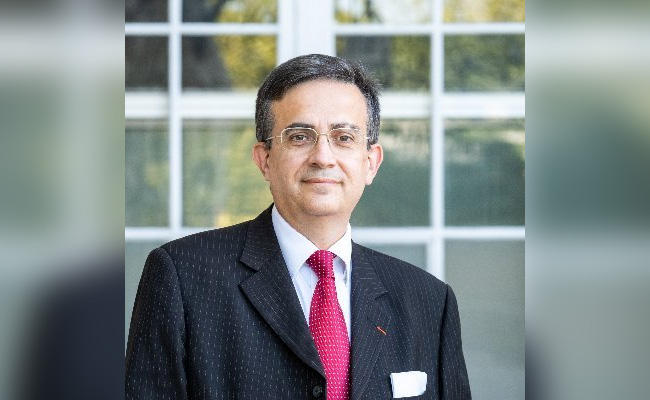
"We expect revenue growth rates to continue to decelerate in the second half," said David Wehner, Chief Financial Officer.
In April, Facebook had warned investors that more users' data scandals in the future may adversely affect the social networking giant's reputation and brand image.
Appearing before the US Congress, Zuckerberg told the lawmakers that his own personal data was part of 87 million users' that was "improperly shared" with the British political consultancy firm Cambridge Analytica.
After the Cambridge Analytica data scandal, Facebook suspended Boston-based data analytics company Crimson Hexagon over concerns that it harvested users' data.
Let the Truth be known. If you read VB and like VB, please be a VB Supporter and Help us deliver the Truth to one and all.
Assam: RSS files police complaints against Kharge for 'derogatory' remarks at poll rally
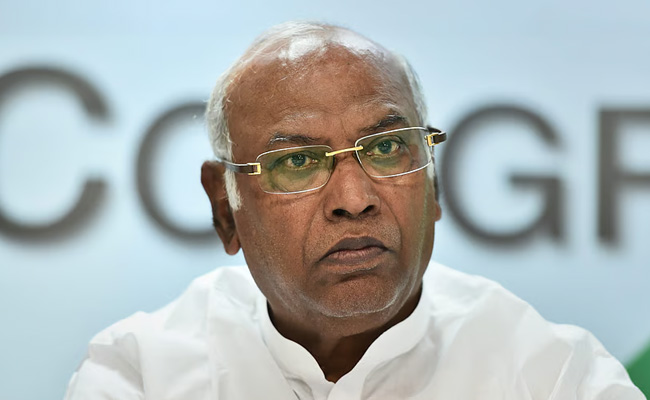
Guwahati (PTI): The RSS on Wednesday said it has filed complaints at two police stations in Assam against Congress president Mallikarjun Kharge for allegedly comparing the ideology of the organisation and the BJP with a 'poisonous snake' at an election rally.
The complaints were filed to seek legal action over alleged ''derogatory, provocative, and communally sensitive statements made during a recent election rally in south Assam, a RSS spokesman said
In the complaints, the Rashtriya Swayamsevak Sangh alleged that the Congress chief had made controversial remarks during an election rally in Nilambazar under the Karimganj South assembly constituency in Sribhumi district.
"If a poisonous snake is moving in front of you while you are offering namaz, you must stop the prayer and rush to kill the poisonous snake first - that is what the Quran prescribes you to do. I tell you that the RSS and BJP are like that same poisonous snake,” Kharge was quoted as saying in the complaints.
The RSS expressed serious concern, claiming that such remarks were "inflammatory in nature and capable of inciting hostility, intimidation, and violence against workers and supporters of the RSS and the BJP".
The complaints pointed out that the statement constitutes a ''corrupt electoral practice under Section 83 of the Representation of the People Act, 1951, and the remarks criminally intimidated the public and promoted enmity between supporters of different political and social groups''.
Describing the ideology of RSS and BJP as “poisonous” and calling for their elimination could encourage "bodily harm against members and supporters of these organisations", the complaints said.
Kharge's remarks attempt to promote ''communal division between Hindu and Muslim communities, potentially disturbing public peace and harmony in Assam and influencing the electoral environment", the RSS said.
The complainants also claimed that such statements might lead to communal tensions or clashes if not addressed promptly by authorities.
The complaints were filed by RSS' North Assam secretary Khagen Saikia at Dispur Police Station and South Assam's secretary Jyotsnamoy Chakraborty at Silchar PS.
The BJP had also filed complaints on the same allegations at the Basishta Police Station here and with the Election Commission on Tuesday.