Fred Smith, FedEx founder who revolutionised package delivery business, passes away at 80
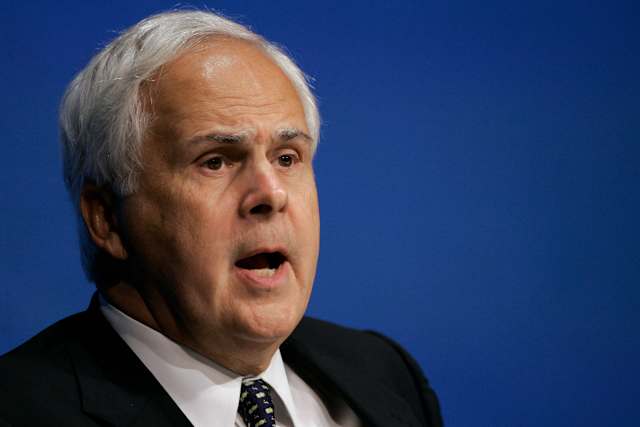
Memphis (AP): Fred Smith, the FedEx Corp. founder who revolutionised the express delivery industry, has died, the company said. He was 80.
FedEx started operating in 1973, delivering small parcels and documents more quickly than the postal service. Over the next half-century, Smith, a Marine Corp. veteran, oversaw the growth of a company that became something of an economic bellwether because so many other companies rely on it.
Memphis, Tennessee-based FedEx became a global transportation and logistics company that averages 17 million shipments per business day. Smith stepped down as CEO in 2022 but remained executive chairman.
Smith, a 1966 graduate of Yale University, used a business theory he came up with in college to create a delivery system based on coordinated air cargo flights centred on a main hub, a "hub and spokes" system, as it became known.
The company also played a major role in the shift by American business and industry to a greater use of time-sensitive deliveries and less dependence on large inventories and warehouses.
Smith once told The Associated Press that he came up with the name Federal Express because he wanted the company to sound big and important when in fact it was a start-up operation with a future far from assured.
At the time, Smith was trying to land a major shipping contract with the Federal Reserve Bank that didn't work out.
In the beginning, Federal Express had 14 small aircraft operating out of the Memphis International Airport flying packages to 25 US cities.
Smith's father, also named Frederick, built a small fortune in Memphis with a regional bus line and other business ventures. Following college, Smith joined the US Marines and was commissioned a second lieutenant. He left the military as a captain in 1969 after two tours in Vietnam where he was decorated for bravery and wounds received in combat.
He told The Associated Press in a 2023 interview that everything he did running FedEx came from his experience in the Marines, not what he learned at Yale.
Getting Federal Express started was no easy task. Overnight shipments were new to American business and the company had to have a fleet of planes and a system of interconnecting air routes in place from the get-go.
Though one of Memphis' best-known and most prominent citizens, Smith generally avoided the public spotlight, devoting his energies to work and family.
Despite his low profile, Smith made a cameo appearance in the 2000 movie “Castaway” starring Tom Hanks. The movie was about a FedEx employee stranded on an island.
“Memphis has lost its most important citizen, Fred Smith,” said U.S. Rep. Steve Cohen of Tennessee, citing Smith's support for everything from the University of Memphis to the city's zoo. “FedEx is the engine of our economy, and Fred Smith was its visionary founder. But more than that, he was a dedicated citizen who cared deeply about our city."
Smith rarely publicized the donations he and his family made, but he agreed to speak with AP in 2023 about a gift to the Marine Corps Scholarship Foundation to endow a new scholarship fund for the children of Navy service members pursuing studies in STEM.
“The thing that's interested me are the institutions and the causes not the naming or the recognition,” Smith said at the time.
Asked what it means to contribute to the public good, he replied:
“America is the most generous country in the world. It's amazing the charitable contributions that Americans make every year. Everything from the smallest things to these massive health care initiatives and the Gates Foundation and everything in between,” he said.
“I think if you've done well in this country, it's pretty churlish for you not to at least be willing to give a pretty good portion of that back to the public interest. And all this is in the great tradition of American philanthropy.”
Let the Truth be known. If you read VB and like VB, please be a VB Supporter and Help us deliver the Truth to one and all.
Thane court sentences man to life imprisonment for bludgeoning wife to death

Thane (PTI): A court in Maharashtra's Thane district sentenced a man to life imprisonment for the brutal murder of his wife, whom he attacked 22 times with a hammer in front of his children, based on the testimony of his 13-year-old daughter.
Principal district and sessions judge S B Agrawal found the accused, Vijay Mishra alias Samir Shaikh, guilty under sections 302 (murder) and 324 (voluntarily causing hurt by dangerous weapons) of the Indian Penal Code (IPC).
The court sentenced him to life imprisonment and a three-year term to be served concurrently. It also imposed a fine of Rs 1 lakh for the murder charge and an additional Rs 10,000 for injuring his minor daughter and mother-in-law, who had tried to intervene during the fatal attack.
Additional public prosecutor Rashmi Kshirsagar informed that 11 prosecution witnesses, including the accused's daughter, were examined during the trial.
According to the prosecution, the victim, Zarin Israr Ansari, had been living with her mother, along with her daughter and a six-year-old son, for two years following prolonged domestic violence and disputes.
The accused, who had converted to Islam to marry Zarin 14 years prior, harboured deep resentment over her living separately and suspected her character.
On the afternoon of September 28, 2023, the accused stormed into his mother-in-law's residence in Mumbra with a hammer concealed in a bag, cornered his wife on the mezzanine floor, dragged her down, locked the main door, and repeatedly bludgeoned her.
The court defended the testimony of the victim's 13-year-old daughter, who was an eyewitness and had sustained injuries herself, noting that minor inconsistencies do not degrade the core truth of an innocent child's account:
"...they are not of any significant consequence since it is not expected from such a witness of 10 years of age to have a total photographic memory to be reproduced before the court. But as far as the incident is concerned, evidence of this witness is totally free from any reasonable doubt."
The prosecution had also stated that the accused had locked his family inside and threatened a neighbour by brandishing a "bomb-like thing" and declaring he would blow up the building if anyone intervened.
The victim's brother eventually broke down the latched door, disarmed the accused, and pinned him down until the police arrived.
The post-mortem report revealed that the victim had suffered 22 brutal injuries and had died due to severe head wounds.