Google celebrates renowned ophthalmologist Govindappa Venkataswamy
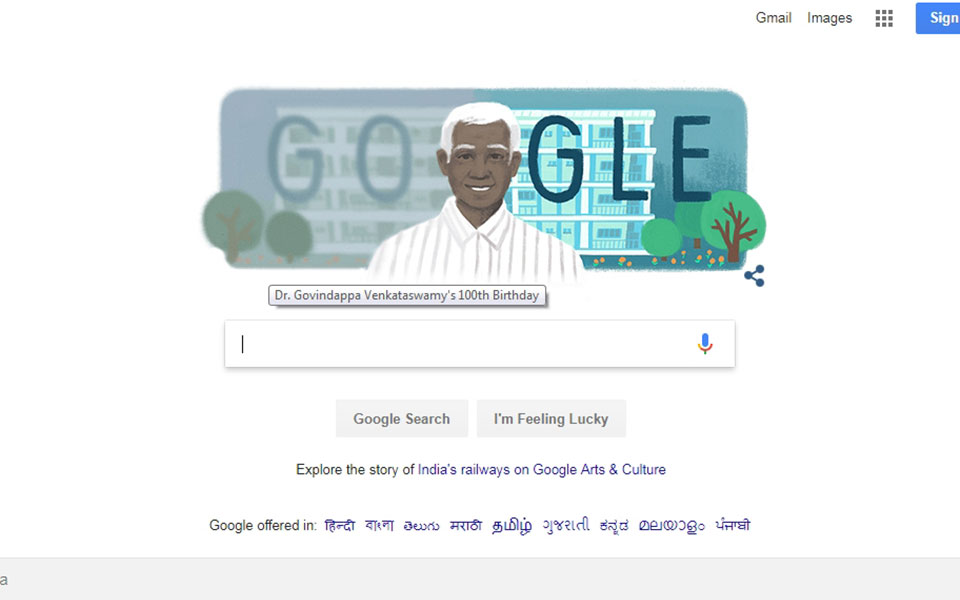
New Delhi, Oct 1: The Google Doodle on Monday celebrated the centenary of renowned ophthalmologist Govindappa Venkataswamy, known as 'Dr V' among his patients, who flocked to the Aravind Eye Hospital that he founded in Madurai.
Born on this day in 1918 in Vadamalapuram, Tamil Nadu, Venkataswamy was permanently crippled by rheumatoid arthritis. However, despite his own health issues, nothing could stop him from what he wanted to be.
He attended a school in his village where students had to write on sand which collected from the riverbank as there was no pencil and paper. Later he went on to study Chemistry at the American College in Madurai and earned a degree of M.D. from Stanley Medical College in Madras in 1944.
Right after completing his medical school Venkataswamy went on to join the Indian Army Medical Corps. However, a severe case of rheumatoid arthritis nearly crippled him and his career took a setback.
He was confined to bed for a year. When he returned to academics, Venkataswamy studied for a degree in ophthalmology in 1951.
The Aravind Eye Hospital which has now transformed into a major chain eradicating cataract related blindness, had begun as a 11-bed hospital under the aegis of Venkataswamy in 1976.
Despite his physical constraints, Dr V learnt to perform surgery to remove cataracts and could perform 100 surgeries in a day.
He used to organise eye camps in rural communities, which would serve as a rehab centre for the blind and a training session for ophthalmic assistants, during this period he performed over 1,00,000 successful eye surgeries, the Google blogspot said.
In 1973, Venkataswamy received the Padma Shri award.
Let the Truth be known. If you read VB and like VB, please be a VB Supporter and Help us deliver the Truth to one and all.
Bihar: Over 150 children fall ill after consuming 'mid-day meal' in Saharsa
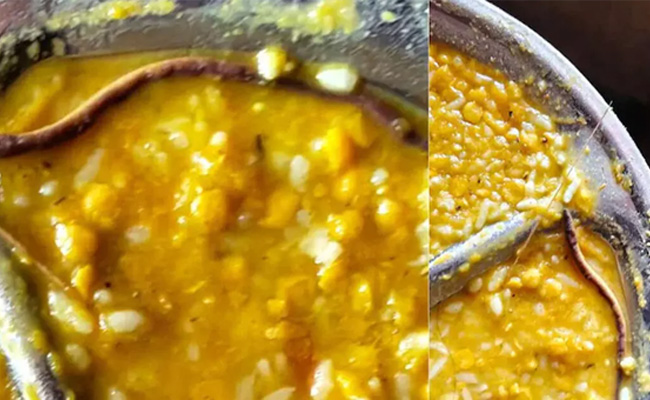
Saharsa (PTI): More than 150 children were taken ill after allegedly consuming food that was part of the mid-day meal in a school in Bihar’s Saharsa district, a senior official said on Thursday.
The incident occurred at a middle school in Baluaha village of the district.
The official said that 115 children were undergoing treatment at the Sadar Hospital, while around 50 students were admitted to Mahishi Public Health Centre.
“We received information that several children fell ill after consuming the mid-day meal in Baluaha. The children were initially treated at the primary health centre, but later, many were referred to the Sadar Hospital,” Saharsa District Magistrate Deepesh Kumar told reporters.
“According to doctors, the health condition of the children has improved, but they will be kept under observation for some time. There is no need to panic. Some kids are having mild fever. They are being treated accordingly,” Kumar said.
Meanwhile, family members of some children claimed that a snake was found in the container in which cooked pulses was stored at the school.
Of the 545 students present in the school, 200 had already eaten their meals by the time the snake was spotted, and later complained of stomach ache and vomiting, they said.
Regarding the claims, the DM said food samples have been collected from the school.
“We will be able to comment on this only after the results of the tested samples arrive,” he said.