Google's Sunder Pichai to receive 2019 Global Leadership Award
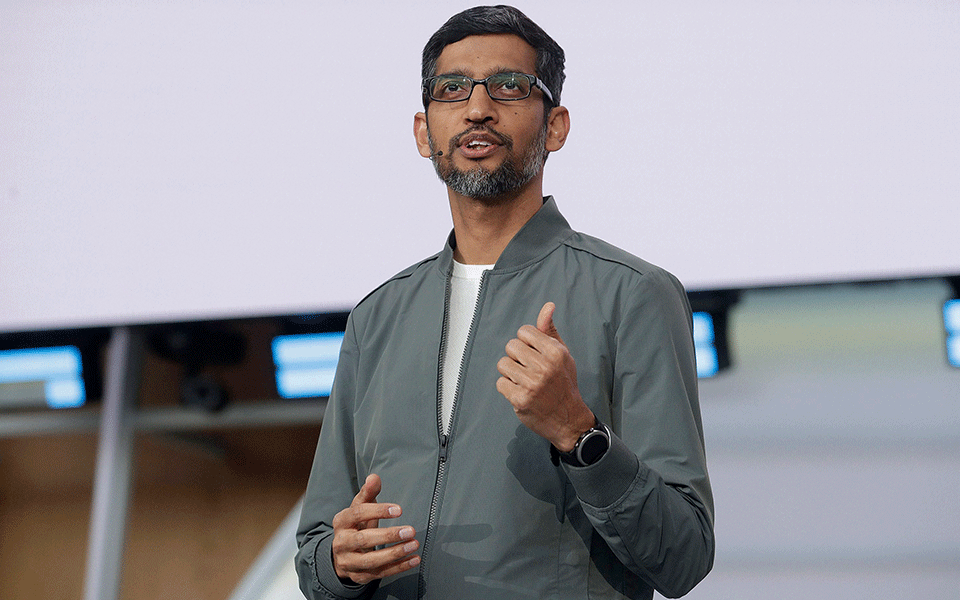
Washington: Google's India-born CEO Sundar Pichai and Nasdaq president Adena Friedman have been chosen for the prestigious Global Leadership Awards 2019 by business advocacy group USIBC in recognition of the two companies' contribution as the leading technology-driven platforms.
The award by Washington-based US-India Business Council (USIBC) would be conferred upon Indian-American Pichai, 46, and Friedman, 50, during the next week's 'India Ideas Summit'.
Given annually since 2007, the USIBC Global Leadership Awards recognise top corporate executives from the United States and India whose companies play a major role in catalysing growth in the US-India commercial corridor.
With companies like Google and Nasdaq at the forefront, bilateral trade in goods and services has grown by nearly 150 per cent over the past five years to reach USD 142.1 billion in 2018, the USIBC said.
"Growing up in India, I saw the profound impact technology has on improving people's lives, and I am proud that Google has been able to contribute to India's exciting growth story," Pichai said.
"At the same time, India is playing an increasingly important role in helping Google build products for the US and globally, and we're only at the beginning of what's possible," he said in an accompanying statement.
The US-India relationship has never been more critical, he added.
According to Friedman, the work performed by the USIBC is critical to promoting mutually beneficial commercial and cultural ties between the US and India.
"At Nasdaq, we greatly value our partnership with the National Stock Exchange of India, as well as our advanced technology development center in Bengaluru. We greatly admire the opportunity and innovation that India represents as a world leading center of talent and technology," Friedman said.
Noting that India is seen as a market with enormous potential for the US companies, US Chambers of Commerce president and CEO Thomas J Donohue applauded the efforts of Pichai and Friedman to engage one of the globe's most promising emerging markets.
"We are enormously excited to recognise the contributions of Google and Nasdaq as leading technology-driven platforms that drive our markets and transform the way we live, learn, and do business," USIBC president Nisha Desai Biswal said.
Under the leadership of Pichai, Google is not only powering India's digital economy sector, but also expanding access to technology for millions of Indian citizens, including women and people from the marginalised communities, she said.
"Nasdaq CEO Adena Friedman has brought the best-in-class technology of Nasdaq to more than 50 countries, including India's National Stock Exchange. Her leadership and investment in India will ensure that capital markets in both countries benefit from Nasdaq's cutting edge market technology and innovative approaches," Biswal added.
Let the Truth be known. If you read VB and like VB, please be a VB Supporter and Help us deliver the Truth to one and all.
Defamatory post against Dharmasthala Veerendra Heggade: Case registered against Girish Mattannavar
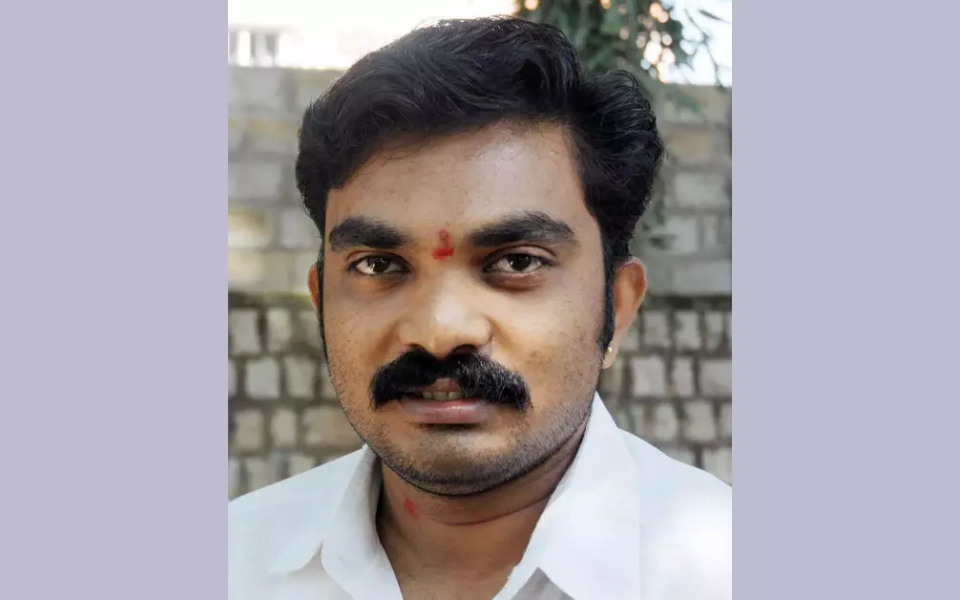
Belthangady: A case has been registered at Dharmasthala police station against Girish Mattannavar over a complaint regarding alleged defamatory posts on social media against Dr. D. Veerendra Heggade, Dharmadhikari of Sri Kshetra Dharmasthala.
The complaint was filed by Subrahmanya Prasad, a resident of Dharmasthala.
The complainant stated that Mattannavar posted content on Instagram making allegations against Dr. Heggade and allegedly affecting his reputation.
Based on the complaint, a case was registered under Section 353(2) of the Bharatiya Nyaya Sanhita (BNS), which is related to spreading false information, rumours, or alarming news, on April 18, and the investigation is in progress.
Following information about Mattannavar’s appearance at the SIT office on May 7, a police officer from Dharmasthala police station issued a notice directing him to appear at the station within a week.