India becoming $5 trillion economy by 2025 ‘simply out of question’: Ex-RBI Governor C Rangarajan
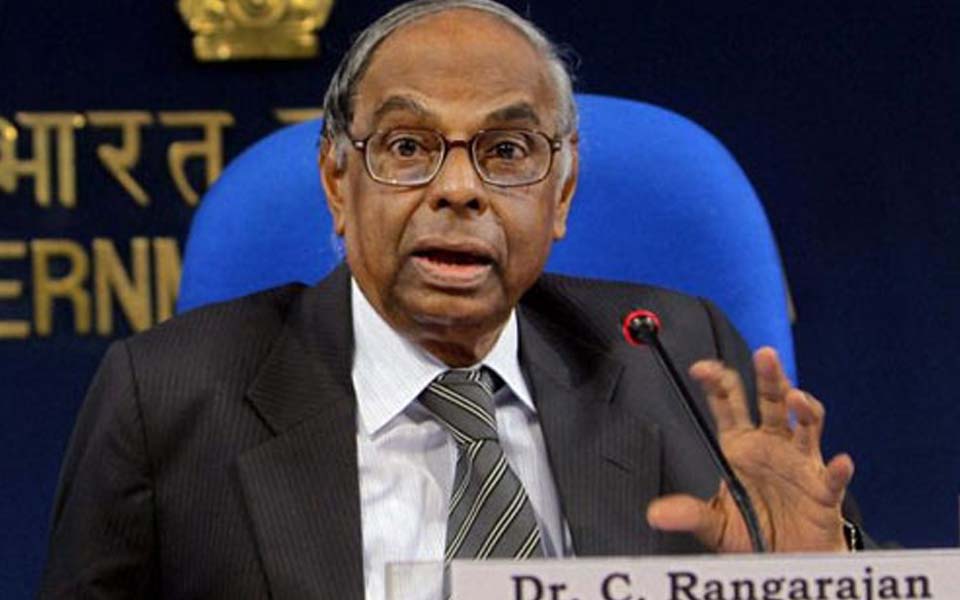
New Delhi: Claiming that India will need another 22 years of sustained growth to become a “developed country,” former Reserve Bank of India (RBI) governor C Rangarajan said on Thursday that at the current growth rate, India becoming a USD 5 trillion economy by 2025 is “simply out of question.”
“The interesting thing is, even if you reach USD 5 trillion, the per capita income in India will grow from the current level of USD 1800 to USD 3600. Even then, India will be called low-middle income country,” said the economist who was awarded the Padma Vibhushan in the year 2002.
“In order to become a high middle income country, the per capita income has to USD 3800 which will take another few years… The definition of a developed country is one whose per capita income is USD 12000. It will take 22 years for India to grow at 9 percent per annum to reach there. The task before us is highly daunting. We need to get out of the current slowdown as quickly as possible,” he told the gathering at Ahmedabad Management Association (AMA).
Pointing out the Indian economy grew “far short of expectations” at 3.5 percent annually for the first 40 years after the country’s independence, Rangarajan said the annual average growth rate improved in the 1990s to 6.8 percent, especially after liberalisation in 1992-93. “The highest rate of growth that we have seen in India, is between 2005-06 and 2007-08, when the annual average rate of growth of the economy was 9.4 percent… In 2008-09, the growth rate fell down because of the international financial crisis. But in 2009-10 and 2010-11, once again the growth rate picked up and went beyond 8 percent,” he said.
Stating that the economy was currently experiencing “slowdown”, the veteran economist said the economic growth has slowed down from 8.2 percent in 2015-16 to 6.8 percent 2018-19.
“So the economy has declined even as per the new series of data… If you look at the quarterly data of 2017-18, the growth in fourth quarter was 8.1 percent, and as per the first quarter of 2019-20, the growth has come down to 5 percent. There is no doubt about the fact that the Indian economy has slowed down and it is a matter of concern,” Rangarajan said adding that economic growth during the current year will not be more than 6 percent.
Claiming that the government could increase its expenditure as one of the measures to prop up the economy, he said the scope of government implementing is limited as “many of the revenue projections made in the Union budget may go wrong.” He said Goods and Services Tax was not providing “enough revenue” as projected earlier. Stating that both long term and short term measures are needed, he said disinvestment can help in providing funds to the government to a certain extent. Increasing FDI and exports can also help to tide over the crisis,” he added.
Courtesy: indianexpress.com
Let the Truth be known. If you read VB and like VB, please be a VB Supporter and Help us deliver the Truth to one and all.
What is Iran’s 10-point plan? Key demands ahead of US talks in Islamabad
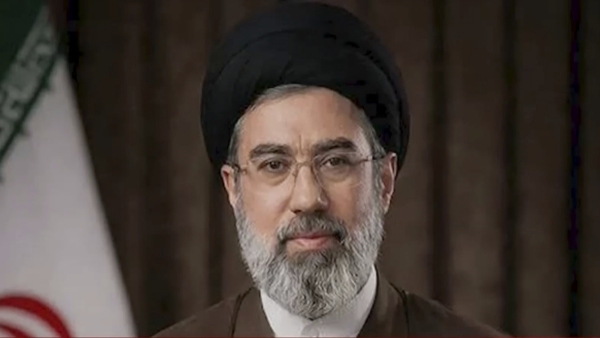
Tehran/Islamabad: Iran has outlined a 10-point plan as the basis for upcoming talks with the United States, expected to begin in Islamabad on April 11, according to a statement from the Iranian Supreme National Security Council.
The plan lays out Tehran’s key political, military and economic demands, and is being seen as a framework for negotiations following the recent escalation in the region.
Strait of Hormuz at the centre
A major focus of the plan is the Strait of Hormuz, a critical global shipping route. Iran has proposed “controlled passage through the Strait of Hormuz in coordination with the Iranian armed forces,” which it says would give the country a unique economic and geopolitical position.
The plan also calls for the “establishment of a safe transit protocol” in the Strait that would guarantee Iran’s dominance under an agreed mechanism.
Call to end conflict
Iran has demanded “the necessity of ending the war against all elements of the axis of resistance,” signalling its expectation that hostilities should stop not only in Iran but also involving allied groups in the region.
US troop withdrawal
Another key demand is the “withdrawal of US combat forces from all bases and deployment points in the region,” indicating Tehran’s long-standing position against American military presence in West Asia.
Sanctions relief and compensation
The plan places strong emphasis on economic measures. It calls for “full payment of Iran’s damages according to estimates,” along with “the lifting of all primary and secondary sanctions and resolutions of the Board of Governors and the Security Council.”
It also seeks “the release of all Iranian assets and properties frozen abroad,” which have been a major point of contention for years.
Binding global guarantee
Finally, Iran has demanded that all these terms be formally recognised through “a binding Security Council resolution,” suggesting it wants international legal backing to ensure enforcement.
What this means
The 10-point plan reflects Iran’s broader push for security guarantees, economic relief and regional influence. The upcoming talks in Islamabad are expected to test how far both sides are willing to negotiate on these demands.