Jio 5G service to launch in India in second half of 2021: Mukesh Ambani
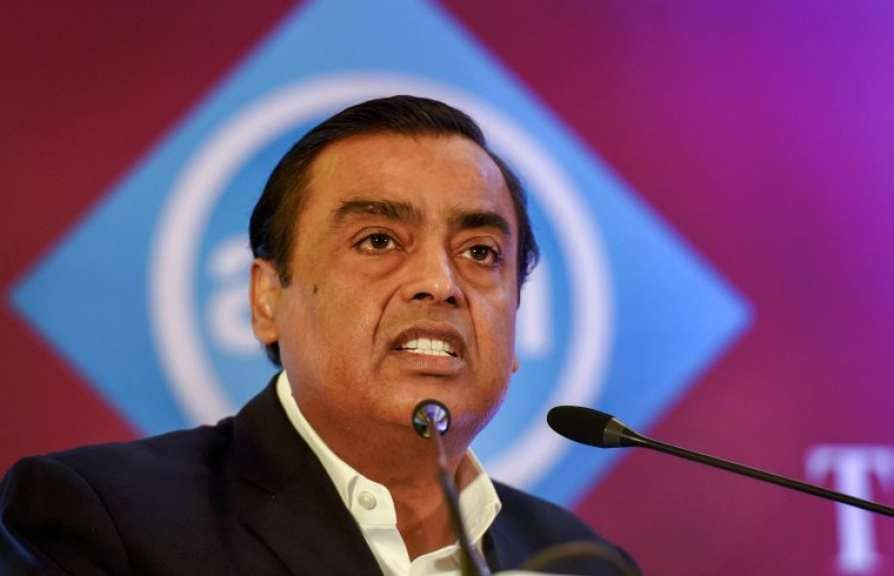
New Delhi, Dec 8: Billionaire Mukesh Ambani on Tuesday hinted at rolling out 5G telecom services in the second half of 2021 and said policy steps are needed to accelerate the early rollout of ultra-high-speed 5G services that are affordable and available everywhere.
Ambani, whose four-year-old telecom venture Jio has captured the No.1 spot offering free voice calling and data at dirt-cheap rates, also pitched for developing hardware manufacturing in India, saying the nation cannot rely on imports in such a critical area.
5G is the 5th generation mobile network that enables connecting virtually everyone and everything together including machines, objects, and devices.
India, he said, is today among the best digitally connected nations in the world.
"In order to maintain this lead, policy steps are needed to accelerate the early rollout of 5G, and to make it affordable and available everywhere," he said. "I assure you that Jio will pioneer the 5G Revolution in India in the second half of 2021."
Jio's 5G will be powered by the indigenously-developed network, hardware and technology components. "Jio's 5G service will be a testimony to your inspiring vision of AtmaNirbhar Bharat."
Jio and other service providers such as Bharti Airtel and Vodafone Idea offer 4G services. The country however also has a 2G network that supports only voice calling and text messaging.
"As many as 300 million mobile subscribers in India are still trapped in the 2G era. Urgent policy steps are needed to ensure that these underprivileged people have an affordable smartphone so that they too can benefit from direct benefit transfer into their bank accounts, and actively participate in the digital economy," he said.
India has over a billion phone users.
His company offers low-priced smartphones that allow internet access.
"I can say with utmost confidence that 5G will enable India to not only participate in the Fourth Industrial Revolution but also to lead it," he said.
As the digitalisation of the Indian economy and Indian society picks up speed, the demand for digital hardware will grow enormously.
"We cannot rely on large-scale imports in this area of critical national need," Ambani, Chairman and Managing Director of Reliance Industries Ltd, said.
Stating that many leading global companies are coming to India to set up manufacturing facilities, he said the country has developed world-class strengths in chip design.
"I clearly foresee India becoming a major hub for the state-of-the-art semiconductor industry," he said. "When all the stakeholders work together, we can surely ensure that India's success in hardware will match our success in software."
Jio Platforms, with its family of over 20 start-up partners, has built world-class capabilities in artificial intelligence, cloud computing, big data, machine learning, the internet of things and blockchain.
"We are creating compelling home-grown solutions in education, healthcare, agriculture, infrastructure, financial services and new commerce," he said. "Each of these solutions, once proven in India, will be offered to the rest of the world to address global challenges."
Ambani said India has the historic opportunity to become the world's pre-eminent digital society with ease of living for all.
"My conviction comes from the enormous transformative power of the digital technologies," he said.
India, he said, has two unique strengths - the confluence of three D's vibrant democracy, young demography and digital transformation, and the visionary and dynamic leadership of Prime Minister Narendra Modi.
While the outbreak of COVID-19 posed life-threatening challenges, high-speed 4G connectivity infrastructure has proved to be India's Digital Lifeline, he said.
Throughout 2020, India worked online, studied online, shopped online, received healthcare online, socialised online, played online. "Simply put, India thrived online."
With the coronavirus induced recession behind, Ambani said the Indian economy will not only bounce back but will also grow with unprecedented acceleration.
"India can and India will prove cynics wrong by becoming a USD 5 trillion economy," he said. "It will be a more equal India, with increased incomes, increased employment, and improved quality of life for 1 billion Indians at the middle and bottom of the economic pyramid."
Let the Truth be known. If you read VB and like VB, please be a VB Supporter and Help us deliver the Truth to one and all.
UP woman found hanging at in-laws' home; family alleges dowry murder

Maharajganj (UP) (PTI): A 29-year-old married woman was found hanging at her in-laws' home here, with her in-laws claiming it was suicide while her mother alleging murder over dowry, police said on Sunday.
According to police, Anukriti (29) had married Manoj Gond six years ago and lived with her in-laws in Mahadeva village.
Her in-laws claimed that she died by suicide after allegedly hanging herself inside a room of the house on Saturday evening, police said.
After receiving information about the incident, a police team reached the spot and sent the body for a post-mortem.
Paniyara police station in-charge Sanjay Kumar Singh said that based on a complaint filed by the woman’s mother, a case was registered on Sunday against her husband Manoj Gond, mother-in-law Punam, father-in-law Sumer Gond, and brother-in-law Munna Gond.
The complainant alleged that Anukriti was being harassed for dowry by in-laws and was murdered over dowry-related demands, Singh said.
(Assistance for overcoming suicidal thoughts is available on the state’s health helpline 104, Tele-MANAS 14416.)