Larry Page, Sergey Brin step down; Sundar Pichai promoted as Alphabet CEO
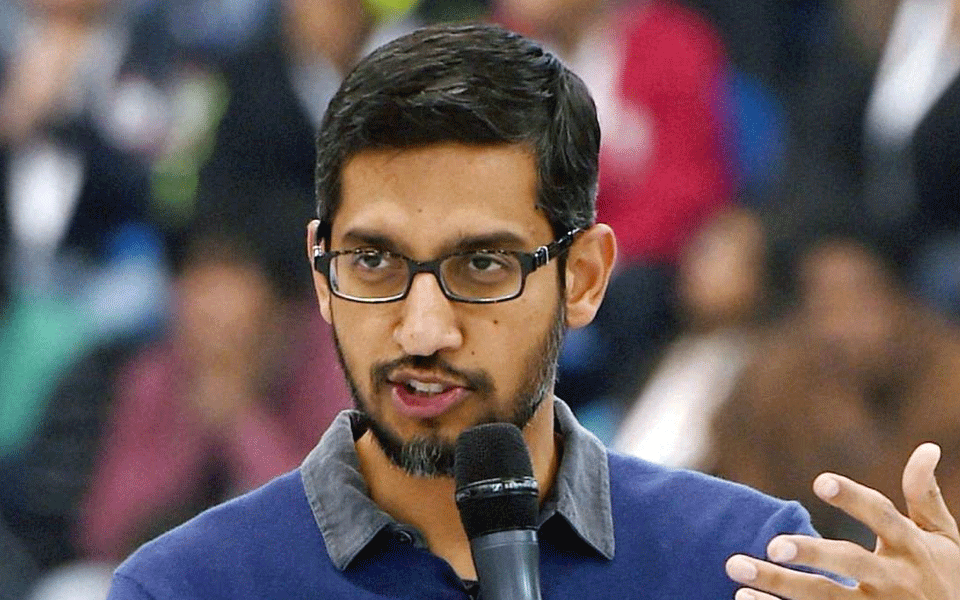
Washington: Google's India-born Chief Executive Officer Sundar Pichai will assume the leadership role at its parent firm Alphabet after the internet giant's co-founders Larry Page and Sergey Brin stepped down from its active management, making him one of the most powerful corporate leaders of the world.
Page and Brin are stepping down as CEO and president, respectively, of Alphabet, the company announced on Tuesday.
Pichai, 47, the current CEO of Google and a longtime executive at the company, will take over as CEO of Alphabet in addition to his current role.
Considered as a significant shakeup in the Silicon Valley company, the shuffle comes at a time when Google is facing mounting scrutiny over its size, data privacy practices and potential impact on society.
With Alphabet now well-established, and Google and 'Other Bets' operating effectively as independent companies, it's the natural time to simplify our management structure, the two Google co-founders wrote in a public letter.
"We've never been ones to hold on to management roles when we think there's a better way to run the company," they said.
"And Alphabet and Google no longer need two CEOs and a President. Going forward, Sundar will be the CEO of both Google and Alphabet. He will be the executive responsible and accountable for leading Google, and managing Alphabet's investment in our portfolio of Other Bets," said Page and Brin.
The cofounders will continue to serve on Alphabet's board of directors.
"We are deeply committed to Google and Alphabet for the long term, and will remain actively involved as Board members, shareholders and co-founders. In addition, we plan to continue talking with Sundar regularly, especially on topics we're passionate about!" they wrote.
Page and Brin, who founded the internet giant over two decades ago, took lesser roles in day-to-day operations in the company in 2015 when they turned Google into Alphabet.
In his statement, Pichai made it clear that the transition will not affect the Alphabet structure or the work they do day to day.
"I will continue to be very focused on Google and the deep work we're doing to push the boundaries of computing and build a more helpful Google for everyone," he wrote.
"At the same time, I'm excited about Alphabet and its long term focus on tackling big challenges through technology," he said in his email.
Pichai took over as CEO of Google in 2015 as part of the company's broader corporate restructuring to create Alphabet. Prior that, Pichai had held a variety of roles at the company, including overseeing Chrome, product chief of Google and head of the Android operating system.
Endorsing the leadership role played by Pichai ever since he was made Google CEO, Page and Sergey said the Indian-American brings humility and a deep passion for technology to their users, partners, and employees every day.
"He's worked closely with us for 15 years, through the formation of Alphabet, as CEO of Google, and a member of the Alphabet Board of Directors. He shares our confidence in the value of the Alphabet structure, and the ability it provides us to tackle big challenges through technology," they wrote.
"There is no one that we have relied on more since Alphabet was founded, and no better person to lead Google and Alphabet into the future," they said.
Pichai was born in Madurai, Tamil Nadu. He is an alumnus of Wharton business school, Stanford University and Indian Institute of Technology Kharagpur.
Let the Truth be known. If you read VB and like VB, please be a VB Supporter and Help us deliver the Truth to one and all.
What is Iran’s 10-point plan? Key demands ahead of US talks in Islamabad
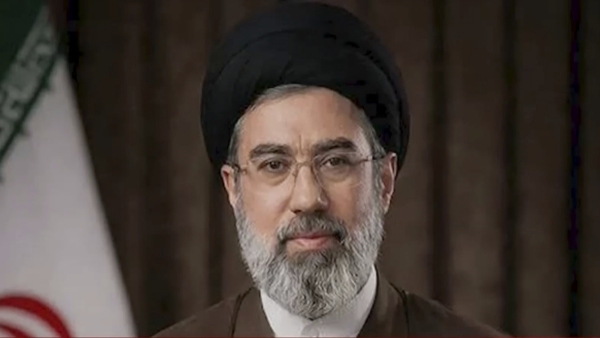
Tehran/Islamabad: Iran has outlined a 10-point plan as the basis for upcoming talks with the United States, expected to begin in Islamabad on April 11, according to a statement from the Iranian Supreme National Security Council.
The plan lays out Tehran’s key political, military and economic demands, and is being seen as a framework for negotiations following the recent escalation in the region.
Strait of Hormuz at the centre
A major focus of the plan is the Strait of Hormuz, a critical global shipping route. Iran has proposed “controlled passage through the Strait of Hormuz in coordination with the Iranian armed forces,” which it says would give the country a unique economic and geopolitical position.
The plan also calls for the “establishment of a safe transit protocol” in the Strait that would guarantee Iran’s dominance under an agreed mechanism.
Call to end conflict
Iran has demanded “the necessity of ending the war against all elements of the axis of resistance,” signalling its expectation that hostilities should stop not only in Iran but also involving allied groups in the region.
US troop withdrawal
Another key demand is the “withdrawal of US combat forces from all bases and deployment points in the region,” indicating Tehran’s long-standing position against American military presence in West Asia.
Sanctions relief and compensation
The plan places strong emphasis on economic measures. It calls for “full payment of Iran’s damages according to estimates,” along with “the lifting of all primary and secondary sanctions and resolutions of the Board of Governors and the Security Council.”
It also seeks “the release of all Iranian assets and properties frozen abroad,” which have been a major point of contention for years.
Binding global guarantee
Finally, Iran has demanded that all these terms be formally recognised through “a binding Security Council resolution,” suggesting it wants international legal backing to ensure enforcement.
What this means
The 10-point plan reflects Iran’s broader push for security guarantees, economic relief and regional influence. The upcoming talks in Islamabad are expected to test how far both sides are willing to negotiate on these demands.