Mercedes Benz, TVS Sundaram Motors celebrate 20 years of partnership with exclusive initiatives
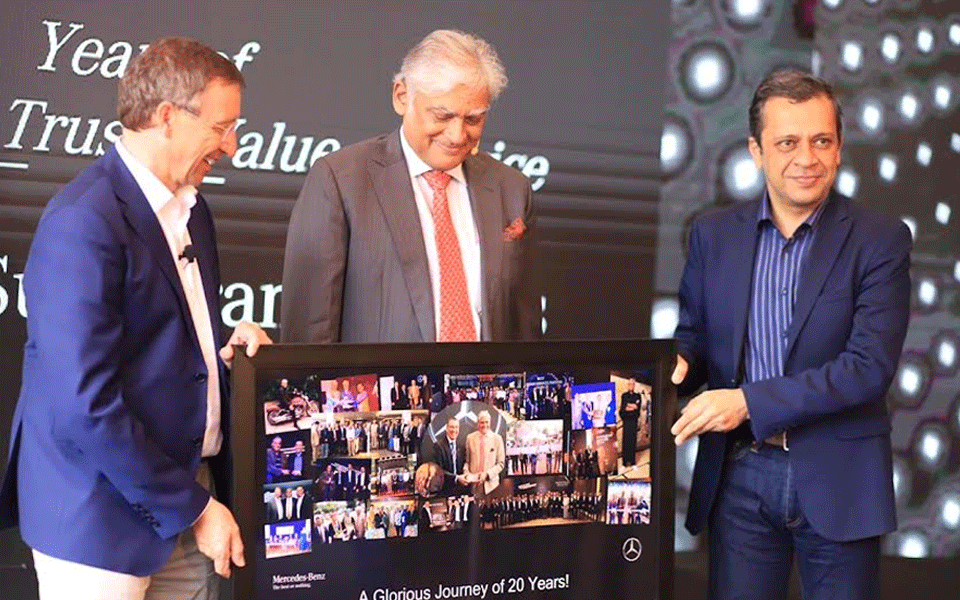
India’s largest automobile manufacturer and TVS Sundaram Motors are celebrating 20 years of their partnership.The mark the completion of 20 years milestone, Sundaram Motors has launched four unique initiatives exclusively for Mercedes-Benz Patrons.
The association between the two renowned automotive brands started on 6th Sep, 2001 at Bangalore, Karnataka and has now reached a milestone 20th year. In the last 20 years they have built a strong partnership and have set up 9 facilities across 6 cities in the 2 states of Tamil Nadu and Karnataka, making TVS Sundaram Motors the densest network in the southern region.
“Mercedes-Benz is the pioneer of luxury automobiles globally & it has always been synonymous with luxury opulence and success. TVS Sundaram Motors is yet another brand in the automobile industry that has gained the reputation for trust, value and service par excellence in the minds of its customers over the years” a press statement from Sundaram Motors stated.
“They together, have till now sold - 10,250 Mercedes-Benz cars, rendered 1,68,000 Star services, Sold more than 2,000 Pre-owned Stars and today employ a 800+ strong team to deliver the best Star Experience. The growth story is even more impressive when you look closer into the numbers. In 2001 Sundaram Motors started with 4 new car display showroom & in 2021 the company boasts of a 41 new car display capacity. In 2001 Sundaram Motors began with 20 work bays & in 2021 the company has 181 work bays. In the first 15 years Sundaram Motors expanded to 4 branches & during last 6 years Sundaram Motors added 5 more and are future ready with few more projects in the pipeline” it further added.
As part of the 20 year celebrations Sundaram Motors also launched 4 unique initiatives exclusively for Mercedes-Benz Patrons.
Key Customer Initiatives (#20yrsofStardoM):
- Sundaram Hues Studio - one stop-customized colouring solutions as per customers’ requests.
- SAFE – Sundaram Assured Future Value – Customers can drive away with total peace of mind, knowing the Assured Future Repurchase value for his / her vehicle at end of the agreed tenure.
- Dusk 2 Dawn – 24 x7 Service by Appointment – At customers’ service always.
- Sundaram Secured Service – Special Service Package with a great value proposition for cars that are more than 6 years old.
To know more, customers can connect with Sundaram Motors @ +91-9148155175 or through email at panchajanya.c@sundarammotors.com.
Let the Truth be known. If you read VB and like VB, please be a VB Supporter and Help us deliver the Truth to one and all.
US rules out use of nuclear weapons against Iran
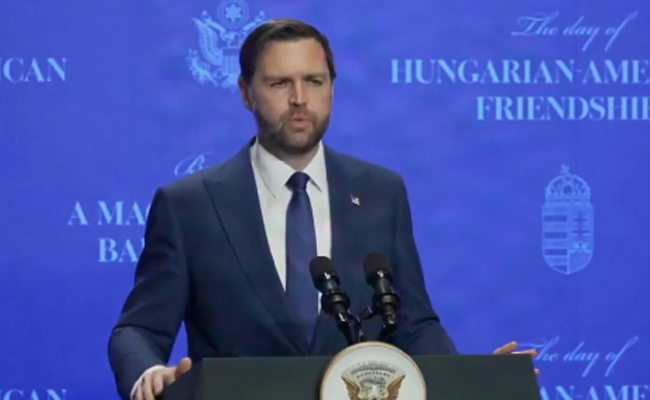
Washington DC: The White House has reportedly ruled out the use of nuclear weapons against Iran, even as uncertainty continues over ongoing peace negotiations and a deadline set by US President Donald Trump approaches.
Issues bout a possible escalation had increased after US Vice President JD Vance said that the United States has “tools in our toolkit that we so far haven’t decided to use” in dealing with Iran.
His remarks came amid rising tensions and ahead of a deadline linked to peace efforts.
The situation has attracted attention as Trump warned Iran that its “whole civilization will die tonight tonight” if an agreement is not reached by Tuesday at 8 pm.
This statement led to speculation about the possibility of extreme military measures, including a nuclear strike.
Following Vance’s comments, the White House issued a clarification distancing itself from such interpretations. In a post on X, it said, "Literally nothing @VP said here 'implies' this, you absolute buffoons." In a later statement, it added that “only the president knows” what action will be taken regarding Iran.
Literally nothing @VP said here "implies" this, you absolute buffoons https://t.co/7JU3wXMaWX
— Rapid Response 47 (@RapidResponse47) April 7, 2026