RPL case: Sebi fines Reliance Industries, Mukesh Ambani, two other entities
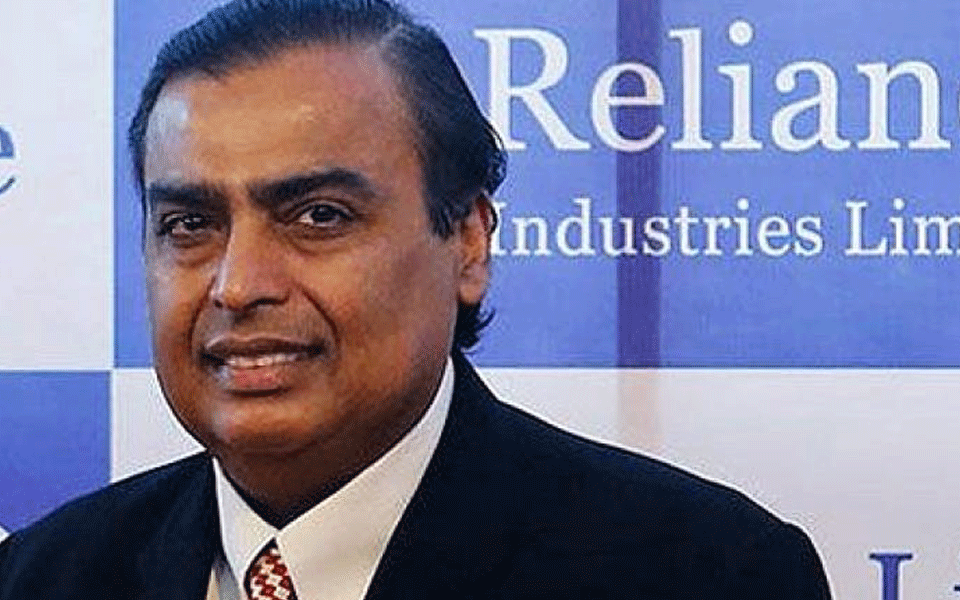
New Delhi: Regulator Sebi on Friday imposed penalties on Reliance Industries Ltd, its Chairman and Managing Director Mukesh Ambani as well as two other entities for alleged manipulative trading in the shares of erstwhile Reliance Petroleum Ltd (RPL) back in November 2007.
Fines of Rs 25 crore and Rs 15 crore have been imposed on Reliance Industries Ltd (RIL) and Ambani, respectively. Besides, Navi Mumbai SEZ Pvt Ltd has been asked to pay a penalty of Rs 20 crore and Mumbai SEZ Ltd has been directed to pay Rs 10 crore.
The case pertains to sale and purchase of RPL shares in the cash and the futures segments in November 2007. This followed RIL's decision in March 2007 to sell 4.1 per cent stake in RPL, a listed subsidiary that was later merged with RIL in 2009.
In a 95-page order, Sebi's Adjudicating Officer B J Dilip said any manipulation in the volume or price of securities always erodes investor confidence in the market when investors find themselves at the receiving end of market manipulators.
"In the instant case, the general investors were not aware that the entity behind the above F&O segment transactions was RIL. The execution of the... fraudulent trades affected the price of the RPL securities in both cash and F&O segments and harmed the interests of other investors," he said in the order.
While noting that execution of manipulative trades affects the price discovery system itself, the adjudicating officer said, "I am of the view that such acts of manipulation have to be dealt sternly so as to dissuade manipulative activities in the capital markets."
There was no immediate comment from RIL on the matter.
On March 24, 2017, Sebi had ordered RIL and certain other entities to disgorge over Rs 447 crore in the RPL case. In November 2020, the Securities Appellate Tribunal (SAT) dismissed the company's appeal against the order.
At that time, RIL had said it would challenge the tribunal's order in the Supreme Court.
Apart from ordering disgorgement of money, Sebi had in March 2017 also prohibited RIL from dealing in equity derivatives in the F&O segment of stock exchanges, directly or indirectly, for one year.
As per the order passed on Friday, Sebi said RIL had entered into a scheme of manipulative trades in respect of the sale of its stake in RPL.
However, before undertaking sale transactions in the cash segment, RIL fraudulently booked large short positions in the RPL November futures through 12 agents with whom it had entered into an agreement to circumvent position limits for a commission payment, it added.
"As a result, RIL fraudulently cornered nearly 93 per cent of open interest in RPL November Futures, when the said 12 agents took short positions in F&O Segment on its behalf," the order said.
The funding for the margin payments by the agents was provided by Navi Mumbai SEZ Pvt Ltd and Mumbai SEZ Ltd, it added.
"A common person connected with RIL had placed orders in the cash segment on behalf of RIL and in the F&O segment on behalf of the agents.
"On the date of settlement of RPL November Futures, i.e., on November 29, 2007, RIL sold 1.95 crore RPL shares on NSE cash segment in the last 10 minutes of trading resulting in fall in the prices on the cash segment, which artificially depressed the settlement price of RPL November Futures.
"This resulted in profits on the huge short positions held by the agents in RPL November Futures and the said profits were transferred back to RIL by the agents as per prior agreement. The above strategy undertaken by RIL has resulted in manipulation of settlement price of RPL November Futures and prices of RPL shares in the cash segment," the order said.
Regarding Ambani, the order said that being the RIL managing director, he was "responsible for the manipulative activities of RIL".
"I am of the view that listed companies should exhibit highest standards of professionalism, transparency and good practices of corporate governance, which inspires confidence of the investors dealing in the capital markets.
"Any attempt to deviate from such standards will not only erode the confidence of the investors but also affect the integrity of the markets... the transactions executed by noticees were structured and executed in such manner so as to escape the notice of regulatory authorities, investors as they were not in public domain.
"Therefore, I conclude that the said scheme of manipulation was deceptive and against the interest of the securities markets," the adjudicating officer said.
The noticees are RIL, Ambani, Navi Mumbai SEZ Pvt Ltd and Mumbai SEZ Ltd.
Let the Truth be known. If you read VB and like VB, please be a VB Supporter and Help us deliver the Truth to one and all.
Road crash in UP leaves 10 dead
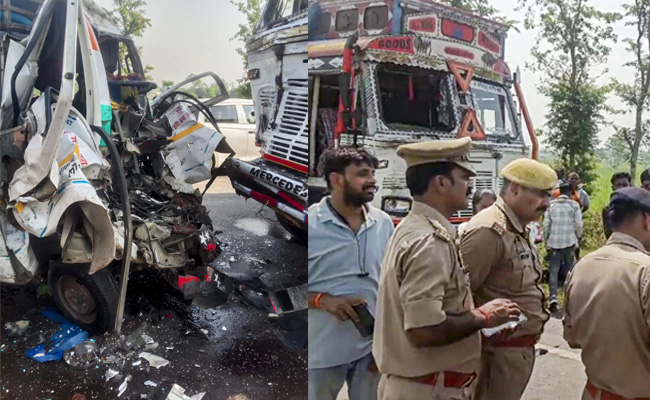
Lakhimpur Kheri (UP) (PTI): Ten people were killed when a van collided head-on with a truck on the Sisaiya-Lakhimpur national highway on Monday, police said.
The van was going to Sisaiya from Lakhimpur when the accident took place between Unchgaon and Bharehta villages.
Circle Officer of Dhaurahra, Shamsher Bahadur Singh, said all nine passengers travelling in the van and the driver were killed.
District Magistrate of Lakhimpur Kheri Anjani Kumar Singh told reporters that the van collided with a truck coming from the opposite direction, leading to nine casualties on the spot, while one succumbed to injuries at the district hospital.
Circle Officer, Dhaurahra, Shamsher Bahadur Singh told PTI, "Efforts are on to establish the identity of other deceased persons."
The seven of the deceased have been identified as Jaideep Singh (25), Pawan (23), Sohan (21), Ram Goyal (42), Sahajram (35), Pappu (18), all residents of Bahraich district and Adnan Khan (15), a resident of Lakhimpur Kheri district, police said.
Condoling the loss of lives in the accident, Uttar Pradesh Chief Minister Yogi Adityanath in a post on X, said, "The loss of life in the unfortunate road accident in Lakhimpur Kheri district is deeply distressing and heart-wrenching. My condolences are with the bereaved families."
"I have directed the local administration to provide prompt and adequate assistance to the injured and the victims. I pray to Lord Shri Ram to grant the departed souls a place at His divine feet and to bestow a speedy recovery upon the injured," Adityanath said on X.
Deputy Chief Minister Keshav Prasad Maurya and Brajesh Pathak too condoled the loss of lives in the accident.
"The loss of lives resulting from the road accident in Lakhimpur Kheri district is deeply tragic and heart-wrenching. My deepest condolences go out to the bereaved families," Maurya said.