Rupee breaks 3-day rally, down 3 Paise at 63.87 a dollar
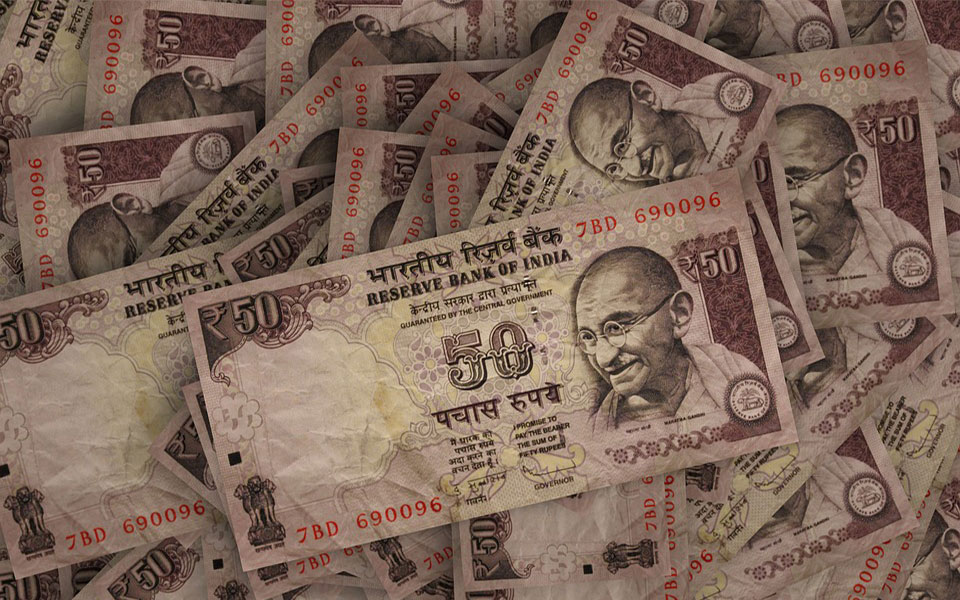
Mumbai: Snapping its three-session winning run, the rupee today ended lower by 3 paise at 63.87 against the US currency following fresh bouts of dollar demand from importers amid the US political jitters.
Trading was extremely volatile as the currency market witnessed wide swings against the backdrop of US government shutdown.
The US government shutdown went into effect at midnight on Friday after Senate negotiators failed to reach an agreement on a last minute deal to keep the government funded amid a dispute over immigration and border security.
The domestic currency oscillated between a high of 63.71 and a low of 64 a dollar.
However, the record-breaking rally in local equities along with robust capital inflows somewhat cushioned the impact of the fall.
In the meantime, country's foreign exchange reserves rose for a fifth consecutive week to yet another record high of USD 413.825 billion in the week to January 12, the RBI said.
Foreign funds and overseas investors continued their portfolio-buying spree and infused a whopping Rs 8,700 crore in the Indian capital markets this month so far on expectation of recovery in corporate earnings and attractive yields.
According to the depositories data, FPIs infused in a net amount of Rs 5,769 crore in equities and Rs 2,940 crore in the debt markets.
In the international commodity front, crude prices rebounded after a brief fall, largely helped by a drop in US drilling activity and also impacted by fighting in Syria between Turkish forces and Kurdish fighters.
Brent crude futures were trading higher at USD 68.79 a barrel in early Asian trading.
Meanwhile, domestic markets continued their relentless upward march for the fourth session on frantic buying activity in key front-line stocks induced by acceleration in corporate earnings growth and growing optimism ahead of the Budget 2018.
In contrast, most Asian stock markets were mixed and rather muted overshadowed by US political turmoil.
The flagship BSE-Sensex shot up over 286 points to end at 35,798.01, while Nifty soared 72 points at 10,966.20.
At the Interbank Foreign Exchange (forex) market, the rupee opened lower at 63.88 as compared to weekend close of 63.84 due to fresh demand for the American currency from importers and banks.
It later drifted sharply to hit day's low of 64.00, breaching the key support level on heavy dollar pressure.
The local currency, however, made a strong comeback in in later afternoon deals to touch a high of 63.71 before pulling back to settle at 63.87, showing a loss of 3 paise, or 0.05 per cent.
The rupee had strengthened by a healthy 20 paise in three-day rally after recovering from a two-week low.
The RBI meanwhile fixed the reference rate for the dollar at 63.8895 and for the euro at 78.1241.
On the global front, the greenback remained broadly lower against other major currencies, though rising Treasury yields seem to be assuring the US currency's appeal.
The dollar index, which measures the greenback's value against a basket of six major currencies, was down at 90.32 in early trade.
In cross-currency trades, the rupee retreated against the pound sterling to conclude at 88.79 per pound from 88.54 and remained weak against the Japanese yen to finish at 57.70 per 100 yens from 57.68 last Friday.
The home unit, however recovered marginally against the euro to close at 78.25 from 78.27 earlier.
Elsewhere, the Euro rebounded to trade slightly higher against the US dollar supported also by news of German Social Democrats (SPD) voting in favour of coalition talks with Angela Merkel's CDU/CSU.
The common currency booked a fifth straight week of gains in advance of Thursday's ECB meeting.
At the same time, the British pound traded in a tight range ahead of the latest UK jobs and data and the first look at Q4 GDP this week.
In forward market today, premium for dollar decline due to mild receiving from exporters.
The benchmark six-month premium payable in June eased to 122-124 paise from 123-125 paise and the far forward December 2018 contract also moved down to 259-261 paise from 261-263 paise previously.
Let the Truth be known. If you read VB and like VB, please be a VB Supporter and Help us deliver the Truth to one and all.
T'gana RTC strike: Talks between govt, employees successful

Hyderabad (PTI): Talks between employees of Telangana State Road Transport Corporation (RTC) who were on strike and the state government concluded successfully on Friday as the government agreed to the key demands of the workmen.
Following a day-long marathon of talks between the leaders of the employees' Joint Action Committee (JAC) and the cabinet sub-committee, the government announced after midnight that it acceded to the demands, including a merger of RTC with the government, 11 per cent pay revision and elections to the employees' unions.
A committee comprising officials and employee leaders would be appointed over the merger of RTC with the government, it said.
The RTC management has also agreed to address the remaining issues as well, an official release said.
The employees would call off their strike and the RTC buses would hit the roads shortly, it said.
The employees had been on an indefinite strike since April 22 over a series of demands, including the merger of RTC with the government.
Earlier in the day, a driver of the RTC, who attempted suicide on April 23 during the strike, died at a hospital here in the early hours of Friday.
Shankar Goud, a 55-year-old driver, set himself ablaze by pouring petrol at Narsampet in Warangal district when the employees were staging a protest on Thursday in support of their demands.
Goud suffered serious burns, was initially admitted to a state-run hospital in Warangal, and later shifted to a super-speciality hospital in Hyderabad for advanced treatment.
"He succumbed (to injuries) at about 1.30 am on Friday," a senior official said.
The driver’s body was taken to his relative’s village, Muttojipet in Warangal district, for funeral rites.
Tension prevailed in Muttojipet as his family members and RTC employees attempted to take the body to the Narsampet bus station, where he worked, to enable his colleagues to pay their last respects. However, police did not permit this, citing law-and-order concerns.
This led to a deadlock before the funeral could proceed.
Union Minister Bandi Sanjay Kumar criticised the Telangana government for not allowing the body to be taken to the Narsampet bus station.
Kumar, Minister of State (Home), visited Muttojipet village in Warangal district, where the funeral was held, and paid homage to Goud.
“They (family members) want to take the body to the bus depot for five minutes. Is the RTC bus depot in Pakistan or Bangladesh? They are emotionally attached to taking the body there. The government is hurting sentiments and creating fear among RTC employees,” Kumar told reporters.
He also expressed anger at the police for not allowing the body to be taken to the bus station and staged a protest, according to a release from his office.
RTC employees and BJP workers attempted to take the mortal remains in an ambulance to Narsampet, but were stopped by the police.
Later, after discussions with the police, the family members and RTC employees agreed to conduct the funeral in the village.
Sanjay Kumar, stating he would abide by the family’s decision, left the village after the funeral was conducted there.
Transport Minister Ponnam Prabhakar said an ex gratia of Rs 10 lakh, a house, and a government job would be provided to the kin of Goud.
Chief Minister A Revanth Reddy expressed shock over the employee’s death and conveyed deep condolences to the grieving family, according to the release.
The RTC employees’ JAC had earlier announced an agitation programme from April 24 to 29, including silent marches and submission of memorandums to MLAs and other leaders.