Rupee rises 23 paise to 94.95 against US dollar in early trade

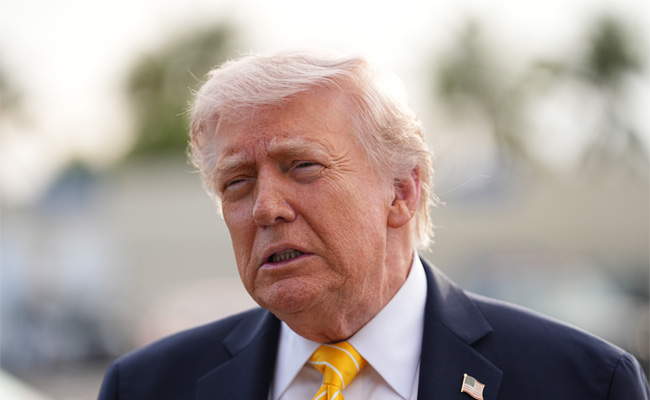
Mumbai (PTI): The rupee appreciated by 23 paise to 94.95 against the US dollar in early trade on Wednesday as Brent crude prices retreated from their elevated level after US President Donald Trump hinted at a possible deal with Iran.
Forex traders said oil prices fell to USD 108 per barrel, as signs of easing geopolitical tensions in the Middle East offset the lingering supply concerns.
At the interbank foreign exchange market, the rupee opened at 95, then gained some ground and touched an early high of 94.95, registering a gain of 23 paise from its previous low.
The rupee was later trading at 95.10 against the greenback.
On Tuesday, the rupee settled at 95.18 against the US dollar, after witnessing an all-time intraday low of 95.44 on Tuesday on possible RBI intervention after investors retreated from riskier assets amid renewed clashes in the Gulf and targeting of UAE infrastructure, which reignited supply chain fears.
The rupee, which fell to its all-time low of 95.44 on Tuesday, gained this morning as Gift Nifty indicated a positive opening of 200 points, said Anil Kumar Bhansali, Head of Treasury and Executive Director Finrex Treasury Advisors LLP.
The dollar Index fell to 98.30, and Asian currencies rose against the dollar this morning in Asian trade, after Trump hinted at a possible deal with Iran, Bhansali added.
Meanwhile, the dollar index, which gauges the greenback's strength against a basket of six currencies, was trading at 98.28, down 0.16 per cent.
Brent crude, the global oil benchmark, was trading lower by 1.32 per cent at USD 108.42 per barrel in futures trade, after Trump paused Operation Freedom.
President Donald Trump has suspended “Project Freedom,” to escort ships through the Strait of Hormuz, claiming progress in negotiations with Iran toward an agreement to end the war.
In a post on Truth Social on Tuesday, Trump said, “Great progress has been made toward a complete and final agreement with representatives of Iran.”
Project Freedom was launched on Monday to escort ships, stranded due to the closure of the Strait of Hormuz, out to safety. Trump had announced the operation on Sunday, and the US Central Command began implementing it the next day.
However, the Project led to friction in the vicinity of the narrow seaway, a key route for transporting one-fifth of the global oil supplies, with the UAE claiming that its ships were attacked by Iran. The US also claimed to have destroyed several Iranian small boats.
On the domestic equity market front, Sensex jumped 657.22 points to 77,675.01 in early trade, while the Nifty rallied 218 points to 24,250.85.
Foreign Institutional Investors sold equities worth Rs 3,621.58 crore on Tuesday, according to exchange data.
Let the Truth be known. If you read VB and like VB, please be a VB Supporter and Help us deliver the Truth to one and all.
Bhojshala case: Disputed structure built from remains of pre-existing temples, claims ASI
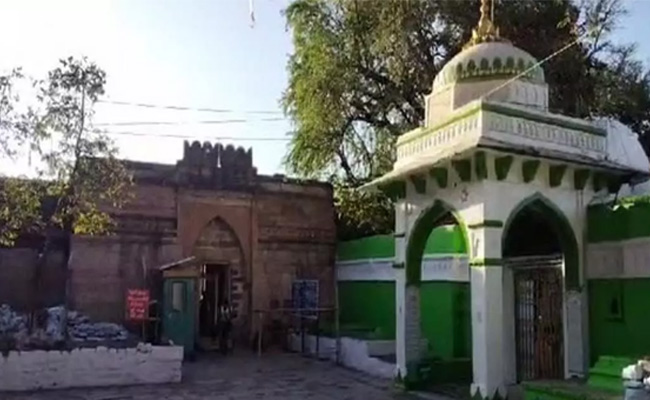
Indore (PTI): The ASI has told the Madhya Pradesh High Court that a massive structure dating back to the Paramara kings' rule existed at the disputed Bhojshala temple-Kamal Maula mosque complex, and the current structure was built from the remains of temples.
The Archaeological Survey of India (ASI) made the claim on Tuesday based on its 98-day scientific survey and over 2,000-page report.
The Hindu community considers Bhojshala a temple dedicated to Vagdevi (Goddess Saraswati), while the Muslim side claims the monument as the Kamal Maula Mosque. The disputed complex is protected by the ASI.
During the hearing before Justices Vijay Kumar Shukla and Alok Awasthi of the HC's Indore bench, Additional Solicitor General Sunil Kumar Jain, representing the ASI, presented a detailed account of the scientific survey conducted two years ago at the complex.
Referring to the ASI's survey report, he said, "Retrieved architectural remains, sculptural fragments, large slabs of inscriptions with literary texts, Nagakarnika inscriptions on pillars, etc, suggest that a large structure associated with literary and educational activities existed at the site. Based on scientific investigations and archaeological remains recovered during the investigations, this pre-existing structure can be dated to the Paramara period."
It can be said that the existing structure was made from the parts of earlier temples, based on scientific investigations, survey and archaeological excavations conducted, study and analysis of retrieved finds, study of architectural remains, sculptures, and inscriptions, art and sculptures, Jain said quoting the report.
Summarising the report, he also drew the court's attention to the fact that the archaeological study identifies that many architectural components, such as pillars and beams, were originally part of temple structures before being repurposed for a mosque.
"The evidence of this transition includes Sanskrit and Prakrit inscriptions that were damaged or hidden, alongside sculptures of deities and animals that were often mutilated or defaced," Jain contended.
The report also states that "all Sanskrit and Prakrit inscriptions are older than the Arabic and Persian inscriptions, indicating that users or engravers of the Sanskrit and Prakrit inscriptions occupied the place earlier".
In light of the Muslim side's earlier objections, the bench wanted to know why there were some discrepancies in the ASI's responses regarding the status of the disputed complex in the cases filed over the years.
The Additional Solicitor General argued that earlier studies of the complex involved only officials, while the current survey involved scientists and the use of advanced technologies such as Ground Penetrating Radar (GPR).
The hearing in the Bhojshala case will continue on Wednesday.
The high court has been regularly hearing four petitions and one writ appeal regarding the religious nature of the Bhojshala temple-Kamal Maula mosque complex since April 6.