Sensex falls by 160 pts on sell-off in IT, healthcare shares as RBI keeps rate unchanged
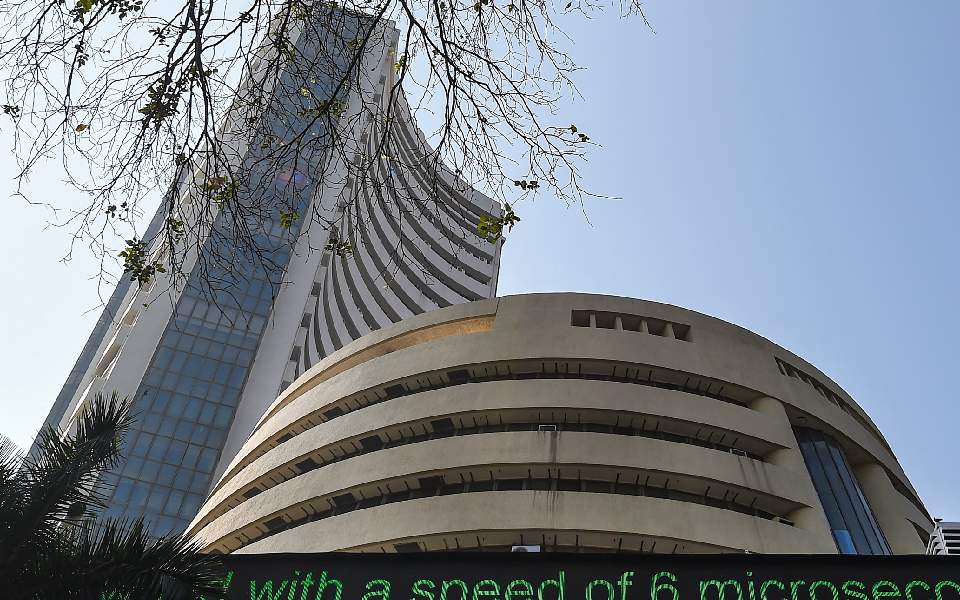
Mumbai, Aug 6 (PTI): Falling for the second day, benchmark BSE Sensex declined by 160 points on Wednesday due to selling in IT and healthcare shares amid the RBI policy decision to keep the key interest rates unchanged.
The 30-share BSE Sensex fell 166.26 points or 0.21 per cent to settle at 80,543.99 with 18 of its constituents ending lower and 12 with gains. During the day, it declined 261.43 points or 0.32 per cent to hit a low of 80,448.82.
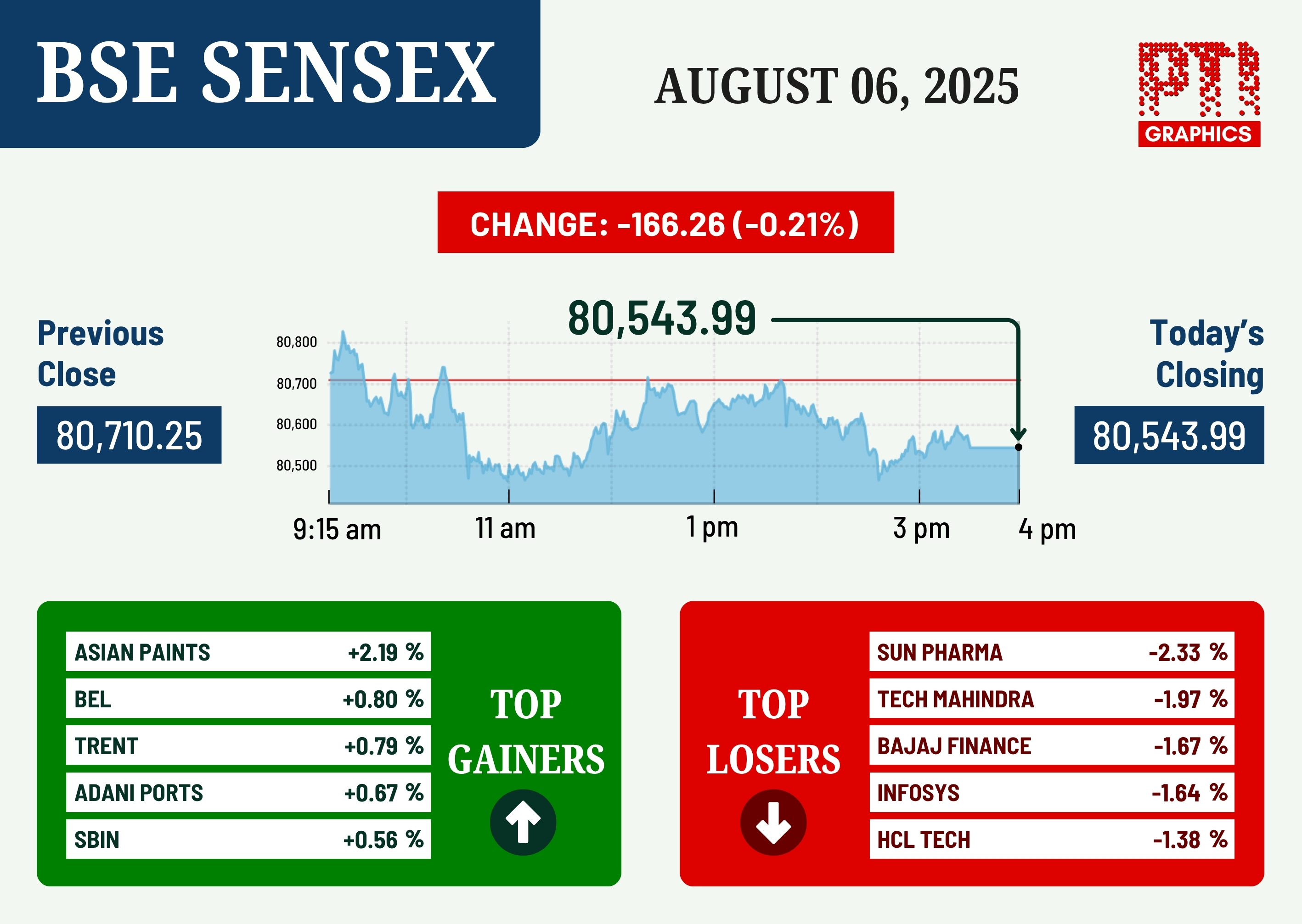
The 50-share NSE Nifty dipped 75.35 points or 0.31 per cent to close at 24,574.20. In the intraday session, the index decreased 110.35 points or 0.44 per cent to hit a low of 24,539.20.
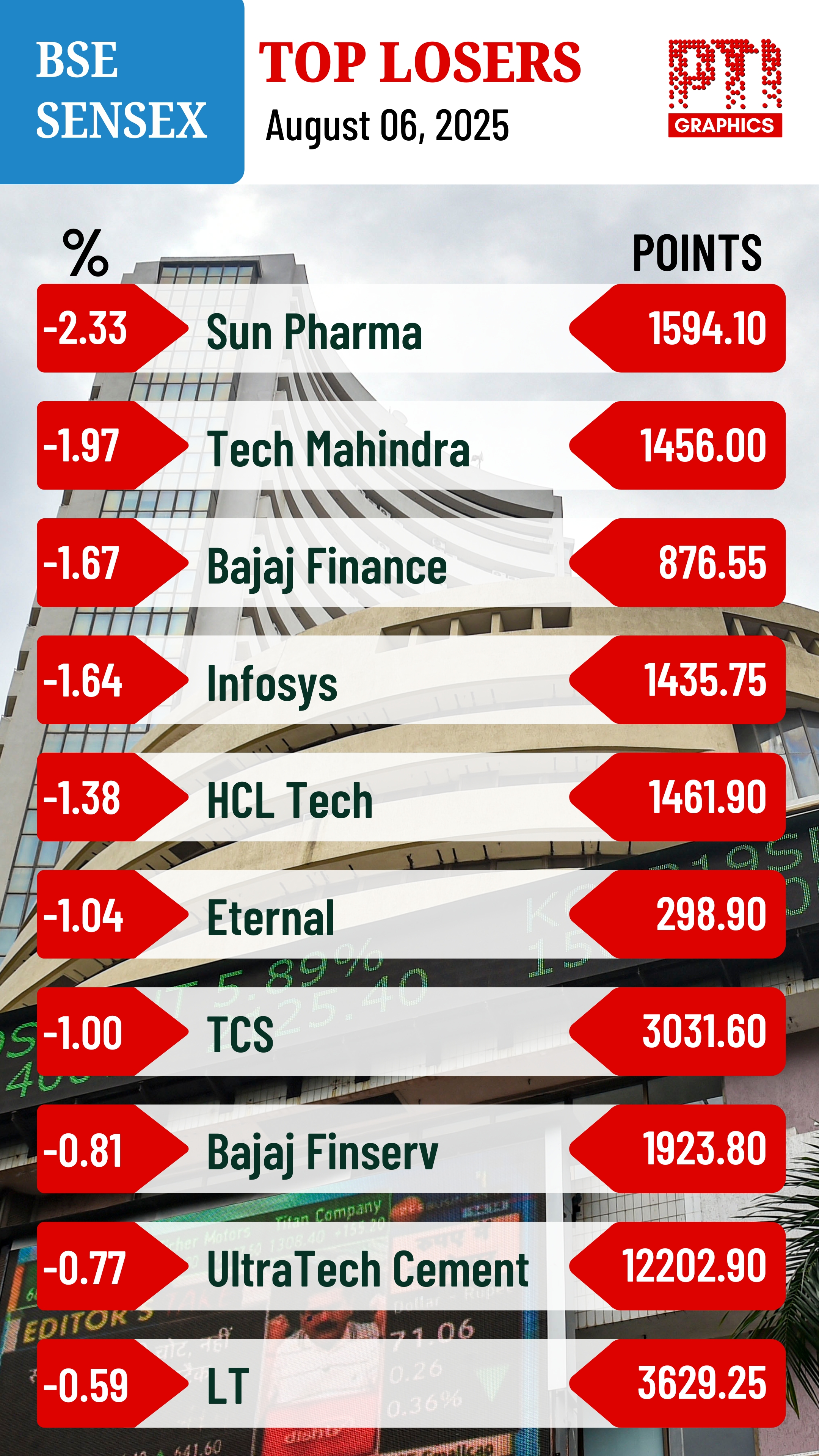
Among the Sensex firms, Sun Pharmaceuticals, Tech Mahindra, HCL Technologies, Infosys, Bajaj Finance, Eternal, Tata Consultancy Services, UltraTech Cement, Bajaj Finserv, Tata Steel, ITC and L&T were the major laggards.
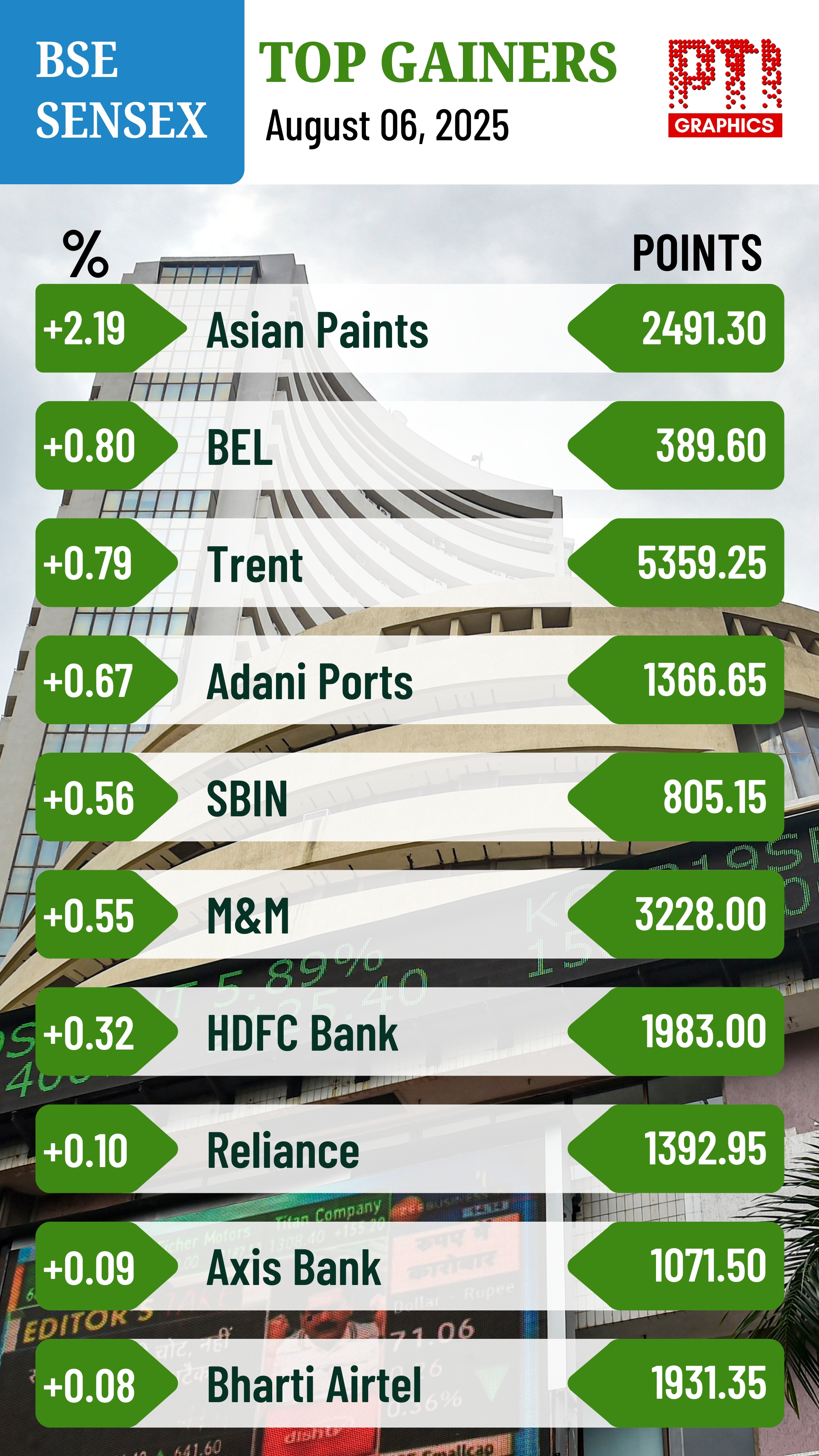
Asian Paints, Mahindra & Mahindra, BEL, Adani Ports, State Bank of India, Trent, HDFC Bank were among the gainers.
"Despite renewed trade tensions—stemming from the U.S.—the domestic market remained resilient, holding firm near the key support level of 24,500. The pharma sector underperformed, emerging as a notable casualty of the tariff warnings," Vinod Nair, Head of Research, Geojit Investments, said.
The Reserve Bank of India (RBI) kept its policy interest rate unchanged on Wednesday, as policymakers weighed the risks posed by US President Donald Trump's trade policies and the uncertainties surrounding the potential for higher tariffs.
The RBI also retained the GDP growth projection for the current fiscal year at 6.5 per cent while lowering the inflation forecast to 3.1 per cent from 3.7 per cent.
The BSE smallcap gauge declined 1.14 per cent and the midcap index by 1 per cent.
Among sectoral indices, Focused IT fell by 1.78 per cent, followed by Heathcare (1.72 per cent), IT (1.64 per cent), Realty (1.55 per cent), Teck (1.20 per cent), Industrials and Capital Goods (0.83 per cent each), FMCG (0.80 per cent), Telecommunication (0.75 per cent) were among the laggards.
Bankex is the only gainer.
The market capitalisation of BSE-listed firms eroded by Rs 3,50,296.28 crore to Rs 4,45,19,999.04 (USD 5.08 trillion) in two days of fall in the equity market.
"Participants were awaiting the outcome of the MPC meeting, which was in line with expectations, as the policy rate remained unchanged and the neutral stance continued. As a result, there was no significant market reaction," Ajit Mishra, SVP, Research, Religare Broking Ltd, said.
In Asian markets, Japan's Nikkei 225, Shanghai's SSE Composite index, and Hong Kong's Hang Seng closed in the positive territory, while South Korea's Kospi settled on a flat note.
The European markets are trading in the green territory. The US markets ended lower on Tuesday.
Global oil benchmark Brent crude rose 1.61 per cent to USD 68.73 a barrel.
Foreign Institutional Investors offloaded equities worth Rs 22.48 crore while Domestic Institutional Investors purchased equities worth Rs 3,840.39 crore on Tuesday, according to exchange data. Sensex fell by 308.47 points to close at 80,710.25 and Nifty dipped 73.20 points to 24,649.55 on Tuesday.
Let the Truth be known. If you read VB and like VB, please be a VB Supporter and Help us deliver the Truth to one and all.
Congress using hijab issue to pacify minority anger, alleges Karnataka LoP R Ashoka
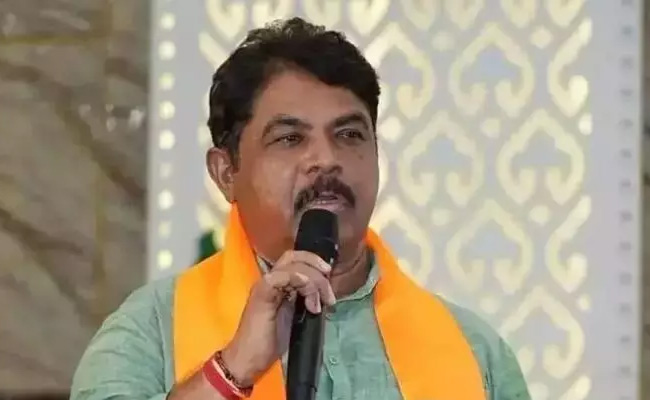
Bengaluru: Leader of Opposition in the Assembly R. Ashoka has accused the Congress government of using the hijab issue to placate what he described as discontent among minority voters after the Davanagere by-election.
In a post on X on Wednesday, Ashoka alleged that the state government, instead of addressing issues such as price rise, corruption, farmers’ distress and law and order, was attempting to retain its minority vote base by reviving the hijab issue.
Referring to the 2022 dress code introduced by the BJP government, which prohibited hijab in schools and colleges, Ashoka said the Karnataka High Court had upheld the policy and emphasised the importance of discipline in educational institutions.
He questioned the Congress government’s move to revisit the issue and asked whether setting aside the court-backed policy to benefit one community could be described as secularism.
Ashoka further alleged that while the government was willing to permit hijab, it continued to prohibit saffron shawls.
He accused the government of dividing students on religious lines rather than treating schools and colleges as spaces of equality.
Drawing a comparison with Mamata Banerjee’s government in West Bengal, Ashoka claimed that excessive appeasement politics had harmed the state and warned that the Congress in Karnataka could face a similar political response.
He said voters in Karnataka would teach the Congress a lesson for what he termed “vote-bank politics” and for compromising constitutional and judicial principles.