Services sector activities contract sharply in May; firms cut jobs: Survey
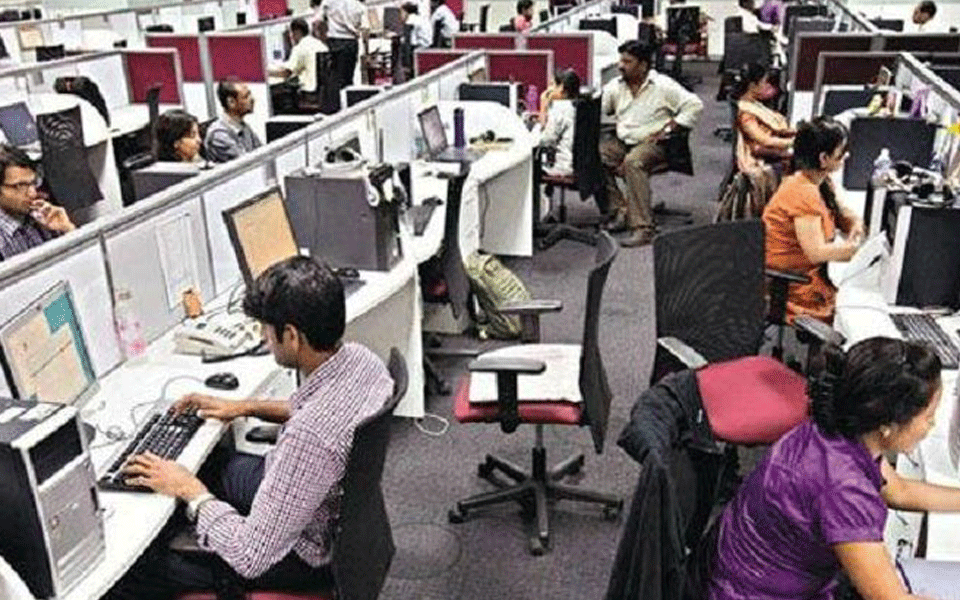
New Delhi: India's service sector activities declined sharply in May as the coronavirus pandemic continued to impair business operations, restrict consumer footfall at shops and resulted in job losses, a monthly survey said on Wednesday.
Reflecting a fall in output at an "extreme rate once again", the IHS Markit India Services Business Activity Index stood at 12.6 in May.
Although the headline figure rose from April's unprecedented low of 5.4, the score remained at a level, which prior to the coronavirus pandemic was unparalleled in over 14 years of data collection and pointed to an extreme drop in services activity across India, the survey noted.
A print above 50 means expansion and a score below that denotes contraction, as per the IHS Markit India Services Purchasing Managers' Index (PMI).
According to the survey, output sank sharply due to extended business shutdowns and very weak demand conditions.
"Service sector activity in India is still effectively on hold, latest PMI data suggest, as output fell at an extreme rate once again during May," Joe Hayes, Economist at IHS Markit said.
Hayes noted that demand for services, both domestically and overseas, continued to plummet in May as clients' businesses remained closed and footfall was drastically below normal levels.
Employment continued to fall in response to weak demand and expectations of further challenging conditions, the survey said.
The Composite PMI Output Index, which measures combined services and manufacturing output, also signalled a severe contraction in private sector business activity in May.
The score, which was at 14.8 compared to 7.2 in April, was consistent with a decline in output which was unparalleled prior to the COVID-19 outbreak, the survey said.
Hayes said that with economic output set to fall enormously in the first half of 2020, it is clear that the recovery to pre-COVID-19 levels of gross domestic product (GDP) is going to be very slow.
India was already in the midst of a protracted economic slowdown before the virus hit due to a festering crisis among shadow lenders and declining consumer demand and private investment. Its GDP grew by 4.2 per cent in 2019-20, the slowest pace in 11 years.
On Monday, Moody's Investors Service downgraded India to the lowest investment grade level and kept it on negative watch, largely because the country faces a prolonged period of slower growth relative to its potential and rising debt levels.
Moody's Investors Service, S&P Global Ratings and Fitch Ratings are predicting the first contraction in GDP for India in over four decades and a fiscal deficit blowout following COVID-19 disruptions.
Meanwhile, on Tuesday, Prime Minister Narendra Modi asserted that India will tide over the coronavirus pandemic and will get back on track with the government's decisive policies.
Let the Truth be known. If you read VB and like VB, please be a VB Supporter and Help us deliver the Truth to one and all.
BJP has history of ‘contradictory alliances’, says BK Hariprasad
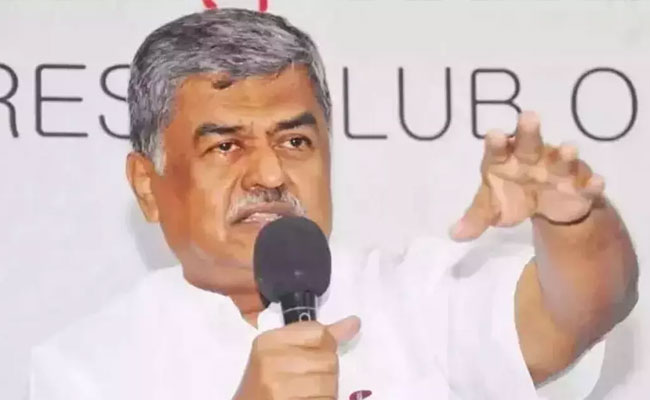
Bengaluru: Congress MLC B. K. Hariprasad has launched a sharp attack on the BJP, accusing the party of hypocrisy over its criticism of alliance politics in Tamil Nadu.
In a post on X on Friday, Hariprasad said BJP leader B. L. Santhosh criticising the Congress party’s alliance politics in Tamil Nadu was “not just laughable, but the height of political contradiction.”
He said the Congress has always joined hands with like-minded parties to protect secular and democratic values in the country.
Hariprasad questioned the BJP over several of its past and present alliances across the country. Referring to Jammu and Kashmir, Punjab, Tripura, Bihar and Maharashtra, he accused the BJP of sharing power with parties it had earlier criticised.
He alleged that the BJP had aligned with separatist and corruption-linked political forces in different states for political gains.
“The BJP, which speaks against alliances today, should first look at its own political history,” he said, adding that the party’s record was full of “contradictions and changing stands.”
Hariprasad also accused the BJP of using central agencies such as the Enforcement Directorate, Income Tax Department and CBI as political tools to target opposition leaders, topple governments and influence electoral mandates.
He further claimed that the people of Tamil Nadu had strongly rejected the BJP and its ideology in the recent election.
“Congress forms alliances to protect the Constitution, secularism and national unity, while the BJP enters into alliances only for power,” he said.