Silver, gold script sharp comeback as US-Iran ceasefire calms global jitter
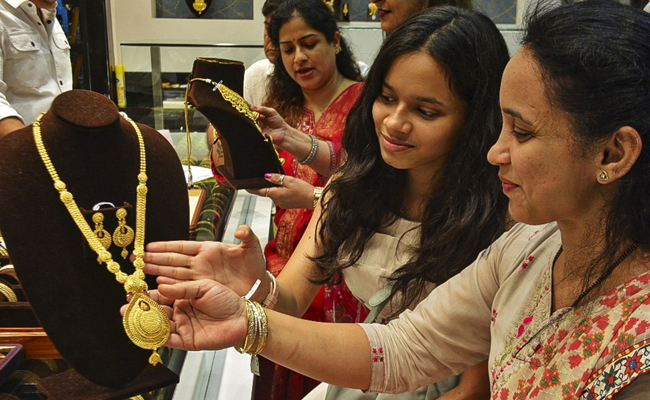
New Delhi (PTI): Silver prices surged Rs 11,000 to Rs 2.51 lakh per kilogram in the national capital on Wednesday, while gold advanced to Rs 1.56 lakh per 10 grams amid strong global cues after the US and Iran agreed to a two-week ceasefire.
According to the All India Sarafa Association, the white metal zoomed by Rs 11,000, or nearly 5 per cent, to Rs 2,51,000 per kg (inclusive of all taxes) from Tuesday's closing level of Rs 2,40,000 per kg.
Gold of 99.9 per cent purity also appreciated by Rs 3,200, or 2.09 per cent, to Rs 1,56,400 per 10 grams (inclusive of all taxes). It settled at Rs 1,53,200 per 10 grams in the previous market session.
Analysts said bullion prices strengthened as geopolitical tensions in West Asia eased, triggering a broader relief rally across global financial markets.
Gold maintained strong gains and approached a three-week high on Wednesday as improved global risk sentiment, along with a pullback in US dollar and crude oil prices, boosted demand for precious metals, Saumil Gandhi, Senior Analyst of Commodities at HDFC Securities, said.
The positive momentum came after an agreement reached just before a self-imposed deadline by US President Donald Trump, who confirmed a pause in military action, conditional on the reopening of the Strait of Hormuz.
Iran also signalled that safe passage through the Strait would be possible during the ceasefire period, further easing supply concerns.
In the overseas markets, spot gold gained USD 97.48, or 2.07 per cent, to USD 4,803.33 per ounce, while silver was trading 6 per cent higher at USD 77.33 per ounce.
"Spot gold in the international markets surged on Wednesday after the announcement of a temporary ceasefire in the Iran war," Praveen Singh, Head of Commodities at Mirae Asset Sharekhan, said.
He added that commodities, bonds and equities rallied after crude oil prices crashed nearly 20 per cent on the ceasefire announcement, as a decline in energy rates will reduce interest rate hike chances by global central banks, including the US Federal Reserve.
Echoing similar sentiments, Kaynat Chainwala, AVP Commodity Research, Kotak Securities, said precious metal prices rose up to 7 per cent as the dollar slipped below 99 on US-Iran ceasefire relief, temporarily easing fears of prolonged energy supply shocks and the associated inflationary fallout.
The rally in bullion ran alongside a broader relief rally in global markets. Throughout the conflict, gold's traditional safe-haven appeal has been tempered by liquidity stress, as investors were compelled to liquidate bullion positions to cover losses elsewhere in their portfolios, she added.
"With the ceasefire conditional and compliance around the Strait of Hormuz still uncertain, any signs of a breach or collapse could quickly reverse sentiment and renew downside risk across precious metals," Chainwala said.
Let the Truth be known. If you read VB and like VB, please be a VB Supporter and Help us deliver the Truth to one and all.
Riyan Parag likely to be fined 25 percent of match fees for vaping inside dressing room
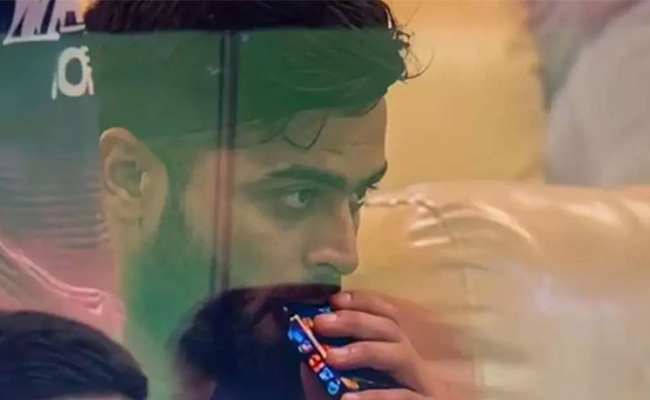
New Delhi (PTI): Rajasthan Royals captain Riyan Parag is set to be fined 25 per cent of his match fee for bringing the game into "disrepute" after being caught vaping on camera during the IPL game against Punjab Kings in Mullanpur.
Parag's actions during the Royals' chase on Tuesday night drew condemnation on social media.
PTI has learned that on field umpires Tanmay Srivastava and Nitin Menon had not reported the matter to match referee Amit Sharma right after the game. They only did that after seeing visual proof and Sharma found Parag guilty for a code of conduct breach as per the IPL guidelines.
The Level 1 offences carries 25 per cent deduction from match fees and one demerit point.
"He is set to be fined a portion of his match fees and a demerit point for a Level 1 offence," said an IPL source.
The Indian government had banned e-cigarettes back in 2019, prohibiting their production, sale and distribution. As per the law, the offender faces imprisonment up to one year and/or a Rs one lakh fine for a first time offence.
"Article 2.21 of IPL Code of Conduct is intended to cover all types of conduct that bring the game into disrepute and which is not specifically and adequately covered by the specific offences set out elsewhere in this Code of Conduct, including Article 2.20," the IPL Code of Conduct states.
"By way of example, Article 2.21 may (depending upon the seriousness and context of the breach) prohibit, without limitation, the following: (a) public acts of misconduct; (b) unruly public behaviour; and (c) inappropriate comments which are detrimental to the interests of the game.
"When assessing the seriousness of the offence, the context of the particular situation, and whether it was deliberate, reckless, negligent, avoidable and/or accidental, shall be considered.
"Further, the person lodging the Report shall determine where on the range of severity the conduct lays (with the range of severity starting at conduct of a minor nature (and hence a Level 1 Offence) up to conduct of an extremely serious nature (and hence a Level 4 Offence)."
Since it is a Level 1 offence there was no need for a hearing.
Parag, who has not had the best of times with the bat this IPL, was seen inhaling an e-cigarette, also known as vaping, in the dressing room during the live broadcast of their game against Punjab Kings. Royals won the game to end Kings' unbeaten run in the tournament.
This is not the first controversy to hit the Royals this season. Earlier this month, team manager Romi Bhinder was fined Rs one lakh for breaching PMOA protocol after being found using his phone in the dugout.
IPL and BCCI officials involved in the conduct of the IPL termed it as a careless act in the age of social media and prying TV cameras.
Royals next host Delhi Capitals at home on Friday night.