Stand up and say it’s not the country our founding fathers envisaged,Infosys’ co-founder tells youth
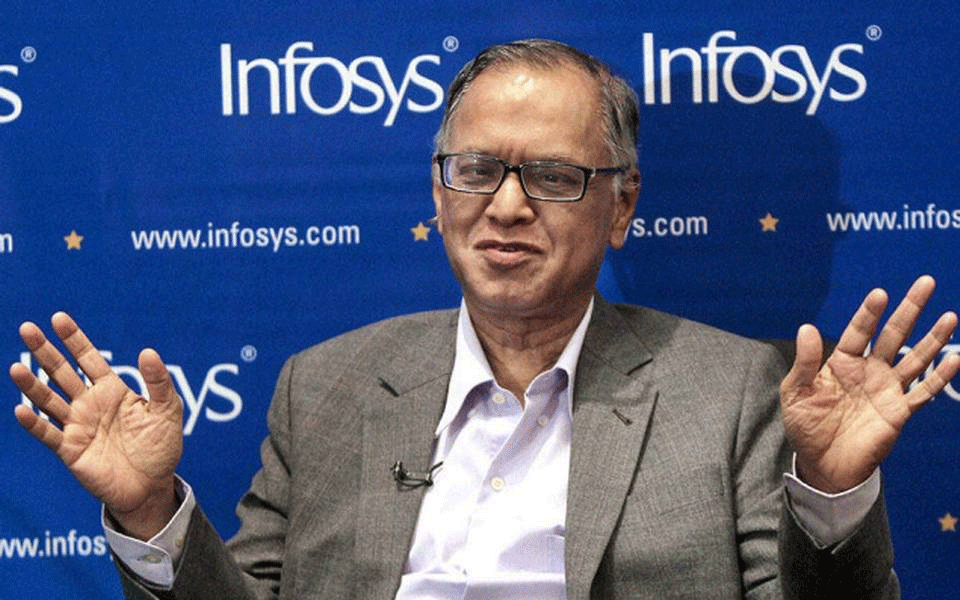
Mumbai, Jul 14: Infosys co-founder Narayana Murthy said Saturday that looking at "what is happening in different parts of the country today", the youth need to state bluntly that this was not the country for which our forefathers got freedom.
Talking about his spat with Vishal Sikka, Infosys' first non-promoter chief executive who quit in 2017, he said he had to speak up when he saw core values of the IT giant being thrown into the "dustbin".
Speaking at a panel discussion at St Xavier's College here, Murthy referred to Sikka's confrontation with him and other promoters, without naming him, when asked about the concerns he had expressed about the way Infosys was being led after his retirement.
"There was not a single word in public that I have spoken about the business strategy or the actions of the executive," Murthy said.
"However, when the question of value systems we had built for over 33 years making huge sacrifices (came up), when you see those value systems being thrown to dustbin, then automatically the leaders in our society and country have to stand up and express their anguish and disappointment," he said.
"Otherwise we would have allowed those mistakes to continue. (In) 2014 CEO (Sikka) was given 55 per cent hike on (salary of) 7 million USD....COO (then Chief Operating Officer Pravin Rao) was given 30 per cent hike. No middle-level fellow was given any salary increase," he said.
"Security guards (were) told to work an extra day without increase in salary or overtime. I think that is a serious violation of values," he added.
"Therefore, if somebody like me who built the company from scratch with the help of six junior colleagues, if I don't stand up for the erosion of the value systems, then I would have failed in our duty singularly," Murthy added.
If the core values of Infosys such as "leadership by example, fairness, transparency, accountability" were "thrown to the dust, then you have to stand up and voice your anguish and disappointment", he stated.
Sikka quit in 2017 after almost a year of public dispute with Murthy and other promoter shareholders.
Murthy further made the point that Indians generally tend not to "displease" anybody even when it is needed.
"If you look at what is happening in different parts of the country today, it is time that we, especially the youth, stood up and say this is not the kind of the country our forefathers had got the freedom for.
"But how many of us are doing it? Nobody is doing it, sadly. That's the reason why this country is in this state that it is. Nobody wants to displease anybody by saying what is wrong," he added.
Let the Truth be known. If you read VB and like VB, please be a VB Supporter and Help us deliver the Truth to one and all.
What is Iran’s 10-point plan? Key demands ahead of US talks in Islamabad
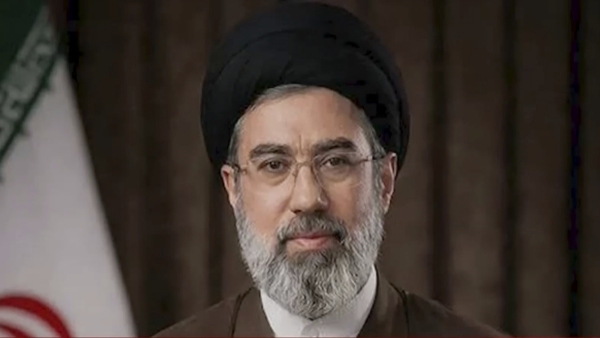
Tehran/Islamabad: Iran has outlined a 10-point plan as the basis for upcoming talks with the United States, expected to begin in Islamabad on April 11, according to a statement from the Iranian Supreme National Security Council.
The plan lays out Tehran’s key political, military and economic demands, and is being seen as a framework for negotiations following the recent escalation in the region.
Strait of Hormuz at the centre
A major focus of the plan is the Strait of Hormuz, a critical global shipping route. Iran has proposed “controlled passage through the Strait of Hormuz in coordination with the Iranian armed forces,” which it says would give the country a unique economic and geopolitical position.
The plan also calls for the “establishment of a safe transit protocol” in the Strait that would guarantee Iran’s dominance under an agreed mechanism.
Call to end conflict
Iran has demanded “the necessity of ending the war against all elements of the axis of resistance,” signalling its expectation that hostilities should stop not only in Iran but also involving allied groups in the region.
US troop withdrawal
Another key demand is the “withdrawal of US combat forces from all bases and deployment points in the region,” indicating Tehran’s long-standing position against American military presence in West Asia.
Sanctions relief and compensation
The plan places strong emphasis on economic measures. It calls for “full payment of Iran’s damages according to estimates,” along with “the lifting of all primary and secondary sanctions and resolutions of the Board of Governors and the Security Council.”
It also seeks “the release of all Iranian assets and properties frozen abroad,” which have been a major point of contention for years.
Binding global guarantee
Finally, Iran has demanded that all these terms be formally recognised through “a binding Security Council resolution,” suggesting it wants international legal backing to ensure enforcement.
What this means
The 10-point plan reflects Iran’s broader push for security guarantees, economic relief and regional influence. The upcoming talks in Islamabad are expected to test how far both sides are willing to negotiate on these demands.