Stop using pugs in advertisements, PETA urges Vodafone

Mumbai: Animal welfare organisation PETA India on Monday requested telecom company Vodafone to stop using pugs in its advertisement, saying that the "not normal dogs" are always in pain.
In a letter to Vodafone India Ltd CEO Sunil Sood, the PETA said that the pugs are genetically compromised species with exagerated features developed to look cute but this that cause them constant pain including difficulty in breathing.
A recent Vodafone ad featured about 30 pugs.
"These dogs have become popular in India, thanks largely to your commercials, and are purchased by people who are usually unaware that they're severely compromised genetically by being bred for unnatural traits, such as tiny flat noses, bulging eyes, and folds of skin," People for the Ethical Treatment of Animals (PETA) CEO Manilal Valliyate said in a letter.
Asking Vodafone to pass a policy prohibiting the use of animals, including pugs, in its advertising, he said that animals like pugs are used in entertainment where they they often become frightened and overwhelmed by the chaos, loud noises, bright lights, and countless retakes on film sets.
While the pugs typically face issues like dental disease, spinal deformities, intolerance of exercise, chronic irritation, pain, skin infection and eye problems, like lagophthalmos, or an inability to close the eyelid completely or to blink properly causing drying of the central cornea, he said they also have "an especially hard time in the heat... in India's climate - and are susceptible to suffering from heatstroke and to collapsing and dying in high temperatures".
"As a veterinarian and the CEO of PETA India, I'm writing to you on behalf of our more than 10 lakh members and supporters to urge you to stop using pugs in your advertising," he said in his letter.
PETA said that unaware of their pain and several possible medical conditions, people often buy pugs and in many case later dump them.
Let the Truth be known. If you read VB and like VB, please be a VB Supporter and Help us deliver the Truth to one and all.
Rickelton's ton in vain as SRH beat MI by 6 wickets
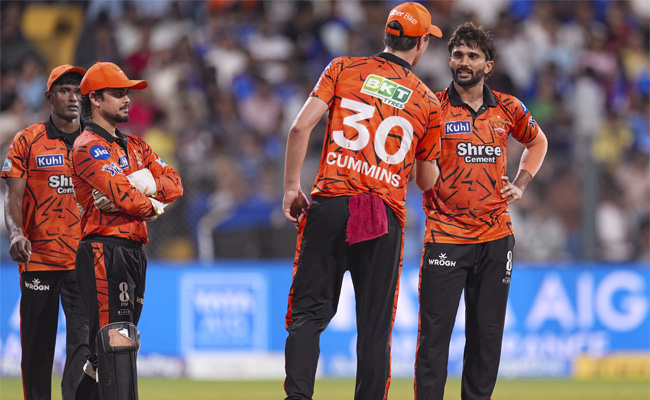
Mumbai (PTI): Ryan Rickelton's whirlwind unbeaten ton was overshadowed by Heinrich Klaasen's unbeaten 65 as Sunrisers Hyderabad defeated Mumbai Indians by six wickets in an IPL match here on Wednesday.
Chasing an imposing 244-run target, Travis Head (76 off 30) and Abhishek Sharma (45 off 24) shared 129 runs for the opening wicket to set the platform for SRH.
Klaasen (65 not out off 30 balls) then displayed his all-round hitting abilities to guide SRH home with the help of Nitish Kumar Reddy (21) and Salil Arora (30 not out off 10) in 18.4 overs.
Earlier, Rickelton's knock powered MI to 243 for five.
MI rode on a 93-run stand between Rickelton (123 not out off 55 balls) and Will Jacks (46 off 22) in 7.1 overs for the opening stand to power the side.
MI skipper Hardik Pandya scored a valuable 31 off 15 balls before being dismissed.
Praful Hinge (2/54), Eshan Malinga (1/29), Sakib Hasan (1/39) and Nitish Kumar Reddy (1/31) were the wicket-takers for SRH.
Brief Scores:
Mumbai Indian: 243 for 5 in 20 overs (Ryan Rickelton 123 not out; Praful Hinge 2/54).
Sunrisers Hyderabad: 249 for 4 in 18.4 overs (Travis Head 76, Heinrich Klaasen 65 not out; AM Ghazanfar 2/51).