'Tearful' Musk aims for $25,000 Tesla car for the masses
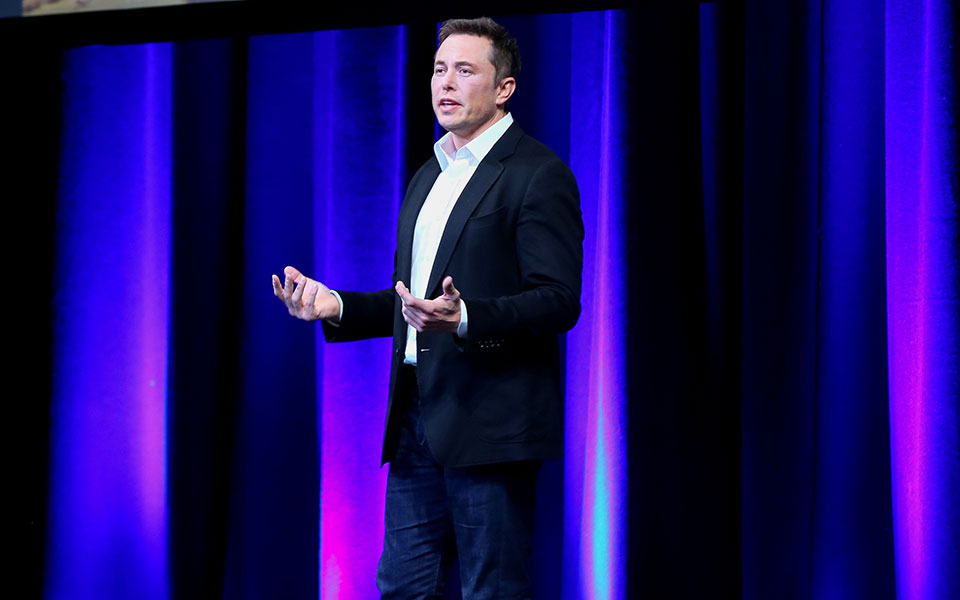
San Francisco, Aug 18 : After giving a "tearful" interview to The New York Times, Tesla Chairman and CEO Elon Musk sat with popular You Tuber Marques Brownlee for a chat, revealing his plans for a mass-market electric vehicle priced as low as $25,000.
"That's something we could do. If we work really hard i think maybe we could do that in three years," Musk replied to Brownlee (who goes by the handle @MKBHD on Google-owned YouTube) on Friday.
The interview took place on August 15 but a 17-minute video was uploaded by Brownlee on YouTube on Friday -- a week after Musk tweeted about taking Tesla private with "funding secured" that created a storm at the Tesla board and amid market watchers.
According to The Verge, Musk said in the YouTube interview that he hoped to scale production at Tesla and lower their design and technology costs enough to be able to offer a truly mass-market electric vehicle.
Currently, the price for Tesla Model 3 starts from $35,000 and Model S from $75,000.
"Musk also expressed a desire to improve production to the point where Tesla can make two cars at once," said the report. "We've really gotta figure out how to make two new vehicles at the same time," Musk told Brownlee.
The YouTube interview came a day after Musk spoke to NYT about "excruciating" times at Tesla, noting that he "nearly missed his brother's wedding this summer and spent his birthday holed up in Tesla's offices as the company raced to meet elusive production targets on a crucial new model".
Earlier this week, Musk confirmed that he is closely working with Goldman Sachs and private-equity firm Silver Lake to take the electric carmaker private -- a deal that would need nearly $70 billion in funding.
"I'm excited to work with Silver Lake and Goldman Sachs as financial advisors, plus Wachtell, Lipton, Rosen & Katz and Munger, Tolles & Olson as legal advisors, on the proposal to take Tesla private," Musk tweeted.
Musk said that in late July, he met Saudi Arabian sovereign fund representatives to discuss the electric carmaker's possible exit from the stock market.
He said in a statement that the Saudi sovereign fund had first contacted him "at the beginning of 2017 to express (their) interest because of the important need to diversify away from oil".
"I continue to have discussions with the Saudi fund, and I also am having discussions with a number of other investors, which is something that I always planned to do since I would like for Tesla to continue to have a broad investor base," he added.
He said he had most recently met with the Saudis on July 31 and left that meeting "with no question that a deal with the... fund could be closed, and that it was just a matter of getting the process moving".
"This is why I referred to 'funding secured' in the August 7 announcement," he said, referring to his surprise tweet on that date that he was thinking about taking Tesla private.
According to Musk, "two thirds" of Tesla's current stockholders would be interested in continuing to hold the firm's shares once it goes private.
On August 7, Musk surprised the investment world with a Twitter announcement that he was considering taking Tesla private and that the funds needed to do so - which some financial analysts estimate at more than $70 billion - were "secured".
Musk's tweet caused a financial firestorm with Tesla shares immediately skyrocketing by almost 11 per cent, although in the coming days they lost a good part of what they had gained and tanked further after Musk's interview with the NYT.
Let the Truth be known. If you read VB and like VB, please be a VB Supporter and Help us deliver the Truth to one and all.
Congress using hijab issue to pacify minority anger, alleges Karnataka LoP R Ashoka
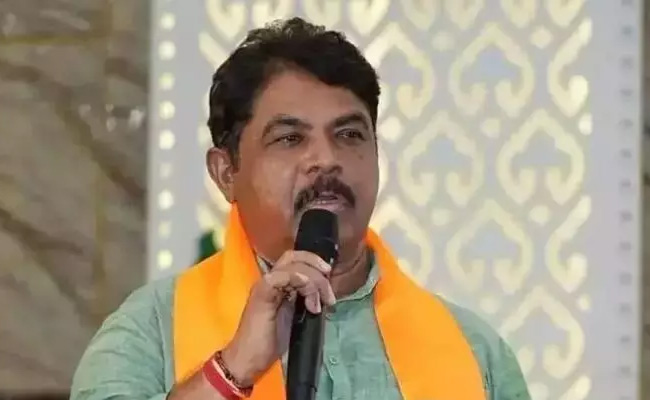
Bengaluru: Leader of Opposition in the Assembly R. Ashoka has accused the Congress government of using the hijab issue to placate what he described as discontent among minority voters after the Davanagere by-election.
In a post on X on Wednesday, Ashoka alleged that the state government, instead of addressing issues such as price rise, corruption, farmers’ distress and law and order, was attempting to retain its minority vote base by reviving the hijab issue.
Referring to the 2022 dress code introduced by the BJP government, which prohibited hijab in schools and colleges, Ashoka said the Karnataka High Court had upheld the policy and emphasised the importance of discipline in educational institutions.
He questioned the Congress government’s move to revisit the issue and asked whether setting aside the court-backed policy to benefit one community could be described as secularism.
Ashoka further alleged that while the government was willing to permit hijab, it continued to prohibit saffron shawls.
He accused the government of dividing students on religious lines rather than treating schools and colleges as spaces of equality.
Drawing a comparison with Mamata Banerjee’s government in West Bengal, Ashoka claimed that excessive appeasement politics had harmed the state and warned that the Congress in Karnataka could face a similar political response.
He said voters in Karnataka would teach the Congress a lesson for what he termed “vote-bank politics” and for compromising constitutional and judicial principles.