US Congress passes bill to delist deceitful Chinese companies from American stock markets
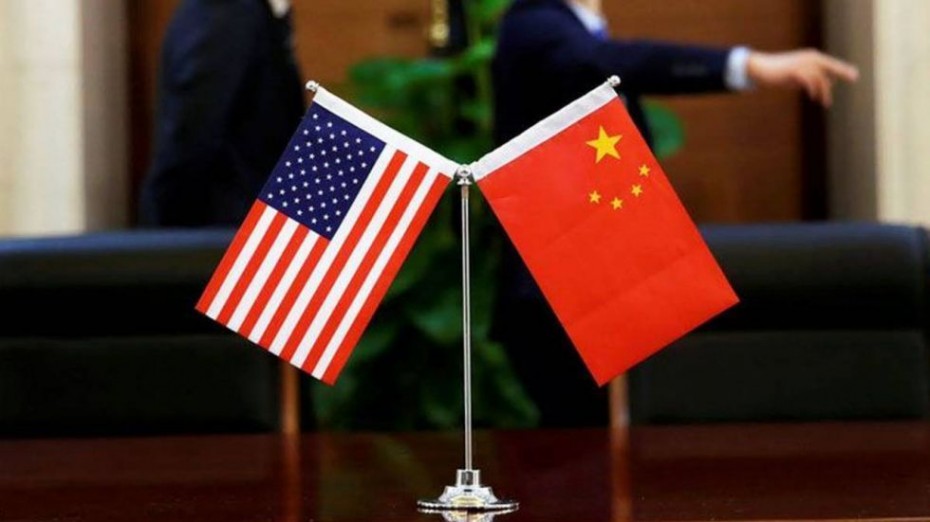
Washington, Dec 3: The US Congress has passed a bill that prohibits companies from being listed on American stock markets if they fail to provide the regulators access to their audit information for three years in a row, paving the way to delist deceitful Chinese companies from the US securities exchanges.
The bipartisan Holding Foreign Companies Accountable Act will help protect American investors and their retirement savings from foreign companies that have been operating on US stock exchanges while flouting oversight.
The bill was passed by the House of Representatives on Wednesday. It was passed by the Senate on May 20. The bill now heads to the White House for President Donald Trump to sign it into law.
The bill prohibits securities of a company from being listed on any of the US securities exchanges if the company has failed to comply with Public Company Accounting Oversight Board (PCAOB) audits for three years in a row.
It requires public companies to disclose whether they are owned or controlled by a foreign government, including China's communist government; and ensures foreign companies traded in America are subject to the same independent audit requirements that apply to American companies.
The Trump administration has passed a series of measures aimed at severing the economic ties between the US and China. US-China ties have deteriorated sharply over issues ranging from trade, the coronavirus pandemic and telecoms-gear maker Huawei to China's territorial claims in the South China Sea and its clampdown on Hong Kong.
There is no reason to let Communist China game the system and put American investments in jeopardy. Our bill protects our constituents' hard-earned money and shines a light on China's nefarious actions. I am glad the House supported it and look forward to President (Donald) Trump signing it, Senator Kevin Cramer said.
This may be the most significant piece of investor protection legislation passed in several years, said Congressman Brad Sherman, Chair of the Investor Protection and Capital Markets subcommittee.
It is designed to assure Financial Statement integrity of 224 US-limited companies with over USD 1.8 trillion in market capitalisation. The purpose is not to de-list any company, but to persuade China to allow the audit oversight that US investors need, and the US investors get when investing in US companies or companies in over 50 foreign jurisdictions, he said.
Currently, the Public Company Accounting Oversight Board is unable to inspect the audit work and practices of PCAOB-registered audit firms in a handful of foreign jurisdictions, primarily China.
In most cases, audit firms in those foreign countries cite local laws related to data protection, privacy, confidentiality, or national security as the reason for being unable to provide the PCAOB with the information they need to complete their inspections.
According to PCAOB, accounting firms which are unable to provide information necessary for effective oversight currently serve as the principal auditor for 224 US-listed companies which have a combined total of USD 1.8 trillion in market capitalisation.
The Holding Foreign Companies Accountable Act will protect investors and enforce a level playing field between US and foreign companies by requiring companies which go three years without the appropriate PCAOB audit inspection to be delisted from US exchanges.
The legislation also requires foreign issuers to provide disclosures as to whether the company is owned or controlled by a foreign government.
The People's Republic of China has continuously sought to undermine and skirt rules to the detriment of American businesses and national security. In the case of their refusal to participate in PCAOB inspections, this situation is unfair and dangerous for investors, said Congressman Anthony Gonzalez.
The Holding Foreign Companies Accountable Act is designed to prevent companies based in China and certain other jurisdictions from taking advantage of our deep and liquid capital markets while avoiding the scrutiny that comes with inspection of their financial statement audits, he said.
Senator John Kennedy said China is currently using US stock exchanges to exploit American workers and families - people who put their retirement and college savings in public companies.
US policy is letting China flout rules that American companies play by, and it's dangerous, he said.
Millions of American families rely on modest investments to retire, send their kids to college, and weather financial emergencies. But many have been cheated out of their money after investing in seemingly-legitimate Chinese companies that are not held to the same standards as other publicly listed companies, Senator Chris Van Hollen said.
This bill rights that wrong, ensuring that all companies on the US exchanges abide by the same rules. I've been proud to work with Senator Kennedy on this bipartisan legislation, and I'm glad to see it pass the House with such strong support. I urge the President to sign this bill into law immediately, he said.
Let the Truth be known. If you read VB and like VB, please be a VB Supporter and Help us deliver the Truth to one and all.
Delhi govt to provide up to Rs 10 crore collateral-free loans to women startups, SHGs

New Delhi (PTI): Delhi government will provide collateral-free loans of up to Rs 10 crore to women-led start ups and self help groups in the national capital, Chief Minister Rekha Gupta said on Sunday.
The government will also provide platforms in malls and large shopping complexes across the city to help indigenous products made by women self-help groups (SHGs) reach a wider market.
"We are working on a wider scale to make the women of the capital self-reliant, entrepreneurial, and economically empowered. Arrangements have been made for providing collateral-free loans up to Rs 10 crore to women self-help groups and startups," Gupta said in a statement.
She said the Delhi government itself would act as guarantor for such loans extended to women start ups and SHGs.
Addressing the inauguration of a two-day 'Mega Self Help Group (SHG) Mela-2026' organised in Rohini on Saturday, Gupta said that Prime Minister Narendra Modi has consistently promoted the vision of 'Vocal for Local', 'Atmanirbhar Bharat', and 'One District, One Product'.
She said the SHG Mela was an effort to promote indigenous products prepared by women and connect them with the wider market.
Around 24 self-help groups participated in fair, where handicrafts, crochet work, khadi, household products, food items, and other handmade products were exhibited and sold. Handicrafts under 'One District, One Product' initiative of North-West Delhi district were also showcased.
Gupta said that people often preferred foreign brands despite Indian handicrafts, khadi, household products, and handmade items being comparable in quality.
"The only requirement is better branding and marketing of these products," she said.
She appealed to people to use more local and indigenous products instead of foreign goods.
Referring to Prime Minister Narendra Modi's appeal to conserve fuel, use public transport, and adopt indigenous products, Gupta said the Delhi government was also promoting campaigns such as 'Monday metro' and 'No Vehicle Day'.
"If people make small changes in their daily routine, it will directly benefit the country," she said.