US formalizes ban on govt contracts to China's Huawei, others
Washington: The United States unveiled rules on Wednesday formally banning technology giant Huawei and other Chinese firms from government contracts in the latest move in the countries' escalating trade war.
The interim rule will preclude any US federal agency from purchasing telecom or technology equipment from the firms "as a substantial or essential component of any system, or as a critical technology as part of any system," starting August 13.
The rules implement a ban included in the defense authorization act Congress approved earlier this year.
Waivers to the rules may be granted "under certain circumstances" by an agency head for up to two years, or by the Director of National Intelligence in other cases, which were not specified.
Huawei said it would press its court challenge to the constitutionality of the ban in federal court.
In a statement, the company said the law "will do nothing to ensure the protection of US telecom networks and systems and rather is (a) trade barrier based on country-of-origin, invoking punitive action without any evidence of wrongdoing."
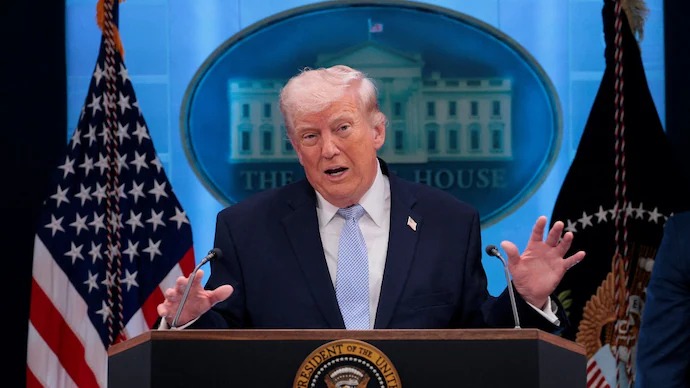
The new rules are part of a sweeping effort by President Donald Trump's administration to restrict Huawei, which officials claim is linked to Chinese intelligence.
It also comes amid a heated dispute between the two economic powers over international trade rules, which some analysts say could roil the global economic system.
The rules, which require a 60-day comment period, also bar contracts to Chinese firms ZTE, Hytera Communications Corporation, Hangzhou Hikvision Digital Technology Company and Dahua Technology Company.
Huawei also faces sanctions that bar the export of US technology to the Chinese firm on national security grounds.
That ban, which has been suspended until mid-August, could prevent Huawei from getting key hardware and software including smartphone chips and key elements of the Google Android operating system.
Let the Truth be known. If you read VB and like VB, please be a VB Supporter and Help us deliver the Truth to one and all.
What is Iran’s 10-point plan? Key demands ahead of US talks in Islamabad
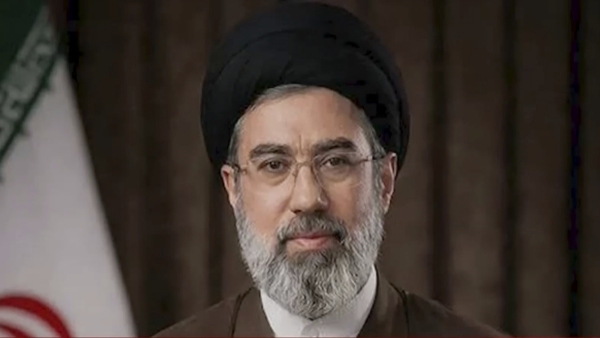
Tehran/Islamabad: Iran has outlined a 10-point plan as the basis for upcoming talks with the United States, expected to begin in Islamabad on April 11, according to a statement from the Iranian Supreme National Security Council.
The plan lays out Tehran’s key political, military and economic demands, and is being seen as a framework for negotiations following the recent escalation in the region.
Strait of Hormuz at the centre
A major focus of the plan is the Strait of Hormuz, a critical global shipping route. Iran has proposed “controlled passage through the Strait of Hormuz in coordination with the Iranian armed forces,” which it says would give the country a unique economic and geopolitical position.
The plan also calls for the “establishment of a safe transit protocol” in the Strait that would guarantee Iran’s dominance under an agreed mechanism.
Call to end conflict
Iran has demanded “the necessity of ending the war against all elements of the axis of resistance,” signalling its expectation that hostilities should stop not only in Iran but also involving allied groups in the region.
US troop withdrawal
Another key demand is the “withdrawal of US combat forces from all bases and deployment points in the region,” indicating Tehran’s long-standing position against American military presence in West Asia.
Sanctions relief and compensation
The plan places strong emphasis on economic measures. It calls for “full payment of Iran’s damages according to estimates,” along with “the lifting of all primary and secondary sanctions and resolutions of the Board of Governors and the Security Council.”
It also seeks “the release of all Iranian assets and properties frozen abroad,” which have been a major point of contention for years.
Binding global guarantee
Finally, Iran has demanded that all these terms be formally recognised through “a binding Security Council resolution,” suggesting it wants international legal backing to ensure enforcement.
What this means
The 10-point plan reflects Iran’s broader push for security guarantees, economic relief and regional influence. The upcoming talks in Islamabad are expected to test how far both sides are willing to negotiate on these demands.