World Bank says it 'dropped' Rs 2,000 crore loan proposal for Amaravati project

Amaravati (AP), Jul 19: The World Bank Friday said it 'dropped' the USD 300-million loan proposal for the Amaravati development project as the central government withdrew the financing request, triggering a blame game between the ruling YSRC and opposition TDP in Andhra Pradesh.
"The Government of India has withdrawn its request to the World Bank for financing the proposed Amaravati Sustainable Infrastructure and Institutional Development Project," a World Bank official said in an email response.
The bank's board of executive directors has been informed that the proposed project is no longer under preparation following the government's decision, the official added.
"The World Bank is not in a position to comment on the nature of internal consultations conducted by the Government of India," he said, when asked for the reason behind the Centre's decision.
Andhra Pradesh Capital Region Development Authority Commissioner Lakshmi Narasimham told PTI they received "no communication" from the Department of Economic Affairs (DEA), under the Union Ministry of Finance, on why the Centre withdrew the loan request.
On Thursday, the World Bank posted on its official website that funding proposal for the Amaravati Sustainable Infrastructure and Institutional Development Project has been "dropped".
Sources said it had apparently taken into consideration widespread complaints lodged by farmers in the region on forcible take over of their fertile lands by the previous N Chandrababu Naidu government in the name of land pooling for capital development.
The Inspection Panel, constituted by the World Bank to look into the complains by farmers and non-governmental organisations in 2017, reportedly sought a deeper inspection of the ground situation as the alleged violation of environment and other laws were against the bank's policy for lending.
The World Bank recently wrote a letter to the state government in this regard.
The state, through the Department of Economic Affairs, sought more time to consider the World Bank request as the new government of Y S Jaganmohan Reddy had just set in.
The Centre reportedly did not want the international lender to conduct such a probe as it could "set an unwarranted precedent" and affect other major projects in the country.
The same was communicated to the state government, sources said.
Under these circumstances, the DEA withdrew the request for financing the Amaravati Sustainable Infrastructure and Institutional Development Project, government sources here said.
Chandrababu Naidu blamed the YSR Congress government for the World Bank's action.
"Was it not the YSRC that instigated farmers to lodge complaints with the World Bank? Is not the YSRC responsible for the World Bank going back (on the loan commitment)," he asked during an informal chat with reporters in the Assembly lobby.
The state would henceforth not get any funds for infrastructure projects, he said and alleged the ruling party did not want any development.
Government Chief Whip G Srikanth Reddy hit back, saying the World Bank rejected the loan only because of Naidu's atrocities.
"The Chandrababu Naidu government terrorised farmers, misused the provisions of land pooling and manipulated land records. Farmers complained to the World Bank about this," he pointed out.
The TDP leaders were, however, carrying out a false propaganda that the loan proposal was dropped because of YSRC's complaints, Reddy said.
Let the Truth be known. If you read VB and like VB, please be a VB Supporter and Help us deliver the Truth to one and all.
What is Iran’s 10-point plan? Key demands ahead of US talks in Islamabad
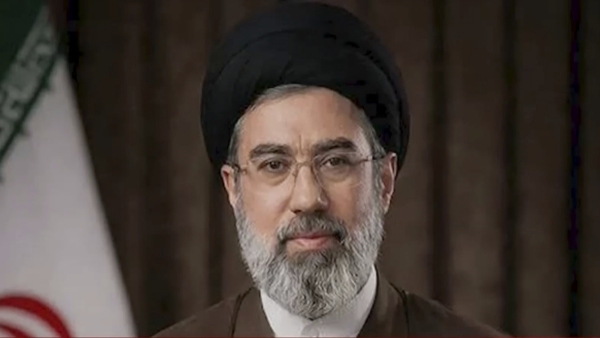
Tehran/Islamabad: Iran has outlined a 10-point plan as the basis for upcoming talks with the United States, expected to begin in Islamabad on April 11, according to a statement from the Iranian Supreme National Security Council.
The plan lays out Tehran’s key political, military and economic demands, and is being seen as a framework for negotiations following the recent escalation in the region.
Strait of Hormuz at the centre
A major focus of the plan is the Strait of Hormuz, a critical global shipping route. Iran has proposed “controlled passage through the Strait of Hormuz in coordination with the Iranian armed forces,” which it says would give the country a unique economic and geopolitical position.
The plan also calls for the “establishment of a safe transit protocol” in the Strait that would guarantee Iran’s dominance under an agreed mechanism.
Call to end conflict
Iran has demanded “the necessity of ending the war against all elements of the axis of resistance,” signalling its expectation that hostilities should stop not only in Iran but also involving allied groups in the region.
US troop withdrawal
Another key demand is the “withdrawal of US combat forces from all bases and deployment points in the region,” indicating Tehran’s long-standing position against American military presence in West Asia.
Sanctions relief and compensation
The plan places strong emphasis on economic measures. It calls for “full payment of Iran’s damages according to estimates,” along with “the lifting of all primary and secondary sanctions and resolutions of the Board of Governors and the Security Council.”
It also seeks “the release of all Iranian assets and properties frozen abroad,” which have been a major point of contention for years.
Binding global guarantee
Finally, Iran has demanded that all these terms be formally recognised through “a binding Security Council resolution,” suggesting it wants international legal backing to ensure enforcement.
What this means
The 10-point plan reflects Iran’s broader push for security guarantees, economic relief and regional influence. The upcoming talks in Islamabad are expected to test how far both sides are willing to negotiate on these demands.