New Delhi, April 24: The Indian government has signed a $210 million loan agreement with the World Bank to improve the rural roads in Madhya Pradesh, an official statement said on Tuesday.
"The project (Madhya Pradesh Rural Connectivity Project) will cover 10,510 km stretch of rural roads in Madhya Pradesh that fall under the Chief Minister's Gram Sadak Yojana (CMGSY) program," said the Finance Ministry in a statement.
The deal, signed between the Central government, Madhya Pradesh government and the World Bank, will improve the durability, resilience and safety of the gravel surfaced rural roads and enhance the capacity of the state to manage its rural roads network, it said.
Of the total roads, 10,000 km will be upgraded from existing gravel to bituminous surface roads, while 510 km of new roads will be built to the same bituminous surface standard, it added.
"Government of India is making all efforts to ensure that communities in the most remote areas across the country are connected through a road network. All weather road connectivity is crucial for economic growth, especially in the rural areas," said Sameer Kumar Khare, Joint Secretary, Department of Economic Affairs, Ministry of Finance.
Gravel surfaced roads are more prone to washouts than paved roads during flood seasons. This project will undertake resilience measures such as surface sealing of roads, embankment pitching, and balancing culverts to prevent damages caused by extreme flood events.
World Bank India Acting Country Director Hisham Abdo said: "This project will leverage resources to support innovations in road construction, improve road safety, and reduce carbon footprint in the transport sector by mainstreaming climate resilient technology in road design and construction."
Recognizing that road safety is a critical issue, the project will also strengthen road safety management systems with the objective of reducing fatalities and serious injuries from road accidents, the statement said.
"The project will focus on improving road accident data collection and analysis at central and state levels through implementation of the Road Accident Database Management System (RADMS)," it said.
Further, the state will pilot a comprehensive Road Safety Programme in districts with most fatal and serious injuries recorded in the recent past, it added.
Let the Truth be known. If you read VB and like VB, please be a VB Supporter and Help us deliver the Truth to one and all.
Allahabad HC orders probe into 'reinstatement' of teacher in UP's Barabanki
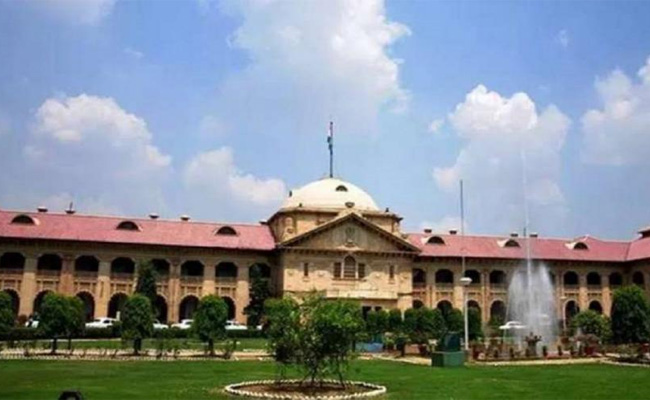
Lucknow (PTI): The Lucknow Bench of the Allahabad High Court on Friday ordered a probe by the special task force (STF) into alleged irregularities in the rejoining of a teacher at City Intermediate College in Barabanki, observing that the reinstatement appeared to be prima facie illegal.
The court also directed the recovery of the salary paid to the teacher during the disputed period.
A bench of Justice Rajeev Singh passed the order on a petition filed by the college management committee. The court expressed doubts over the roles of the District Inspector of Schools (DIOS), Barabanki, the college principal and the teacher concerned and hence, directed a detailed inquiry into the matter.
Taking note of alleged manipulation of records and misleading submissions, the court ordered the immediate transfer of the Barabanki DIOS to ensure a fair probe. It also directed the initiation of disciplinary proceedings against the then joint director of education of the Ayodhya division.
In its order, the court found that the teacher, Abhay Kumar, was initially appointed as an assistant teacher in 2018 but joined an Eklavya Model Residential School in Chhattisgarh as a lecturer in June 2024 without obtaining permission from the management. His subsequent request to retain the lien was rejected.
Despite this, he was allowed to rejoin the Barabanki College in September 2025 on the directions of the joint director of education and the DIOS, and was even paid the salary for October 2025. The court termed the rejoining "wholly illegal" and lacking any legal basis.
The bench also expressed concern over lapses in communication within the education department and directed the Uttar Pradesh chief secretary to ensure that official orders are communicated through email and WhatsApp as well, to prevent disputes.
The matter is next listed for hearing on May 28 when a compliance report is sought.