Air pollution is detrimental to public health

Ever since globalisation set its foot in, one needs to take a critical look at activities that have taken place in the name of development. People have been able to access a lot of facilities in the name of modern technology. But the impact of this unabated development has been largely negative on the environment. Official statistics say one among eight deaths happens due to air pollution. Pure air is becoming dearer with every passing day.
A global survey indicates the average life of Indians is getting reduced by 1.7 years owing to pollutants in the air. Lung cancer, heart attack, difficulty in breathing, stroke, and diabetes are caused due to air pollution. Industrial effluents, unabated construction, dust emanating from sub standard roads, the carbon emanating from the vehicles, smoke that arises when garbage is burnt, all this has turned into a major threat to the prevailing quality of air in the country. Supreme Court has been issuing warnings to state and Central governments regarding this issue time and again.
Environmental experts and scientists, along with activists of social service organisations have been voicing their concerns in no uncertain terms regarding this. But the administrators who sit in AC chambers hardly care about this. Government issues license to businesses like mining which cause great harm to ecology. Influential politicians have license to those businesses that render irretrievable damage to atmosphere. Though this damages everyone, those who are sitting in corridors of power are totally deaf to this cause. Not just this, those sitting in corridors of power protect the wrong doers who are politicians and bureaucrats.
The level of this pollution may be less in Karnataka compared to other states, but Bangalore is all g those cities which suffers massively owing to air pollution. Compared to Delhi, Bangalore is home to more gardens and number of industries are very less too. But this city is home to over 80 lakh vehicles that can destroy the atmosphere. If this has to be checked, there has to be a cap on number of private vehicles that can be owned by people. In a city like Bangalore, a family of four members usually own four cars too with one car per member. This can lead to serious destruction to environment. Hence the government has to improve public transportation and reduce the usage and need of private vehicles. The wood fire stove used by people living in villages contributes significantly to air pollution.
North India has high instances of this. Hence the government has to provide every household with bio gas powered stoves or solar cooking units. If the waste part of crops is allowed to decompose in the soil, it would serve as a good fertiliser. Use of diesel generators have to be restricted. Pollution Control Board has a large role to play in this regard. But at the moment this agency is almost non existent. More than anything else, this issue has to become a prominent topic in election manifesto.
Without addressing these issues, spending thousands of crores on public health would be a total waste of resources. Not just the government, even NGOs and citizens groups have to be proactive in checking this menace. Mining is the most pertinent and majorly contributing factor to this menace. The result of unabated mining is not just plundering of resources, but also massive destruction of ecology. When mining took place in Bellary around the time when BJP government was in power, it rendered the whole area useless. Both legal and illegal form of mining thrived in this area. Since the most influential occupying high offices were involved in mining, it was difficult to catch and penalise them. Mining stopped only after relentless crusade by Justice Santosh Hegde and environmental crusader S R Hiremath.
Mining continues in many parts of the country beyond Karnataka as well. Influential politicians are behind this. Central government has entered into agreement on consuming the forest resources that was protected and safeguarded since many years in states like Odisha, Chattisgarh, Jharkhand and other resource rich states. So the tribals who were settled in those areas since ages have been uprooted. Those who oppose this are being shot to death. If the government is really concerned about ecology, it should stop displacing the tribals. Lip service isn't enough to check air pollution. Effective steps have to be initiated to ensure this is done in letter and spirit. Checking air pollution leads to improved public health. A healthy citizen makes for a strong country. Modi government does not have a clear environment policy. At least in the coming elections environment has to be made the election manifesto.
Let the Truth be known. If you read VB and like VB, please be a VB Supporter and Help us deliver the Truth to one and all.
Man arrested with Rs 2.54-crore heroin in Mumbai
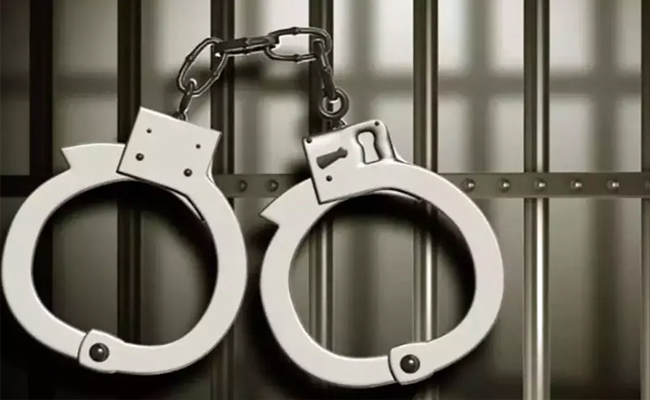
Mumbai (PTI): Police have arrested a man and seized over 500 grams of heroin worth Rs 2.54 crore in the illicit market from him in Mumbai, officials said on Friday.
The police's Anti-Narcotics Cell (ANC) made the drug seizure in Santacruz in the western suburbs. The operation was conducted by the Kandivali unit of the ANC on Thursday as part of a special crackdown against drug trafficking in the area, they said.
Acting on specific inputs, an ANC team conducted a raid in Santacruz (East) and intercepted a man. During a search, the team recovered 508 grams of high-grade heroin from his possession, an official said.
The seized contraband, a highly addictive, opioid drug derived from morphine, is estimated to be worth Rs 2.54 crore in the international market, he informed.
Following the seizure, a case was registered against the man under relevant sections of the Narcotic Drugs and Psychotropic Substances (NDPS) Act, 1985, and he was formally placed under arrest in the early hours of Friday.
The police are currently investigating the source of the drug and trying to identify the intended recipients of the consignment, he said.