By elections in Karnataka: Who’s responsible?
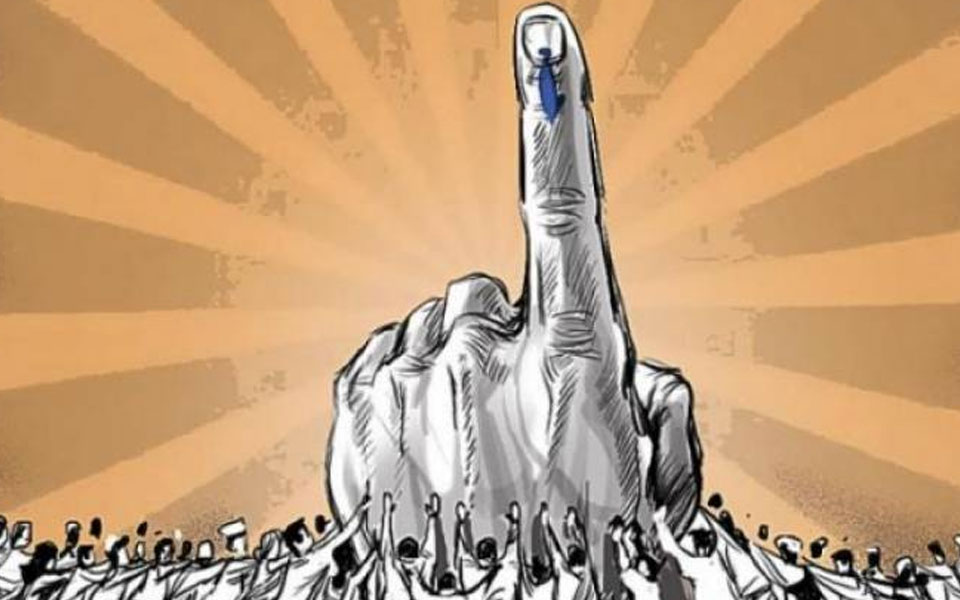
Election commission has declared elections in the states of Madhya Pradesh, Chhattisgarh and Rajasthan, along with three Lok Sabha constituencies in Karnataka. Mandya, Ballari and Shivamogga districts will have to face an unexpected election before they go to polls again in the next five months owing to this decision. The elected representative will last for a term of only a few months before the new one is chosen. Isn’t this a little expensive to use resources just so that the whole process has to be repeated again? As per the EC, three Lok Sabha seats have been lying vacant since the last few months so conducting the election is inevitable. But the question that arises right now is the usefulness of a candidate who’d be elected for a matter of few months.
Many political parties and politicians have voiced their opinions regarding this. How committed would this few months’ MP be, in his/her service to his voters? No sooner does he/she begin the work, there would be a poll code for 2019 elections. At best, this election would be a preparation ground for the forthcoming one. And officers would rule the roost for all that while in these constituencies. Two visits to Delhi and the MP would be home again ending his/her term. Isn’t this an insult to the democracy? Voters and the entire ecosystem would be taken for granted with this. Who are those people who made the elections inevitable at this moment? Instead of blaming something as hazy as a ‘system’, we need to identify persons who used the system to their convenience and pushed people into this inevitable phase.
When elected representatives meet with a sudden death, an election is understandable. But in this case, the elections have been imposed on people owing to vested political gains. Those who wanted to continue in state politics, why did they contest for Lok Sabha seats at all? Why did they assure their voters things that they could never fulfil? When they resign after such long drawn process, isn’t that much like cheating on his/her own people? Whoever wins these effectively temporary seats may contest again in the 2019 elections for sure. This irresponsibility has to end with immediate effect.
One candidate should not be allowed to contest from two seats of different or same houses so as to avoid investment of men and machinery later, to uphold democracy. If a candidate makes a decision of vacating one seat owing to his fancy, the EC has to make him pay up the expenses of conducting elections unless there’s a tangible reason to his vacating the seat. Because when people contest the elections that they made inevitable, and contest for the same seat in the same phase from two parties, he/she is mocking the democracy and nothing less. This has to be controlled and stopped to ensure candidates don’t get away with their powerful whims. Else, such operations will cost a lot of resources for the state and the agencies in repeated instances in the near future.
Let the Truth be known. If you read VB and like VB, please be a VB Supporter and Help us deliver the Truth to one and all.
Sujit Nair raises concerns over speculation of DMK-AIADMK understanding to block TVK
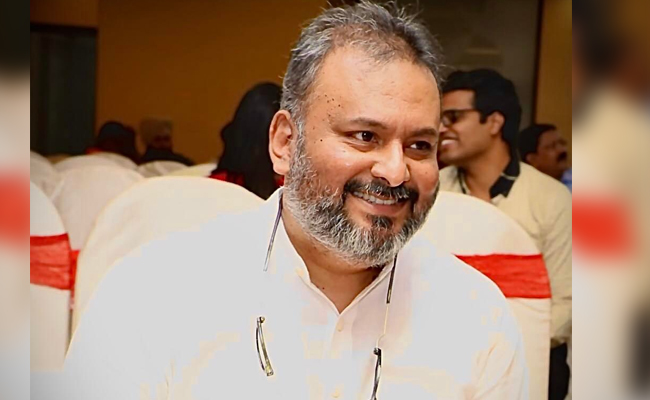
Chennai: Journalist and political commentator Sujit Nair has expressed concern over speculation that the Dravida Munnetra Kazhagam and the All India Anna Dravida Munnetra Kazhagam could explore a post-poll understanding to prevent Vijay-led Tamilaga Vettri Kazhagam from forming the government in Tamil Nadu.
In a social media post, Sujit Nair said the election verdict in Tamil Nadu reflected a clear public demand for political change and argued that the mandate should be respected irrespective of political preferences.
Referring to reports and political discussions surrounding a possible understanding between the DMK and AIADMK, he said he hoped such developments remained only speculative conversations and did not turn into reality.
Nair stated that if such an alliance were to take shape, it would raise serious questions about ideological politics in the country. He said TVK had emerged through a democratic electoral process and that the legitimacy to govern in a parliamentary democracy comes from the people’s verdict.
According to him, attempts to prevent an electoral winner from forming the government through unexpected political arrangements may be constitutionally valid, but many people could view them as politically opportunistic.
He further said that such a move could particularly affect the political image of the DMK, which has historically projected itself around ideology, social justice and opposition politics. Nair said that in ideological terms, the DMK appeared closer to TVK than to the AIADMK, and joining hands with its long-time political rival only to remain in power could weaken its broader political narrative.
He added that the same questions would apply to the AIADMK as well, as the party had spent decades positioning itself against the DMK and such an arrangement could create discomfort among its cadre and supporters.
Drawing a comparison with Maharashtra politics in 2019, Nair said he had expressed similar views when the Shiv Sena formed an alliance with the Indian National Congress and the Nationalist Congress Party after the Assembly elections.
He said post-poll alliances between long-standing political rivals often create a public perception that ideology and electoral mandates become secondary when political power equations come into play.
Nair also said such developments increase public cynicism towards politics and reinforce the belief among voters that ideology is often sidelined after elections.
He maintained that the Tamil Nadu verdict was emphatic and said respecting both the spirit and substance of the mandate was important for the credibility of democratic politics.