CBI Chief Verma dismissal: Chowkidar’s true colours
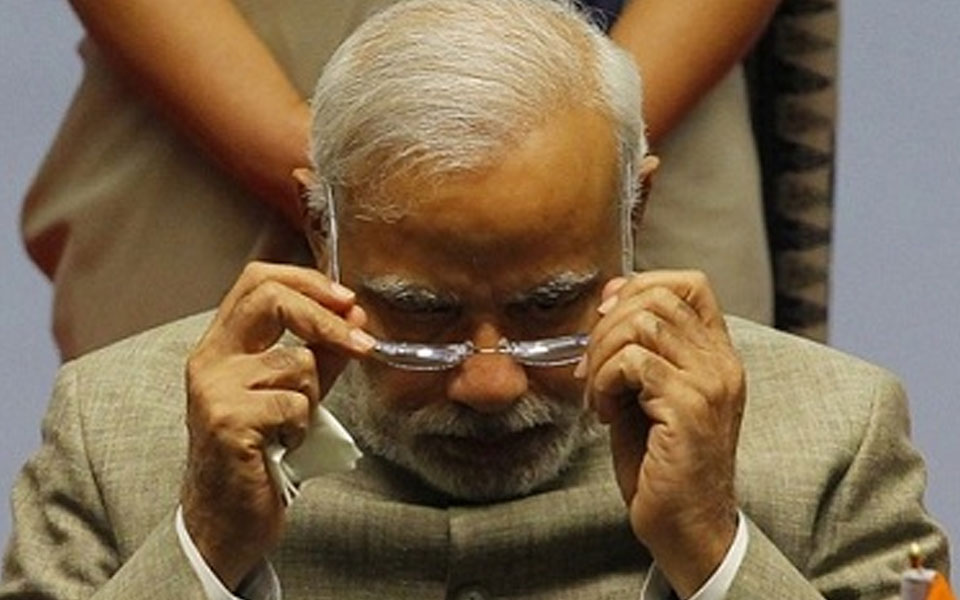
Though the Supreme Court had ordered CBI chief Alok Verma to be reinstated into his position, the government has taken less than 24 hours to unseat him through a committee led by PM Narendra Modi. The objections recorded by Congress leader Mallikarjun Kharge did not make a cut.
Ironically, the government had earlier mentioned Verma was sent on leave following the recommendation made by CVC, which was rejected by the court before it sought reinstatement of Verma. And on the basis of same accusations levelled by the CVC, Modi has transferred Verma. Which means even CVC did not articulate well on the accusations listed out on the officer.
The committee’s decision on Verma transfer was based on the recommendations made by the CVC. But the committee itself has not been able to substantiate any of the allegations it has levelled against Verma, which is largely based on the complaints listed out by the CVC.
There is one allegation that Verma has taken Rs 2 cr bribe from an industrialist, but this is unsubstantiated. The Central Vigilance Committee had said incidental witnesses had to be probed. Though there is a mention of some intelligence leads not being probed during his tenure, CVC has not been able to articulate on them. Three complaints among the 10 complaints have been ascertained, but the others are not substantiated as per the vigilance committee.
Even the veracity of allegations is under doubt. CVC has ascertained the fact that a suspect in IARTC case has not been mentioned as an accused in the subsequent FIR, CVC had observed.
The accusation of Verma unable to check gold trafficking in Delhi airport has been proved partially right. Kharge had argued that Verma should be allowed to finish his tenure while the investigation based on the CVC report is on. He had even said since Verma had lost 77 days of his service, his tenure should be extended by those many days to make good for the time lost.
But the central government was very stuck upon keeping Verma out of the office. The committee said allegations against him had to be proved and he cannot continue as the Chief of CBI. Another Judge has concurred with this recommendation made by Modi. This is nothing but an authoritarian situation. Committee has been reduced to just name sake.
This is a severe blow on the moral strength of CBI. Verma’s transfer is just name sake because the committee had probably even known the officer may not accept a transfer with his service lasting just about a month. As expected, Verma resigned from the post. Instead of slaving before the government, he has martyred his service to save his self respect. Someone like him is the hope of this country.
The whole incident has proved one thing beyond doubt. PM Modi fears the CBI. The people of this country know Modi has ensured Verma does not return as CBI chief following the Rafale deal which has left the government stark naked.
If not for the cover of power, Rafale by now is the major undoing of the government. Verma lost his job owing to his interest in investigating the Rafale deal. Modi, who would take pride in calling himself the Chowkidar, has whipped the CBI with his hunter. If he really was a gatekeeper of this country, why should he be scared of the CBI?
The house owner will really not throw a dog out just because he barked at something suspicious. Instead he would check around his house to see what’s lurking. Looks like Modi has admitted to the misdemeanors, by way of throwing out the investigating officer. This has gone to show the Chowkidar and the thief, to the nation.
The country is taking note of how CBI is being pressurized with Modi and his team continuing to be resistant of any investigation of Rafale deal. Modi is not bigger than the country and its security. He is totally deserving of a punishment if he has favoured a private company like Reliance over state run expert at aviation HAL.
In fact Modi has run HAL into the ground with this decision. Why does he fear an investigation if he has done no wrong in Rafale? The lone choice of proving himself innocent is by allowing an inquiry to take place. He cannot shut the mouth of the constitution and judiciary by misplacing a Verma. Modi would know that soon.
Let the Truth be known. If you read VB and like VB, please be a VB Supporter and Help us deliver the Truth to one and all.
Rickelton's ton in vain as SRH beat MI by 6 wickets
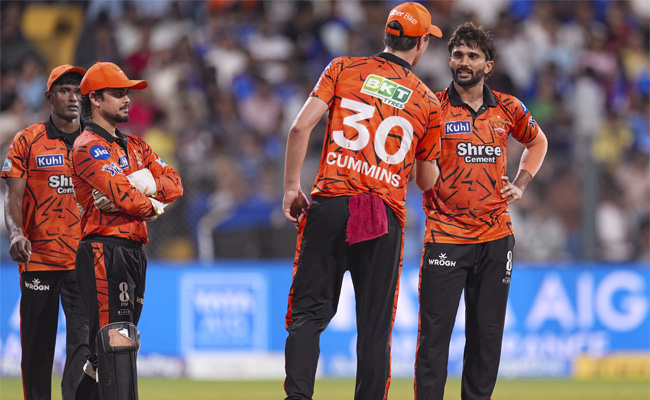
Mumbai (PTI): Ryan Rickelton's whirlwind unbeaten ton was overshadowed by Heinrich Klaasen's unbeaten 65 as Sunrisers Hyderabad defeated Mumbai Indians by six wickets in an IPL match here on Wednesday.
Chasing an imposing 244-run target, Travis Head (76 off 30) and Abhishek Sharma (45 off 24) shared 129 runs for the opening wicket to set the platform for SRH.
Klaasen (65 not out off 30 balls) then displayed his all-round hitting abilities to guide SRH home with the help of Nitish Kumar Reddy (21) and Salil Arora (30 not out off 10) in 18.4 overs.
Earlier, Rickelton's knock powered MI to 243 for five.
MI rode on a 93-run stand between Rickelton (123 not out off 55 balls) and Will Jacks (46 off 22) in 7.1 overs for the opening stand to power the side.
MI skipper Hardik Pandya scored a valuable 31 off 15 balls before being dismissed.
Praful Hinge (2/54), Eshan Malinga (1/29), Sakib Hasan (1/39) and Nitish Kumar Reddy (1/31) were the wicket-takers for SRH.
Brief Scores:
Mumbai Indian: 243 for 5 in 20 overs (Ryan Rickelton 123 not out; Praful Hinge 2/54).
Sunrisers Hyderabad: 249 for 4 in 18.4 overs (Travis Head 76, Heinrich Klaasen 65 not out; AM Ghazanfar 2/51).