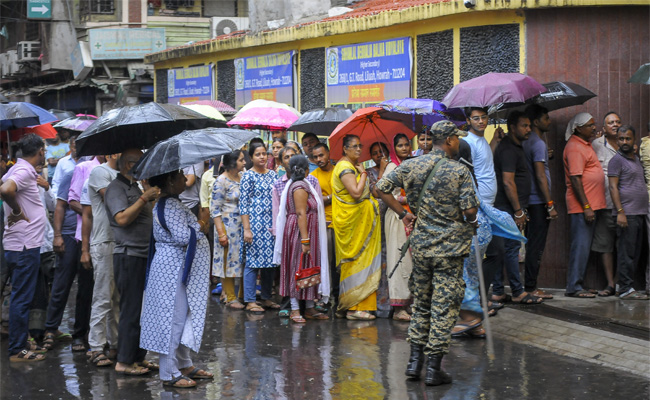
Dalits disappointed by Mahesh’s resignation
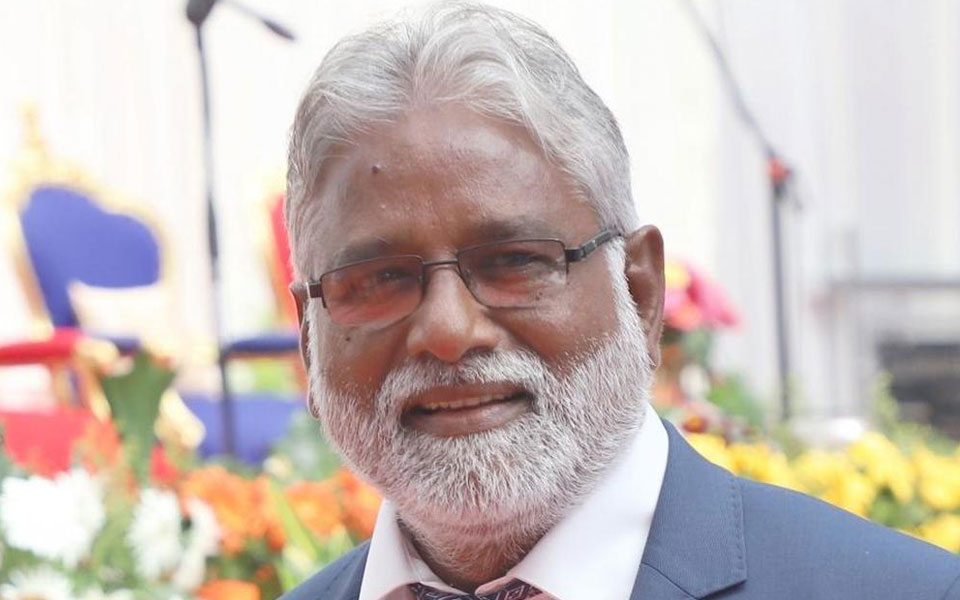
The last state assembly election had thrown up unexpected results. Some of the important ones on that are Siddaramaiah's charisma losing its charm, BJP getting highest number of seats and HDK becoming the CM even with least seats in the assembly.Even BSP which had entered into an agreement with JDS bagged a seat. Most respected and adored Dalit leader from Kollegal N Mahesh was elected. This is a major milestone for BSP which barely had any presence in the state. The party was excited about one of their own candidates becoming a Minister. This could have been a major opportunity for the party to create a base for itself in the state.
The party should have deemed it as an opportunity to grow itself in the state instead of just assuming one of their own men became a minister. But to toppling everybody's expectations Mahesh has resigned from his post of primary education minister.It is said that this was done owing to Mayawati's instructions to him over Madhya Pradesh and Chattisgarh elections and the coalition partners of BSP in these states.The number of BSP voters in the state is rather dismal. Forget the other community votes, even if the party had managed to bag 50% of dalit votes, it didn't have to worry so much about its existence now.
If the party hadn't struck a deal with JDS as a coalition partner, Mahesh's victory in Kollegal was a tough deal since BSP could win only one seat of the 20 seats it contested from in the state. And even for one victory, it was Mahesh's individual persona that worked more than the party's image. If this isn't the case. Mayawati's image should have cast it's magic on other constituencies too for people to win or make a good cut among voters elsewhere.
BSP gained some weight with its coalition with JDS while the latter didn't get much benefit from the partnership. There is a difference between BSP in other states such as Madhya Pradesh and Uttar Pradesh, as against Karnataka. Dalit ideology is still a mirage at root level here. Already the Dalit leaders are indulging in selfish politics, even as BSP is yet to make a cut in the state. Though BSP won't gain much from the resignation of Mahesh, his departure has left a huge feeling of void and disbelief among Dalits and marginalised communities. This would also have an effect on the spirit of BSP activists and workers in the state. Mahesh was given primary education as portfolio. Most of the dalit kids are getting affected by closure of government schools in their villages and areas. He could have worked to constructively change this for their future. He could have improved the situation of schools and improved syllabus to give children an empowering childhood through scientific and rational education. One does not know whether this could have helped BSP, but surely enough it would have uplifted the marginalised communities to arm them with most modern thoughts and education.
Now with his resignation, Mayawati has to provide some logic on how it would help the party's image and growth in the state. The finality of stating ‘won't truck with any other party’ by Mayawati is to go with new coalition partners such as BJP. But let us, for a moment, respect her statement that it is better to go it alone instead of joining hands with someone else for the sake of seats/posts. BSP now has a base in the state. It does not have to go with a begging bowl to others. It has one just one seat while being coalition partners with JD(S).
Mayawati’s hope of capturing Dalit votes through coalition with JD(S) and Cong itself if somehow deeply lacking in understanding and strategy. This shows Mayawati is no different from other North centric politicians who have no understanding of Southern states. If she is indicating through Mahesh’s resignation that Dalits should not support JD(S) or Congress, who is she indicating that the community supports? What’s the main reason behind Mahesh’s resignation? This has caused a big loss to the Dalit and marginalized communities. If a high-command of a yet-to-be-stable party can stunt its own growth, what can we say about other national parties?
Let the Truth be known. If you read VB and like VB, please be a VB Supporter and Help us deliver the Truth to one and all.
Rickelton's ton in vain as SRH beat MI by 6 wickets
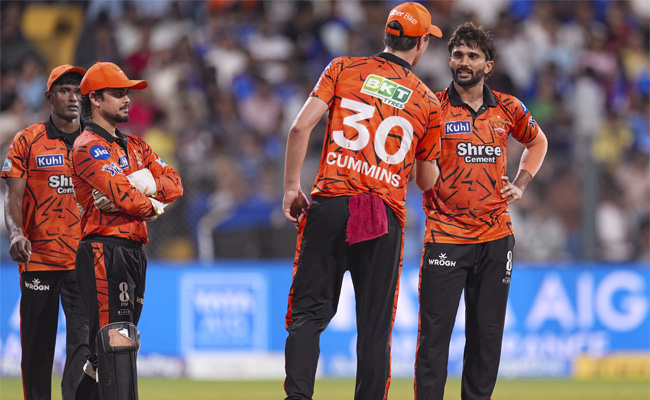
Mumbai (PTI): Ryan Rickelton's whirlwind unbeaten ton was overshadowed by Heinrich Klaasen's unbeaten 65 as Sunrisers Hyderabad defeated Mumbai Indians by six wickets in an IPL match here on Wednesday.
Chasing an imposing 244-run target, Travis Head (76 off 30) and Abhishek Sharma (45 off 24) shared 129 runs for the opening wicket to set the platform for SRH.
Klaasen (65 not out off 30 balls) then displayed his all-round hitting abilities to guide SRH home with the help of Nitish Kumar Reddy (21) and Salil Arora (30 not out off 10) in 18.4 overs.
Earlier, Rickelton's knock powered MI to 243 for five.
MI rode on a 93-run stand between Rickelton (123 not out off 55 balls) and Will Jacks (46 off 22) in 7.1 overs for the opening stand to power the side.
MI skipper Hardik Pandya scored a valuable 31 off 15 balls before being dismissed.
Praful Hinge (2/54), Eshan Malinga (1/29), Sakib Hasan (1/39) and Nitish Kumar Reddy (1/31) were the wicket-takers for SRH.
Brief Scores:
Mumbai Indian: 243 for 5 in 20 overs (Ryan Rickelton 123 not out; Praful Hinge 2/54).
Sunrisers Hyderabad: 249 for 4 in 18.4 overs (Travis Head 76, Heinrich Klaasen 65 not out; AM Ghazanfar 2/51).