'Dispose-after-use’ migrant labourers
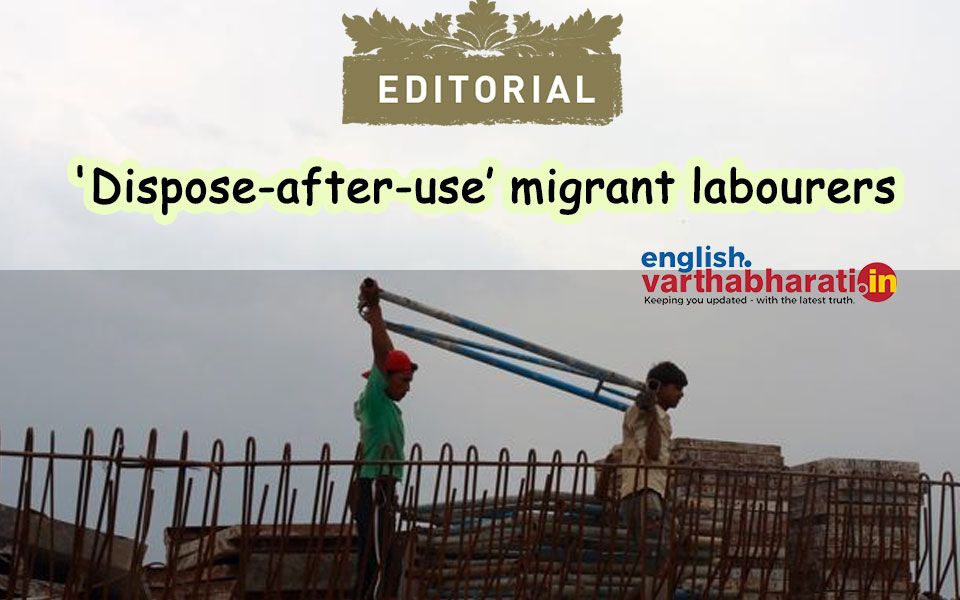
India spares no occasion to criticize the administration of countries such as Australia or America when Indians living there are attacked, calling it nothing less than ‘racism’. The government seems to believe that such incidents of communal hatred have to be condemned only when they happen on foreign soil. The exploitation and abuse of labourers from North Karnataka don’t come under this purview when they happen on the soil of southern part of the state. Why don’t the incidents of assault on labourers coming from places like Vijayapura and surrounding areas come to Mangaluru or Bengaluru for work, count as racism? Why doesn’t the state government pay heed to this and have a legal framework to protect their interests in place? The situation of labourers who move from north Karnataka to south, or to Mumbai from Bihar and to Gujarat from states such as Madhya Pradesh, Uttar Pradesh or any others.
In some way, more than those who leave the country in search of jobs; the situation of migrant labourers within their own country is more miserable to the core. A lot of them are being assaulted feeding into the rumour of ‘child lifters’. Their looks, language and culture set them apart from the locals. We often forget that our own people have also left our state and are earning their bread elsewhere. We show such intolerance towards Tamils, Telugus and Malayalis. However, this selective rage is never on the rich and elite. This is restricted to tea stall owners, car drives, labourers, hawkers etc.
We often run them down in an attempt to feel superior to them. We deem the Marathi people villains only when they attack Kannadigas living there. We want migrant labourers to do menial jobs for us but we prefer to keep them away from us. Our buildings can be built by those, but our gates will always remain closed for them. We perceive them as robbers, theifs and rapists when we are forced to trust them. The recent developments in Gujarat are an excellent example of this. The locals blamed a labourer, also a Bihari immigrant, of sexually assaulting a minor girl in the afternoon of September 28, 2018.
Soon after, series of assaults were unleashed upon the Biharis and north Indian immigrant labourers. Ruling BJP blamed Congress and Khatri Sena’s Alpesh Thakur as forces behind this evil attack. Even the sexual assault victim was said to be from Thakur community. From there things took a different social turn and this was used as an occasion to get even with the immigrant community that was stealing their jobs. Immigrant exodus began in hoards since violence was unleashed on labourers from other states. This naturally affected the industries and many sectors including real estate which uses their services heavily for their day-to-day work.
The industrialists began to request the politicians and leaders of the communities to check this trend and ensure the labourers didn’t flee the state. Protection was provided to industries that had employed labourers to ensure smooth flow of work and projects. The Industries and Commerce Federation of Gujarat requested intervention of Gujarat CM into the matter. This matter had to be resolved urgently since the investors’ conference was going to be initiated soon in 2019 January. Guj govt didn’t want the festive season to be affected along with industries suffering the ordeal.
This problem may be sorted soon. But that will provide no respite from the problems faced by migrant labourers. Their situation would be far worse than that of locals working in the same category. They do not even have negotiating power on salaries or benefits with their employers. They do not get representation on labour unions because of their immigrant status. They would like to come under the banner of some institution for their safety and welfare. The country and ruling dispensation should have more humane approach towards their plight and help them find a solution. There has to be some parameters in place to safeguard their lives when riots break out. It is a fundamental right. We must not treat them like a use-and-throw option to suit our requirements.
Let the Truth be known. If you read VB and like VB, please be a VB Supporter and Help us deliver the Truth to one and all.
Bhojshala case: Disputed structure built from remains of pre-existing temples, claims ASI
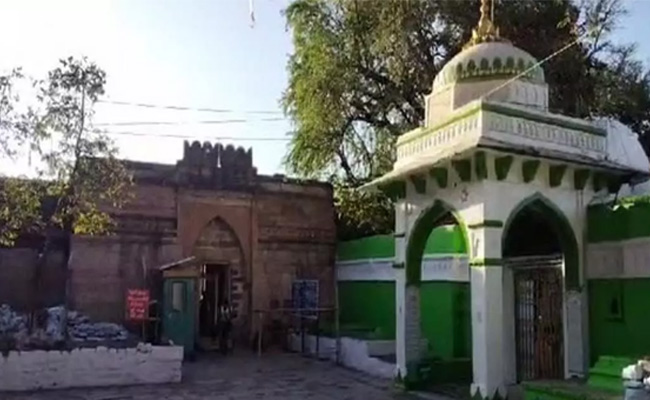
Indore (PTI): The ASI has told the Madhya Pradesh High Court that a massive structure dating back to the Paramara kings' rule existed at the disputed Bhojshala temple-Kamal Maula mosque complex, and the current structure was built from the remains of temples.
The Archaeological Survey of India (ASI) made the claim on Tuesday based on its 98-day scientific survey and over 2,000-page report.
The Hindu community considers Bhojshala a temple dedicated to Vagdevi (Goddess Saraswati), while the Muslim side claims the monument as the Kamal Maula Mosque. The disputed complex is protected by the ASI.
During the hearing before Justices Vijay Kumar Shukla and Alok Awasthi of the HC's Indore bench, Additional Solicitor General Sunil Kumar Jain, representing the ASI, presented a detailed account of the scientific survey conducted two years ago at the complex.
Referring to the ASI's survey report, he said, "Retrieved architectural remains, sculptural fragments, large slabs of inscriptions with literary texts, Nagakarnika inscriptions on pillars, etc, suggest that a large structure associated with literary and educational activities existed at the site. Based on scientific investigations and archaeological remains recovered during the investigations, this pre-existing structure can be dated to the Paramara period."
It can be said that the existing structure was made from the parts of earlier temples, based on scientific investigations, survey and archaeological excavations conducted, study and analysis of retrieved finds, study of architectural remains, sculptures, and inscriptions, art and sculptures, Jain said quoting the report.
Summarising the report, he also drew the court's attention to the fact that the archaeological study identifies that many architectural components, such as pillars and beams, were originally part of temple structures before being repurposed for a mosque.
"The evidence of this transition includes Sanskrit and Prakrit inscriptions that were damaged or hidden, alongside sculptures of deities and animals that were often mutilated or defaced," Jain contended.
The report also states that "all Sanskrit and Prakrit inscriptions are older than the Arabic and Persian inscriptions, indicating that users or engravers of the Sanskrit and Prakrit inscriptions occupied the place earlier".
In light of the Muslim side's earlier objections, the bench wanted to know why there were some discrepancies in the ASI's responses regarding the status of the disputed complex in the cases filed over the years.
The Additional Solicitor General argued that earlier studies of the complex involved only officials, while the current survey involved scientists and the use of advanced technologies such as Ground Penetrating Radar (GPR).
The hearing in the Bhojshala case will continue on Wednesday.
The high court has been regularly hearing four petitions and one writ appeal regarding the religious nature of the Bhojshala temple-Kamal Maula mosque complex since April 6.