From declared emergency to undeclared emergency
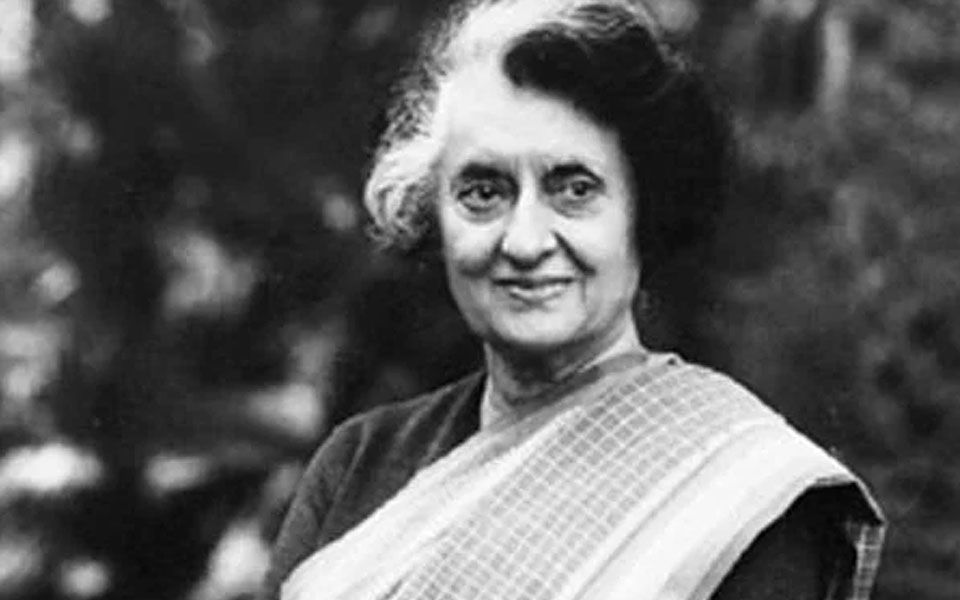
Country is remembering those dark days of emergency imposed by the then Prime Minister Indira Gandhi. The very memory of those days is to uphold the significance of democracy. We need to go through this memory only to remind ourselves that the nation needn’t witness those uncertain days again.
Even if the ‘dictator’ is our own, we should follow him like meek sheep. One of the most renowned poets refers to this time in his works and says ‘how does it matter whether the sword was our own or was a foreign one?’ The memory of this phase should encourage us to strengthen the democracy further. There is no point in using this premise to just criticize a particular party.
Indira Gandhi does not signify emergency alone. Her strengths stretch beyond this dark phase too. Her contribution in strengthening India cannot be refuted. Land tenancy act and nationalisation of banks were some bold decisions she took to help the lowest strata of the society. She earned the wrath of the upper castes, rich and powerful in the meantime. If Indira Gandhi is just remembered for emergency alone like the BJP likes to project, why did people bring her back to power with a resounding victory?
It’s a very opportunist politics to project her as the architect of emergency alone, restricting her to Congress party and criticize her alone. It is important to remember the context in which emergency was imposed on the country, and the negative effects it created. Congress and RSS both organisations have reaped rich benefits of this phase. Many reports indicated RSS was also hand in glove with attacks on muslims during this time. The cons should be taken into cognizance in the context of not allowing this phase to repeat again.
Senior most leader of BJP L K Advani who had gone to jail during the dark times, has said in the past that this country is on the threshold of facing another emergency-like situation. He was referring to the current happenings in BJP. Another senior BJP leader who quit the party in Rajasthan, said he would fight against the ‘undeclared emergency’ in the country. BJP ally Shivasena is also speaking the same language. We need to remember during emergency, the freedom of expression was curtailed. Journalists and opposition party leaders were jailed. The people at lowest strata in the society never felt the heat of this time. The upper class people misused this term to their benefit. Muslims were attacked. The poor never understood what exactly was transpiring in the country. Including Karnataka, many states implemented land tenancy act during this time. But one can never defend this highly venomous act against small benefits.
The BJP leaders are criticizing emergency phase in strongest of terms. They must remember what happened in our own country during demonetization. People had to stand in queue before banks and ATMs to draw their own hard earned money. Some even died waiting in these queues. This step had a massive negative effect on rural India and people are still living through the ill effects of this time. Did this make sense in any form? No one can defend this either. Demo led to major benefits to the rich and miseries to the poor. RBI suffered losses. BJP became the richest party. Farmers today cannot sell livestock according to their preference. This situation didn’t exist even during emergency, per se.
Just the way as groups had attacked random people during emergency due to breakdown of law and order, Gau Rakshaks are attacking people and cattle traders. Farmers who care for cattle are victims of higher crimes committed against them. Hence today when we speak, we need to keep in context the new situation that’s almost on par with the old days of emergency. Dark and vulnerable indeed. Journalist Gauri Lankesh was murdered during this time and another media agency NDTV has been under continuous attack for its stance since the recent days. We may well refer to the past, but the new days of almost emergency are here for all of us to see. We need to devise a plan to face this and register out opposition in strong terms.
Let the Truth be known. If you read VB and like VB, please be a VB Supporter and Help us deliver the Truth to one and all.
Axar shifts focus to next IPL after KKR all but end DC's campaign
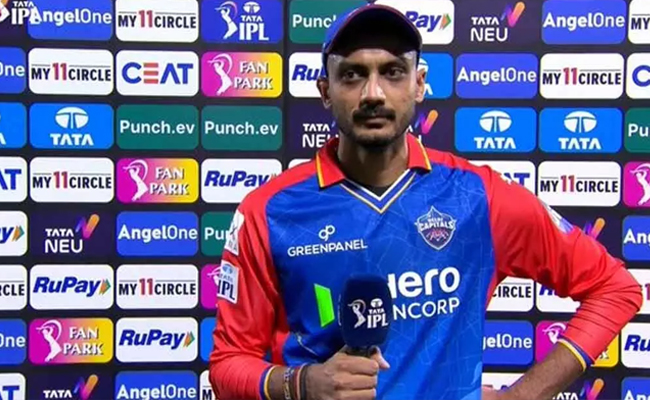
New Delhi (PTI): A beleaguered Axar Patel admitted that both his team's batters and bowlers let the side down after Delhi Capitals suffered a humiliating eight-wicket defeat to Kolkata Knight Riders, virtually ending their IPL 2026 playoff hopes, while indicating the team had already begun looking ahead to the next season.
DC endured a miserable outing at home, managing only 142/8, which Kolkata Knight Riders chased down in just 14.2 overs, powered by a blistering unbeaten 100 from Finn Allen and his destructive stand with Cameron Green (33 not out) as the visitors tore apart the bowling attack.
With just eight points from 11 matches, DC are eighth on the table, while KKR revived their playoff hopes with a resurgent run, moving to seventh with nine points from 10 outings, though their road to the knockouts still remains difficult.
"For now, we'll go back and think about the mistakes we made. After that, obviously there's still a long journey ahead and next year will come too. So we'll think about what plans we can make for next year and what approach we should take," said Axar after the match.
"Based on that, we can also look at the players sitting on the bench and decide who can be given opportunities and what changes we can make," he added, hinting at a possible major overhaul next season.
With 200-plus totals becoming the norm this season, 142 was always going to be inadequate, and Axar admitted the score was well below par while also pointing out at poor judgement shown by the spinners while defending the modest total.
"I think the runs were definitely below par and at the same time the spinners made quite a few mistakes. Looking at the way the pitch behaved, I feel the spinners did make errors.
"At the same time, we lost five wickets in two-three overs, and I think that's where the momentum slipped away from us. That's probably something we need to think about because the same thing happened against CSK...we started well, and then suddenly wickets kept falling," he added.
He admitted the solutions to the issues could be found but players need to show the right mindset and character.
"See, you can't solve it in a complicated way. So, I think it's more about applying the right mindset. Even if you lose one or two wickets, you can still spend time at the crease and play through it. I think that's what needs to be applied, when wickets are falling in clusters, you need to absorb the pressure for an over or two," opined Axar.
KKR skipper Ajinkya Rahane was pleased to see a struggling Finn Allen finally rediscover his touch with the bat.
"I'm really happy for Finn Allen. He was struggling first four or five games, working really hard, but the way he batted tonight was fantastic. But I want to praise our bowlers again.
"We did well because of them. And they've been doing it so well consistently, especially those middle overs and the death overs. Our spinners, Sunil Narine, Varun (Chakravarthy) and Anukul Roy, have been fantastic," he said.
"Fielding-wise, yes, we are working really hard. Our fielding coach has been really strict with us. And that's what has been helping us. The result which you've been seeing about the catches and the ground fielding, credit goes to our fielding coach as well," he added.