From Kannada medium school in Hejamady to IT leader in US: Inspiring story of Imtiaz Iqbal
Barnes Aerospace CIO says, Have travelled world, I feel Mangalore is best place to grow up
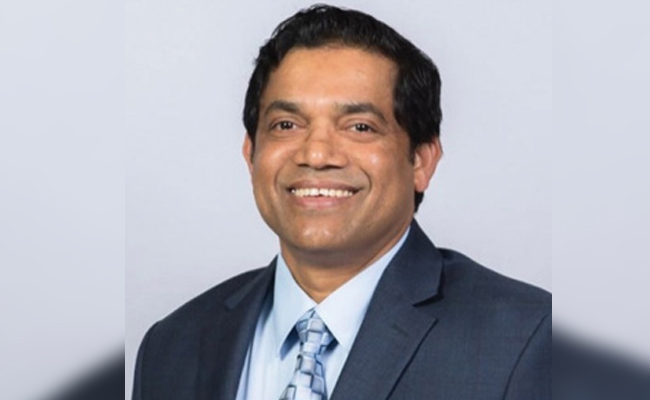
Imtiaz Iqbal did not come from privilege, elite schools, or an English-medium background. He grew up in Hejamadi, studied in Kannada-medium government schools, and moved through life one step at a time, learning as he went. Today, he works as a senior technology leader in the United States, after spending decades across academia, banking, manufacturing, healthcare, aerospace, and global corporate roles.
This interview traces that long journey, not as a success story told in hindsight, but as a series of choices, struggles, and lessons. Imtiaz speaks about growing up in a small house, learning English the hard way, working across cultures, and adapting to industries that kept changing around him.
He also reflects on leadership, failure, artificial intelligence, and why communication matters as much as technical skill. Above all, he speaks directly to young people from coastal Karnataka and similar backgrounds, especially those studying in regional-language schools, about ambition, clarity, and staying focused on where you want to go.
What follows are excerpts from a conversation that is honest, grounded, and rooted in lived experience.
Question: Starting the interview, I would like to know about your Mangalore roots. How did the journey begin from Mangalore to the United States?
Answer: I was born and brought up in Hejamadi, in Udupi district. I studied in government schools there, both primary school and high school. After that, I completed my PUC from Vijaya College, Mulki, which is a neighbouring town. I then pursued computer engineering from NITTE Engineering College, where I secured top-of-the-class distinction in computer engineering.
Soon after graduating, I started my career in academics. I worked as a lecturer at NITK Engineering College for a few years. After that, I moved into the industry and went to Muscat in the Sultanate of Oman, where I worked with the Saud Bahwan Group. During my time there, I handled various roles, starting from software engineering and gradually moving up to project management, taking care of systems and technology projects.
Later, I moved to Dubai and joined HSBC Bank as a Senior IT Officer. My stint there was short, less than a year. During that period, I received an offer from the United States to work as a software consultant. In 1998, I moved to the US.
After doing consulting roles for some time, I joined Givaudan, a Swiss company involved in flavours and fragrance manufacturing. I held multiple roles there and eventually became Director of IT.
After Givaudan, I joined Smith and Nephew, a UK-based medical devices company, though my role was based in the United States. The company manufactures hip and knee replacement products as well as endoscopy equipment. I served there as Vice President of IT.
While working there, I also pursued higher studies and completed my Master of Business Administration in International Business from Xavier University in Cincinnati, Ohio.
After that, I moved into a Chief Information Officer role at Corning Life Sciences, where the company manufactures products used in laboratory and medical research. From there, I joined an aerospace and defence company called Mercury as CIO. The company manufactures electronic systems used in both fighter jets and commercial aircraft. I spent about five years in that role.
Currently, I am with Barnes Aerospace. We manufacture aircraft engine parts and supply them to major commercial aircraft manufacturers. In my present role, I take care of everything related to technology, focusing on solving business challenges using technology.
Question: You mentioned just before this interview that you studied in a Kannada-medium school. What interested me was how you managed to move across industries, starting with teaching, then banking, medical equipment, and later aerospace. There is a common stereotype here that students from regional-language schools find it harder to reach such levels. How did you make this possible and remain relevant across industries?
Answer: That’s a very good question. The biggest turning point for me was when I moved to Vijaya College for my first year of PUC. That is where I shifted from Kannada medium to English.
The first year was difficult. I struggled a lot. I would regularly refer to a dictionary just to understand what was written in the textbooks. It took me almost double the effort compared to someone who came from an English-medium background, just to absorb the same content.
But with hard work, perseverance, and focus, I managed to get through that first year. By the second year of PUC, I was much more comfortable. I could understand the content without needing constant support.
For me, it came down to determination. There was no alternative path. This was the only way forward, and I was not willing to settle for anything less than what I wanted to achieve.
That mindset drove me. Today, when I speak to you, you wouldn’t be able to tell that I studied in a Kannada-medium school. Recognising your weakness is very important.
I knew where I was weak. At college, most of the teachers understood Kannada, but they deliberately refused to speak to us in Kannada. They told us clearly that they would only communicate in English because the future was in English. That pressure helped us. In an indirect way, they made sure we didn’t give up and pushed us to adapt. So it helped.
Question: Just one more question about your growing up years in Mangalore. What was the atmosphere at home, among family and friends? How was the setup when you were studying, especially during the transition from Kannada medium to English medium? How did the environment support you?
Answer: I come from a very humble background. My father was a truck driver, and my mother did beading work. We were a simple family.
I have five sisters, and we grew up in a very small house. Studying in a government school was not really a choice. It was the only option available to us.
One thing my parents were very clear about was that education was the only way out of our situation. They made sure all of us went to school and got educated. We were blessed with very good parents who kept things simple for us.
They used to say, go get your education, life will happen. That was it. As simple as that. And they supported us consistently in that journey.
Hejamadi, where I come from, is a village. It is still a village today. If you drive through it now, it looks almost exactly the same as it did 40 years ago.
But there was a strong belief among people at that time that education would change your life. That belief came not just from our parents, but also from neighbours and teachers. It was very reinforcing.
I was fortunate to have some of the best teachers, both in elementary school and in high school, who were genuinely interested in building our future.
Question: Coming to your professional journey, you have worked extensively with international teams across cultures and geographies. Many would describe you as a global citizen. What is one leadership lesson you learned that textbooks and management courses don’t teach?
This is very important. Throughout my career, I have worked with geographically distributed teams across the world. People from different regions come with different cultures, values, and ways of working. I have had team members ranging from Japan all the way to Argentina, and everywhere in between.
One key learning is that you must understand people as individuals. You need to understand their values, their culture, and their preferences. Based on that understanding, you have to respond to situations in a way that aligns with their beliefs and norms.
For example, if you are working in America, there is a certain way things function. But when you work with people from Mexico or South America, it is very different. The same applies to Europe. I have worked closely with French, German, and British teams, and all three have very different working styles.
When interacting with them, you cannot apply one standard approach. Take French executive culture, for instance. Many decisions are not made inside the meeting room. They are made over coffee, and the meeting is used to confirm what has already been discussed. If you try to put them on the spot in a meeting and push for decisions, which is common in American work culture, it does not work. In fact, it can offend people.
Similarly, when working with Italians or teams from southern Europe, including Spain, you may encounter ego clashes. You should not feed into that. If you approach them in a very rigid or uptight manner, as is common in British or American styles, it can again lead to offence.
So you have to work through these differences by understanding where people come from.
I believe growing up in a place like Mangalore helped me a lot in this regard. In Mangalore, we speak several languages. You grow up speaking at least five languages. When we played cricket or football, we would speak to other players in the language they understood, Konkani, Beary, Tulu, Kannada, and others.
This builds an ability to communicate easily across languages. On top of that, Mangalore has multiple religions, cultures, and even subcultures within a small region. That exposure prepares you naturally for an international environment.
As Indians, if you think about it, this is what makes us unique. Many Indian leaders succeed globally because working with diversity, different languages, beliefs, and cultures comes naturally to us. In many ways, it is a blessing.
Question: Many youngsters from coastal Karnataka today aspire to work on a global platform, much like you did. What advice would you give them on managing their ambitions while staying grounded and relevant to the industry? Especially for young people from this region, how should they move forward?
In the field of technology, I can speak very clearly about this. Artificial intelligence and robotics are the future. We broadly call it computer science, but specialising in artificial intelligence and robotics is the way forward. Everything is going to revolve around that.
The second thing is that you have to be very strong in the subject you are studying. That is a given. You have to be at your best and constantly strive for excellence. There is no room for settling for mediocrity. Aim high, work hard, and get there.
Another very important aspect, and this is my observation not just from coastal Karnataka but across India, is communication. What really sets you apart on the international stage is your ability to communicate.
Communication is extremely important. It is the combination of communication and leadership that becomes the real differentiating factor. You may be very good at science and technology, but if you are unable to articulate your ideas clearly and effectively to an audience, you will not reach where you want to be.
This is one area many people ignore. We don’t pay enough attention to it, and it becomes a blind spot. We need to consciously work on sharpening these skills. When you do that, it becomes the key distinction that sets you apart.
Question: You spoke about artificial intelligence earlier, which was going to be my next question. Looking at a future shaped by AI and newer technologies, what is one skill you feel is most underrated today, something people don’t pay enough attention to but really should?
There are two things I would highlight. First, I have a master’s degree in artificial intelligence from the University of Pennsylvania. Artificial intelligence and robotics are going to be embedded in everything we do.
In our day-to-day lives, AI will be part of almost everything. Not paying attention to how we can use artificial intelligence to improve our daily effectiveness will not be good for us going forward. Take something as simple as writing. If AI can help you do it more efficiently, you should use it.
Using AI allows you to do things faster and frees up time to focus on areas that need deeper thinking. Anything that is repetitive or straightforward, if a machine can do it, you should take advantage of that. What machines cannot do is where humans are needed.
So in whatever job you are doing, it is important to ask one simple question: can this be done by a machine or by a human? If the answer is that a machine can do it, then do not spend your energy there. Focus instead on areas where human judgment, thinking, and creativity are required.
This is a message for everyone, across all fields. Start asking whether a task can be done using artificial intelligence. If the answer is yes, then shift your focus to what machines cannot do, and where you remain relevant.
Question: There is some personal scepticism I have about this idea of constantly asking whether something can be done by a machine. Won’t this eventually reduce jobs? Over the last 25 years, machines have taken over work humans once did. We don’t know what the next 25 years will look like. Won’t this lead to more unemployment or make us overly dependent on machines?
That is a very loaded question. Let me respond to that.
If you look at the global economy, where global GDP was in the 1970s and where it is today in 2025, the difference is massive. I may not know the exact numbers, but global GDP has multiplied many times over. This growth has happened largely because of advancements in technology and science.
If you also compare the quality of life in 1970 to today, there is a clear improvement. People today have far better access to education, healthcare, proper living conditions, clean water, and basic necessities. These changes did not happen despite technology. They happened because of it.
Whenever a major technology is introduced, the entire human race benefits from it. Modern technologies like artificial intelligence and robotics will do the same. What they will do is accelerate how we generate value in the world.
This means human beings will be freed up to focus on work where human involvement is truly required. Tasks that do not need human effort being automated does not automatically create unemployment. Instead, it shifts where human effort needs to be applied.
Let me give you an example from the computer field. Today, I can describe a logic or requirement in plain English, feed it into an AI system, and it can generate the code for me. When I graduated in 1992, I had to write that entire program myself.
So my role today is no longer to write every line of code. My role is to clearly define the problem and prescribe the right input so the machine can produce a better solution.
Interviewer: Prompt engineer.
Yes, exactly. Prompt engineering. That is a skill people need to learn.
This is about using new technology to your advantage, not fearing that it will take your job away. When you use AI effectively, you can build systems faster, solve problems faster, and move on to higher-value work.
Question: Just one additional question, even if I am stretching it a bit. If AI can write code through prompts, why does a company still need someone like you? Why not just hire a lower-paid person who can give prompts and get the work done? What really sets you apart?
One thing we should not forget is that human beings are far smarter than we often give ourselves credit for. If you look at most of the major innovations in the world, they were first imagined and created by humans. Electricity was invented by humans. The internet was invented by humans. Machines did not invent these things on their own.
That is why it is important to position human beings where they are truly needed and use machines as tools. Think about transportation. Centuries ago, people either walked or rode horses. Today, we have cars. Because of that, we can travel faster and get things done more efficiently.
For example, today you can attend a wedding in Mangalore while living in Udupi. You drive for about 40 minutes, attend the function, and come back. Earlier, the same journey could take days. That is a productive use of human time.
Human life comes with a limitation. There is only a certain number of years a person is alive. So the real question is how to use that limited time in the most productive way possible.
We should also not underestimate the positive impact machines can have on human life. When machines take care of repetitive work, humans gain more time for themselves. That time can be used to focus on health, family, fitness, and overall well-being. In that sense, technology does not just improve productivity, it also improves quality of life.
Question: That is a powerful way of looking at things. As you moved ahead in your career, you took on bigger roles with greater responsibilities. Along the way, there must also have been days of failure. How do you personally deal with failure? How should young people ideally look at failure in such moments? And what keeps someone like you motivated on difficult days?
My philosophy is that you learn far more from failures and setbacks than from success. Success gives instant gratification. Failure gives you lessons that push you forward and prepare you for future success.
Failure is a part of what we do. I take it openly. I reflect on it, identify the weaknesses, understand why it failed and how it failed. It could be a project, or even something in personal life. The effort is always to make sure I don’t end up in the same place again.
Optimism is very important. That is something I strongly believe in. Another compass I rely on is focus.
In any journey, you must keep the destination in mind. The journey will have ups and downs. There will be breakdowns and setbacks. But if you focus too much on every single step of the journey, you can get distracted.
For me, the goal is clear. I need to get there. Whatever happens along the way, my job is to reach the destination. The focus has to stay on the destination.
Question: Since we spoke about failure, I want to end by asking about success. Beyond titles and achievements, what does success mean to you personally? And what kind of legacy would you like to leave behind for the people of Mangalore, your village, and coastal Karnataka? How would you like to be remembered?
That’s a great question. In my professional life, wherever I work, I always focus on the legacy I leave behind. I want people to remember me for two things.
One is the problems I have solved for the company. The second is the kind of team members I have developed along the way. These two things together form the legacy you leave behind when you move on from any organisation. People remember what you did for the company and what you did for the people.
That has always been my guiding principle, and it is what I try to follow consistently.
At this stage of my life, I am more focused on how we can motivate young people so they can reach the highest levels they aspire to. If we can play even a small role in showing them the way, like a lighthouse guiding ships, that itself becomes a meaningful legacy.
It is about paying it forward. Just as others helped us reach where we are today, it becomes our responsibility to help the next generation. Whatever I am today is because of the support of countless people, whether in big ways or small. My teachers, my community, and many others supported me at different stages.
If I can help show the way forward for young people, that is the legacy I would like to leave behind.
Question: How often do you visit Mangalore? From your childhood to now, what changes have you noticed in the city, its neighbourhoods, and the overall environment, especially as someone who returns once in a while?
I have been fortunate to travel across the world. I have visited many countries and cities, and worked with people from different places, including colleagues, business partners, and vendors. Having seen all that, I strongly feel that people from this region are truly blessed.
If you ask me where one of the best places in the world is to grow up, I would say the Mangalore region ranks right at the top. One major reason is education. Here, education is always part of everyday conversation. That itself is a blessing when you are growing up.
Then there is diversity and multilingual ability. These things make people from Mangalore unique. Most of the time, when you come across someone from Mangalore, you will find that they have accomplished something in life. That comes from these very ingredients.
In terms of change, what I see today is greater access to education and a better quality of life, especially in healthcare and living standards. This was not the case when we were growing up in the 1970s. These are positive changes, and overall, the development I see is moving in the right direction.
One area where I feel Mangalore is still lacking is manufacturing. If we really want to support future generations in this region, we need to bring manufacturing industries here. When you make products that are sold across the world, you move to a different economic level.
We have seen strong growth in service industries, and even IT is doing well. But industrial and manufacturing development remains a weak area. This is not unique to Mangalore; it is a broader issue across India, where manufacturing is concentrated in a few cities. But Mangalore has the potential to change that.
Manufacturing does not always mean large corporations. Even small-scale companies that focus on a single product, employ local people, and ship globally can lift the entire region. I have seen this model work very well in Western countries, including the United States and Europe, and that is what sets them apart.
We already have the resources, the knowledge base, and strong educational institutions here. I was told that there are more than 30 engineering colleges in this region and some of the best medical colleges as well. So the real question is, why don’t we have even one major medical devices innovation company here? That is something we need to seriously reflect on.
Question: Last question. Imagine there is another Imtiaz Iqbal somewhere in the world today, studying in a Kannada-medium or regional-language school, with ambitions similar to yours. As someone who has already walked that path, what advice would you give to that young Imtiaz Iqbal? In other words, what is your message to the younger generation?
I think we focus far too much on the medium of instruction, Kannada medium, English medium, and so on. Language is power. In fact, knowing more languages makes you stronger and smarter.
Studying in Kannada medium should never be seen as a weakness. It is not a weakness at all. It is a strength. Everything should be looked at as a strength, not as a limitation.
If Kannada medium is what you can afford, go for it. What truly matters is the knowledge you acquire. The language medium is secondary. If you understand calculus, algebra, physics, or chemistry, if you understand concepts like Newton’s laws, then you are already on solid ground, regardless of the language.
Today, the importance of language barriers is reducing even further. With artificial intelligence, translation is becoming easier. That part is no longer the biggest challenge.
What really matters is having a purpose in life. You must know where you want to go and what you want to achieve. That is the most important thing. That is why I always go back to the idea of keeping the destination in mind, not the journey.
In my case, the journey included Kannada medium, moving to English medium, struggles, and challenges. But my focus was always on where I wanted to reach. Because of that focus, the rest became obstacles to overcome, lessons to learn from.
For the younger generation, my advice is simple. Sit down one day and ask yourself where you want to see yourself in life. It doesn’t have to be fancy or complicated. You can aim high if you want, but you must have clarity.
You may not know today whether you want to become a doctor or an engineer. That is okay. But you can still have basic goals, wanting to meet your social and economic responsibilities, wanting to keep your parents happy, wanting to be a valuable citizen.
These are noble foundations to start with. As you grow and gain more information, you will discover which field suits you best, and you can move in that direction. But having a clear sense of destination is absolutely essential.
Let the Truth be known. If you read VB and like VB, please be a VB Supporter and Help us deliver the Truth to one and all.
Rickelton's ton in vain as SRH beat MI by 6 wickets

Mumbai (PTI): Ryan Rickelton's whirlwind unbeaten ton was overshadowed by Heinrich Klaasen's unbeaten 65 as Sunrisers Hyderabad defeated Mumbai Indians by six wickets in an IPL match here on Wednesday.
Chasing an imposing 244-run target, Travis Head (76 off 30) and Abhishek Sharma (45 off 24) shared 129 runs for the opening wicket to set the platform for SRH.
Klaasen (65 not out off 30 balls) then displayed his all-round hitting abilities to guide SRH home with the help of Nitish Kumar Reddy (21) and Salil Arora (30 not out off 10) in 18.4 overs.
Earlier, Rickelton's knock powered MI to 243 for five.
MI rode on a 93-run stand between Rickelton (123 not out off 55 balls) and Will Jacks (46 off 22) in 7.1 overs for the opening stand to power the side.
MI skipper Hardik Pandya scored a valuable 31 off 15 balls before being dismissed.
Praful Hinge (2/54), Eshan Malinga (1/29), Sakib Hasan (1/39) and Nitish Kumar Reddy (1/31) were the wicket-takers for SRH.
Brief Scores:
Mumbai Indian: 243 for 5 in 20 overs (Ryan Rickelton 123 not out; Praful Hinge 2/54).
Sunrisers Hyderabad: 249 for 4 in 18.4 overs (Travis Head 76, Heinrich Klaasen 65 not out; AM Ghazanfar 2/51).