Gandhi ideology mocked in Modi's India
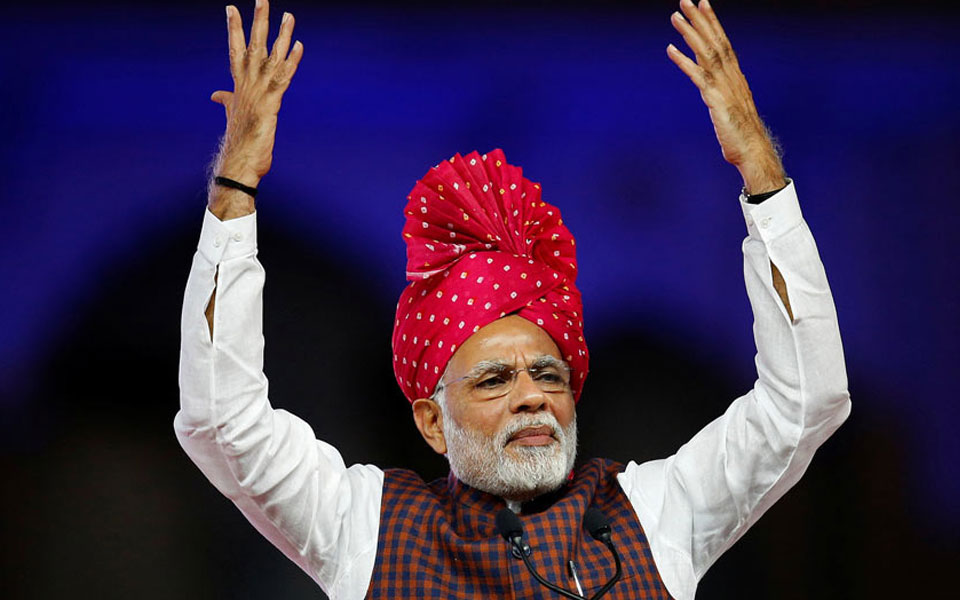
India is celebrating Gandhiji's 150th birth anniversary like some kind of a mockery. Modi has restricted Gandhi to just a symbol of cleaning roads. There is a reason to this. Gandhi is a memory, an indelible one, that seeps the sangh Parivar in guilt owing to the end he met at the hands of a person who believed in Sangh ideology. Hence the BJP which believes in Sangh ideology has restricted Gandhiji to a metaphor of sweeping roads. BJP leaders stand with rooms in the hands on the birth anniversary of Gandhiji clearly ignorant is all other messages and teachings. Gandhians fear whether the leaders have held broom to sweep away his other values such as non violence, coexistence, harmony and secularism.
It is true that Gandhiji placed cleanliness above all other values. He wants visited pilgrimage which was dirty beyond comprehension and said god would never be present here. He once visited Krishna Mutt and the dignitaries invited him to visit the main temple Gandhiji asked them are Dalits allowed in that place?
Upon getting a negative answer he refused to go to the temple. His emphasis for cleanliness was not just external. He believed external cleanliness is as important as internal purity. This is the main reason why Modi's swachata andolan is not taking off as expected. The reason for its failure is here. There is also a reason as to why the river Ganga is not getting cleaned up. So long as social evils such as poverty, casteism and untouchability are not eradicated from our society, or the government does not work with total integrity to eradicate them from the society, all these celebrations will just remain mere slogans or pretensions.
Gandhiji strongly believed in nonviolence. That was the route he chose to earn freedom for India. Just as the non-cooperative movement was gaining momentum some people set a police station on fire when he heard this he withdrew from the movement.
He felt the country wasn't prepared to gain independence. He regretted for this incident of violence. At a time when the country celebrates his 150th birth anniversary violence is looming large in all quarters of the country. There was a time when those to cared for the cows were known as Gau rakshaks. Today's Gau rakshaks are those who brandish knives, do rowdism, smoke ganja and drink alcohol creating trouble for everyone and claiming innocent lives in the pretext of cow protection. Dairy farming held prominent place in Gandhi's India. Princes in Modi's India, dairy farming takes a backseat and fake Gau rakshaks gain prominence.
Farmers are killed by this fake cow protectors. Police kill without hesitation in the name of encounters. More than anything else government got down to assault the farmers who had gathered to press for the demands at the national capital on Gandhi Jayanti day itself. This is the tragedy of the celebration. This bloodthirsty government will attempt to kill common people but will pay tributes to Gandhiji by banning sale of meat on the day of his birth anniversary. Just as fake cleanliness is a mockery of Gandhi's values running sale of meat is also another contradiction to what Gandhi stood for.
India is a country where people have varied sources of food, it's not a majoritarian nation. Meat and alcohol should not be made on the same scale. Alcohol is not food and by consuming it man loses semblance of thoughts. The government has to ban sale of alcohol on certain occasions.
Gandhi had staged anti alcohol protest many a times during his freedom struggle. But never ever did he stage a demonstration against food or choice of meat as one's food. Many of his friends were meat eaters and Gandhi never protested against it. This being the case why should the government ban sale of meat on his birth anniversary? More than 50% of the population in India dies of malnutrition. World Health Organisation has been warning that the numbers are increasing with every passing year. With this by placing meat and alcohol on the same level what message is the government trying to give to the people of the country?
The government is trying to reduce the food of the majority of Indians to third grade. This government is trying to create an inferiority Complex among people about eating meat. Where are the examples of vegetarians having followed the path of non violence?
History is testimony to the fact that Hitler was vegetarian. All those who have been exploiting the Dalits since ages are vegetarians. This being the facts what is the basis to prove that non vegetarian diet encourages violence or cruelty among its consumers?
Violence is to take away the right to sell cattle from the hands of their rearers which are farmers. Denying people their food for not possessing Aadhar card is violence. Banning sale of meat on Gandhi Jayanti day and denying people their choice of food is violence. The irony of democracy is that the government decides the diet of people starting from Gandhi Jayanti to Mahavir Jayanti. Gandhiji would have never approved of this. No administration or any government has any right to dictate food choices to people. Before people take to streets demanding their choice of food the government should issue a directive to district administration to not issue official orders on what people should be eating on a particular day.
Let the Truth be known. If you read VB and like VB, please be a VB Supporter and Help us deliver the Truth to one and all.
Primary accused in 96.6 pc POCSO cases were close acquaintances: NCRB

New Delhi (PTI): In 96.6 per cent of 44,126 cases of sexual abuse of minors, close acquaintances have emerged as the primary offenders, according to the latest data released by the NCRB.
In its report 'Crime in India 2024' released by the National Crime Records Bureau (NCRB), 44,126 total cases have been registered under the Prevention of Children from Sexual Offences (POCSO) Act under Sections 4 and 6 which pertain to penetrative sexual assault on minors during the year across the country.
The figures present a grim picture as close acquaintances emerged as primary accused in 42,634 (around 96.6 per cent) of the 44,126 total cases falling in that category, according to the latest NCRB data.
The data shows that family members were involved in 3,658 cases, while family friends, neighbours, employers or other known persons were named in 16,668 cases.
The largest share came from friends, online friends or live-in partners acting on the pretext of marriage, with 22,308 cases.
Cases where the offender was unknown or not identified stood at mere 1,492, or 3.4 per cent of the total.
Among states, Tamil Nadu reported the highest number of POCSO cases at 5,320, followed by Maharashtra at 4,829 and Madhya Pradesh at 3,721. Uttar Pradesh was next with 3,671 cases.
In Union territories, Delhi accounted for the highest number of cases at 1,038, followed by Jammu and Kashmir at 228 and Puducherry at 82. The Andaman and Nicobar Islands reported 77 cases.
The data also shows that Andhra Pradesh, Arunachal Pradesh, Himachal Pradesh, Nagaland, Sikkim, Uttarakhand, Tripura and several Union territories, including Chandigarh, Andaman and Nicobar Islands, Dadra and Nagar Haveli and Daman and Diu, Lakshadweep, Ladakh and Puducherry, reported 100 per cent of cases involving known offenders.