How C.V. Raman’s Discovery is Saving Millions of Lives Today
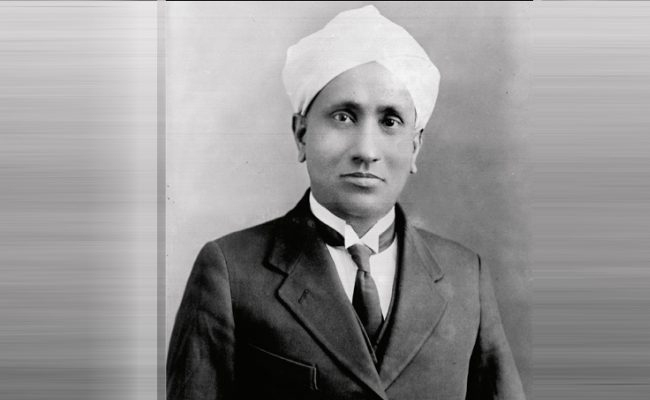
Every year on 28 February, India celebrates National Science Day. It is the day we remember Sir C. V. Raman, an Indian physicist who made a discovery in 1928 that changed the world. He received the Nobel Prize in Physics in 1930 for this work, becoming the first Asian to win that honour in science. The Government of India declared 28 February as National Science Day in 1986 to honour this achievement and to keep the spirit of scientific thinking alive in our country. This year, 2026, the theme is "Women in Science: Catalysing Viksit Bharat," reminding us that India's growth depends on every single mind, regardless of gender. But today, let us talk about something that most people do not know. The discovery Raman made while staring at the blue sea is quietly saving your life right now, inside hospitals and medical laboratories across the world.
Let us first understand what the Raman Effect actually is, in the simplest way possible. Raman noticed that when light passes through a clear material, a tiny portion of that light changes its colour slightly. Not much, just a little. In fact, only about 1 in every 10 million particles of light called photons changes. But that tiny change is enough to tell scientists exactly what a substance is made of. Think of it like a fingerprint. Just like no two people have the same fingerprint, no two molecules change light in exactly the same way. So when scientists shine a laser, which is a focused beam of light, on any material, they can read those tiny light changes like reading a name tag. This reading is called Raman Spectroscopy, and it is the most powerful identification tool science has ever created.
Now, why does this matter to a common person sitting at home? Because this technology has quietly walked into your nearest hospital and started doing things that were once considered impossible. Let us take cancer as an example. Detecting cancer early is the difference between life and death. Earlier, doctors had to remove a tissue sample, send it to a lab, and wait for days to get results. Today, Raman spectroscopy can examine living cells and tissues without cutting, without harming, without removing anything from the body. It reads the molecular fingerprint of the tissue and tells doctors immediately whether a cell is healthy or cancerous. This means faster diagnosis, less pain for the patient, and more time to begin treatment. For millions of families who have watched a loved one battle cancer, this is not just science. It is hope delivered at the speed of light.
The medical revolution does not stop at cancer. In pharmacies and drug manufacturing companies, Raman spectroscopy is used to check whether a medicine is pure and genuine. Fake medicines are a serious problem in India and across the world. People buy tablets trusting that what is written on the label is inside the tablet. Raman spectroscopy can verify this in minutes without even opening the packet. The laser passes through the packaging, reads the molecular fingerprint of the medicine inside, and confirms whether it is real or fake. This one application alone is protecting millions of people from consuming counterfeit drugs every single day.
In blood testing, in identifying kidney stones without surgery, in checking whether a wound is healing properly at a cellular level, in detecting early signs of diabetes through the skin without even taking a blood sample, Raman spectroscopy is showing up everywhere. Scientists and doctors are working on handheld Raman devices that a local doctor in a small town can use to diagnose patients on the spot, without needing expensive lab equipment or long waiting periods. In a country like India where medical infrastructure in rural areas is still developing, this could genuinely change how millions of people receive healthcare.
All of this began with one man refusing to accept a simple answer. Raman looked at the blue sea and asked why. That one question, followed by seven years of hard work, gave the world a tool that now fights cancer, catches fake medicines, and is slowly making quality healthcare reachable for every Indian, rich or poor, city or village. This National Science Day 2026, with its focus on women in science, is also a reminder that the next Raman could be a young girl sitting anywhere in this country, asking her own "why." The only thing she needs is for the world around her to stop saying "don't ask" and start saying "go find out."
(Girish Linganna is an award-winning science communicator and a Defence, Aerospace & Geopolitical Analyst. He is the Managing Director of ADD Engineering Components India Pvt. Ltd., a subsidiary of ADD Engineering GmbH, Germany.)
Disclaimer: The views and opinions expressed in this article are solely those of the author. They do not necessarily reflect the views, policies, or position of the publication, its editors, or its management. The publication is not responsible for the accuracy of any information, statements, or opinions presented in this piece.
Let the Truth be known. If you read VB and like VB, please be a VB Supporter and Help us deliver the Truth to one and all.
Real Madrid fines Valverde and Tchouaméni half a million euros each for altercation
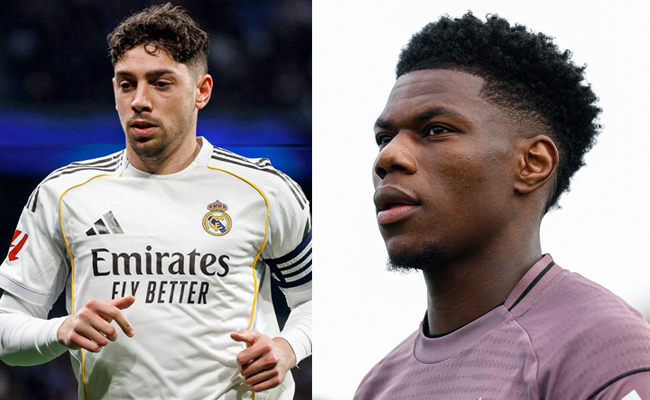
Barcelona (AP): Real Madrid slapped players Federico Valverde and Aurélien Tchouaméni with half-a-million-euro ($588,000) fines on Friday for their altercation during practice.
The massive fines came a day after the midfielders tussled when the team trained. Valverde said in a post on social media on Thursday that no punches were thrown. But Valverde knocked his head on a table and he suffered a small cut that required a brief hospital visit.
On social media, Valverde initially called it a “meaningless fight” with a teammate and said “everything has been blown out of proportion."
His employers, however, considered it a significant enough breach of team discipline to nail both Valverde and Tchouaméni with fines that bite even the bank account of a top soccer player. The half-a-million euro penalties reflect the reputational damage the club was enduring in a chaotic end to a disappointing season.
In a statement, the 15-time European champion said its disciplinary action was concluded after both players expressed to the club “their complete remorse for what happened and apologized to one another.”
Madrid added they also apologized to their teammates, the coaching staff and club supporters, as well as showing their willingness to accept whatever disciplinary action the club deemed “opportune.”
Tchouaméni was back training with Madrid on Friday, two days before they play at Barcelona in a clasico. Madrid has to win otherwise Barcelona will be crowned La Liga champion.
After being notified of the fine, he posted a public apology to the club and its fans on social media.
“What happened this week in training is unacceptable,” Tchouaméni wrote. "I say this while thinking about the example we are expected to set for young people, whether in football or at school.
“Above all, I am sorry for the image we projected of the club.”
Valverde was not at practice due to the head knock.
Both players are set to play in the World Cup next month, with Tchouaméni playing for France and Valverde for Uruguay.
Chaotic end to a poor season
===================
The run-in between the players, who for seasons have played side by side in Madrid's midfield, came after they argued this week in previous training sessions. But tempers boiled over on Thursday. Spanish media was rife with reports that the players previously disagreed over the club's decision to let coach Xabi Alonso go after just months on the job.
It was not the only altercation involving Madrid players during training this week. Álvaro Carreras confirmed he was in a “minor” incident with a teammate. Spanish media said he and fellow defender Antonio Rüdiger got into a scuffle.
Álvaro Arbeloa, the coach who was promoted from Madrid's reserve team when Alonso was fired in January, will face tough questions on what went wrong inside the changing room when he gives a press conference on Saturday ahead of the clasico at Camp Nou.
Madrid is facing a second consecutive campaign without a major trophy amid rumors in the Spanish media that club president Florentino Pérez is considering bringing back Jose Mourinho to straighten out his underperforming team.