Indo-Pak talks should not be aborted
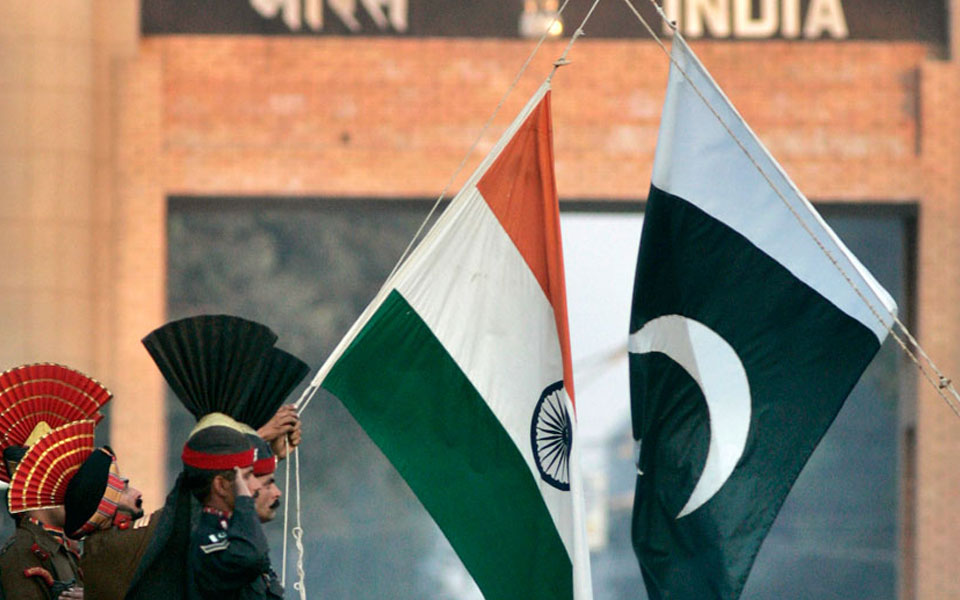
India and Pakistan are neighbours. For the same reason, they have to be in good terms with each other. It is also in the interest of both countries that they are connected with each other over many matters apart from borders, for the many reasons including their commonalities in culture, way of life and people who share a history that belonged to a few generations in both nations. But owing to mistakes made by ruling dispensations, both countries have been breathing hot and cold over many years.
This week, a meeting was supposed to be held between foreign affairs ministries of India and Pakistan. But this meeting was cancelled for no tangible reason. Pakistan PM Imran Khan had sought cooperation from India in a letter he had written. As a result of this, a meeting of external affairs minister Sushma Swaraj’s meeting with her Pak counterpart Muhammad Khureshi was almost certain. But in a matter of 24 hours, the talks have been cancelled from India’s side and Pak PM Imran Khan has expressed deep discontentment in this regard.
The relationship between India and Pakistan has been a chequered one. The nations that share a common border sometimes come very close. Just as one starts to assume things may get better from this point, the relationship breaks down to nothing. A meeting gets cancelled and then people begin to blow hot and blow cold immediately thereafter. And this time is no exception either.
Gruesome murder of a BSF soldier allegedly by Pakistan forces has led to both countries retreating on their talk pact. Terrorists in Kashmir kidnapped three policemen from their homes and killed them. This incident added even more complexity to the already volatile situation between the two nations.
Upset by this development, India has said these incidents are a result of evil approach Pakistan has taken towards India. The most foul murder of BSF soldier is highly condemnable. No one would ever have any objection to widespread condemnation to this. But just about a day before his body was found, defence minister Nirmala Sitharaman had said in an interview that ‘we (india) also severe their necks, but we do not publicise that.’ Her words have also been condemned widely.
Eye for an eye is never the answer. This does not contribute to the betterment of relationships between two countries in any way. In fact, it would be detrimental to good relations between two countries. There is no doubt that Pakistan promotes terrorism. But innocent Kashmiris don’t have to pay the price for this. People are already stuck between terrorists and army in that area. On the other hand, relationship between two countries is getting very complex now. War will not serve both countries well at all. Common people will face a lot of problem owing to that. That would set the country’s progress back by many years. Hence, India has to take a calculated approach in this matter.
India-Pakistan-Bangladesh are three nations that exist on a single unit of land. Socialist leader Ram Manohar Lohia often said they have to foster better relations between themselves and walk in solidarity towards progress. From the time of our very first PM Nehru, India has been following this policy. Many steps were initiated in this regard. A train and bus facility was made to connect Lahore with India. But that contentment didn’t last too long. The whole border area is laden with a lot of problems. Terrorists have been consistently continuing their destructive activities since many years now. Their whole purpose is to destroy any chance of conducive talks between both countries. Whenever there is a fair chance of betterment of relations between two countries, terrorists increase the frequency of their attacks. Hence, both the countries have to ensure they keep the talks on irrespective of such gruesome incidents.
India boycotted the meeting with Pakistan for reasons that Kashmir had released a postage stamp commemorating Burhan Wani, an alleged terrorist and for the reason that Pakistan had slit the throat of BSF jawan. Instead of boycotting, the murder of jawan should have been put before the foreign affairs minister of Pakistan and taken the nation to task over this inhumanity. But cancelling the meeting means an opportunity lost to take our case further. This cannot better the relations between foreign affairs ministries of both countries. The only interest of India at this point should be to keep the talks on and continue to explore opportunities to take the case of peace existing between both countries further. Hence, both nations need to take positive approach. India, Bangladesh and Pakistan cannot fight each other on issues that should actually bond them together. Hence, India should not hesitate from calling another international meeting between the nations and Pakistan must make it a point to participate and do its duty in ensuring peace in the region.
Let the Truth be known. If you read VB and like VB, please be a VB Supporter and Help us deliver the Truth to one and all.
2 Indian nationals part of crew of luxury cruise ship that reported hantavirus outbreak

London (PTI): At least two Indian nationals are part of the crew of the Dutch vessel MV Hondius which reported a hantavirus outbreak with five confirmed cases and three deaths so far, according to the BBC.
The luxury cruise ship, operated by Oceanwide Expeditions, began its journey on April 1 from Argentina’s Ushuaia and is expected to arrive in Spain’s Canary Islands on May 10.
About 150 passengers and crew from 28 countries were initially aboard the luxury cruise, but dozens disembarked on the island of St Helena on April 24, according to the report.
Of the 28 nationalities onboard, 38 are from the Philippines, 31 from the UK, 23 from the US, 16 from the Netherlands, 14 from Spain, nine from Germany, six from Canada, and two crew members from India, among others, the BBC reported.
ALSO READ: West Bengal board declares class 10 exam results, 86.83 pc students pass
The World Health Organization said on Thursday that five of the eight suspected hantavirus cases had been confirmed.
A 69-year-old Dutch woman, confirmed to have the virus, has died; her Dutch husband and a German woman were also among the fatalities. Their cases are being investigated.
The UN health agency has said the outbreak is not the start of a pandemic.
Maria van Kerkhove, an infectious disease epidemiologist at WHO, told a news briefing that the situation is not the same as six years ago with Covid-19 because hantavirus spreads through “close, intimate contact”.
Van Kerkhove said “this is not Covid, this is not influenza, it spreads very, very differently”. She said authorities had asked “everyone to wear a mask” on board the MV Hondius.
Those in contact with or caring for suspected cases, she added, should “wear a higher level of personal protective equipment”.
Hantavirus typically spreads from rodents - but in the latest outbreak the transmission between people was documented for the first time, the WHO said.
Meanwhile, health authorities are racing to trace dozens of people who have recently disembarked from the Dutch vessel MV Hondius.
Oceanwide Expedition said 29 passengers, of at least 12 different nationalities, had left the MV Hondius in St Helena, the British Overseas Territory.
It also said the body of one deceased person—now known to be a Dutch man - was taken off the vessel.
Seven of those who left the cruise liner were British nationals.