Insensitive statements of political leaders
Some of the recent incidents in Karnataka are the best examples of what transpires when political leaders lose sensitivity. Two cases of audio clippings have not only created political turmoil, but have also exposed the calloused attitude of political leaders.
Speaker Ramesh Kumar set of a stream of tears since his name was mentioned in the audio tape expose case by the state government. He spoke rather emotionally and sent the whole audio issue off track the assembly.
Since issues such as audio recording have challenged the democracy, they have to be discussed rather pragmatically than emotionally. Ramesh Kumar may not have received money from the BJP.
But why should that stop the whole issue from being investigated? Then what would the difference be, between Ramesh Kumar and Narendra Modi?
The metaphor he gave to convince that any further investigation will cause him more humiliation was highly deplorable. Those are not the words that a statesman like him can throw around freely. A rape survivor apparently lodged a complaint and the matter went to the court. In the court, she was questioned many more times about the same incident that she felt even more humiliated though the rape happened only once. Someone asked her if she got justice, she apparently said the rape happened only once but the court hearing forced her to relive that incident multiple times in the court.
This story is what Ramesh Kumar said as a response to the allegations made about him in the audio tape. This example is not too far from the truth. Humiliating the survivor and making her deeply regret the fact that she even made an attempt to complain against the ghastly crime that happened her well within a judiciary system is a fact enough.
The courts are now insisting that the rape survivors be treated with more respect and dignity than what has been the norm so far. Ramesh Kumar says he has been treated like a rape survivor. He has taken the plight of a rape survivor rather so lightly, almost sounding like a joke.
So does that mean the survivor shouldn’t have lodged a complaint at all if she is going to be humiliated in the court time and again? Isn’t it the responsibility of the judicial system that pushed her into this plight?
Ramesh Kumar’s analogy is somewhat smart as well. He is insisting that the audio should not be investigated by Special Investigation Team. If that happens, the speaker feels the officers may question him in various ways that may cause him further agony.
This is an illogical argument that does not weigh well on the case. His image is not any bigger than the constitution. So to save his image, one cannot overthrow the constitutional requirements and protect his image over a sovereign government. He should have been more matured about this and in fact he should have sought a thorough enquiry and through that protected his clean image.
If this matter is not investigated, the dark side of this issue will haunt him forever. If the issue is investigated, and he is proved innocent, it may even get him a cleaner image. His dramatic behavior regarding this has led to serious doubts about the issue.
At the same time, an elected representative from Hassan is facing people’s ire for having spoken rather insensitively about former PM Deve Gowda and CM Kumaraswamy. People may nurse some dissent towards a political party. That’s natural. And they may even create strategies to defeat the competition through various means.
But how does one hope for the death of a senior politician? “Deve Gowda is old and will die soon. Kumaraswamy may also not last longer because he isn’t in great health,” the MLA has reportedly said.
This person must remember sometimes people who wait to see someone’s death die before the person himself! One cannot even get the context of state politics by keeping aside the JD(S) and former PM Deve Gowda.
His contribution to state and central politics is huge. BJP has taken to streets supporting their MLA who has wished death to Deve Gowda. JD(S) activists too have attacked him for having spoken this way. This is not right either.
Both have to be brought to book. At the same time, BJP should have apologized that their MLA spoke in this disrespecting manner to one of the towering figures of Indian politics. This was the least they could do. They should have condemned the words of their MLA before condemning the assault on their activists and workers. It is shameful; that instead of being a sensible party, BJP went to support their MLA and are encouraging them to indulge in violence.
Let the Truth be known. If you read VB and like VB, please be a VB Supporter and Help us deliver the Truth to one and all.
UP Cong chief Ajay Rai hospitalised after fainting, stable
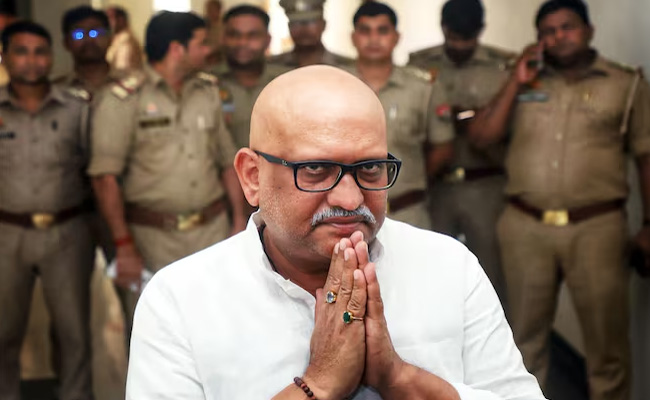
Lucknow (PTI): Uttar Pradesh Congress president Ajay Rai was hospitalised here after he fell unconscious due to low sodium levels, party leaders said on Saturday.
They said he was admitted to Medanta Hospital on Friday evening and is stable.
"Ajay Rai was admitted to Medanta Hospital in Lucknow at around 6 pm on Friday after he fell unconscious as his sodium levels had dropped. He fell unconscious at his residence in Lucknow. For the entire day, he was engaged in party programmes and had also gone to the airport," Uttar Pradesh Congress spokesperson Anshu Awasthi told PTI.
Congress in-charge of Uttar Pradesh Avinash Pande told PTI, "Now, he (Ajay Rai) is stable and I am also reaching Lucknow."
Medanta Hospital Director Dr Rakesh Kapoor told PTI that Rai collapsed at his home on Friday evening and was subsequently admitted to the hospital's emergency ward.
Medical examinations revealed that Rai was suffering from a sodium deficiency and elevated blood pressure. Doctors administered immediate treatment and he is doing significantly better now, Kapoor said.
A team of doctors is monitoring his health. Rai is conversing with others and his condition is stable, he added.
In a post on X late Friday night, Prime Minister Narendra Modi wished Rai a speedy recovery.
Rai hails from Varanasi and had contested the 2024 Lok Sabha elections against Modi from the parliamentary constituency. The Congress appointed him as the Uttar Pradesh unit chief in 2023.