Inside PRAHAAR: India’s New Seven-Layer Strike
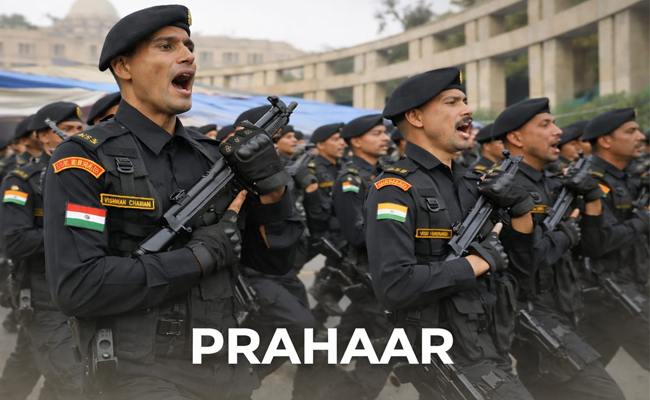
India has finally done something it should have done a long time ago. For the first time ever, our country has released an official counter-terrorism policy. It is an eight-page document prepared by India's Home Ministry, and it is called PRAHAAR — which in Hindi means "Strike." But this is not just a powerful name. It is also a smart acronym where every letter stands for a specific layer of action. Together, these seven layers form India's complete plan to fight terrorism — not just today, but for the decades to come.
So let us understand this in simple language. What is PRAHAAR, what does it say, and why does India need it?
What Is PRAHAAR?
PRAHAAR is India's first-ever official counter-terrorism policy. Think of it as a rulebook — a clear, written document that tells every agency, every police force, every NGO, and every state government exactly what their role is when it comes to terrorism. Before this, everyone had their own way of doing things. Now, India has one unified plan.
The document makes two things crystal clear right at the beginning. First, India has zero tolerance for terrorism — no exceptions, no excuses. Second, India does not link terrorism to any religion, nationality, or ethnicity. This is important. It means India separates the Pakistani state — which the document accuses of using terrorism as a tool — from ordinary Pakistani people. India is attacking a policy, not a people. That is a mature and responsible stand.
The Seven Layers
P stands for Prevention. This is about intelligence gathering. Different agencies must share information with each other without delay. Cyber operations are a big part of this because most terror groups today plan attacks over the internet. Catching them online before they act is the first line of defence.
R stands for Response. Local police are the first to reach any attack site. The NSG — National Security Guard — is India's elite counter-terror force, trained for tough operations like hostage rescue. Their role is now formally written into policy.
A stands for Aggregating Capacities. This means giving our security forces the best technology, resources, and training. It also means creating common protocols across all states so that the response to any attack is fast, coordinated, and effective.
H stands for Human Rights and Rule of Law. Even while fighting terrorism, India must follow due process. Remember Ajmal Kasab — the Pakistani terrorist caught during the 26/11 Mumbai attacks? India gave him a fair trial. That was not weakness. That was integrity. This policy wants to preserve that legacy.
A stands for Attenuating Conditions That Lead to Terrorism. This is about fighting radicalization from the roots. NGOs, religious leaders, and community preachers are called upon to identify and guide vulnerable youth. The policy also talks about education, housing, and jobs — because poverty and hopelessness are often what push young people towards dangerous paths.
A stands for Aligning with Global Efforts. India cannot fight terrorism alone. Intelligence sharing, extradition treaties, and working with the United Nations to designate foreign terrorists — all of this is part of the plan. Global problems need global solutions.
R stands for Recovery and Resilience. When a terror attack happens, it does not just kill — it traumatises. Survivors carry that pain for life. This layer focuses on healing — through doctors, psychologists, NGOs, and proper support systems. A society that recovers fast is a society that cannot be broken.
Why Did India Need This Policy?
There are three solid reasons. First, it is a statement of intent. India has suffered tremendously because of terrorism. Hundreds of lives have been lost. Every government has said "zero tolerance" — but now it is written, official, and institutionalised. Words have become policy.
Second, it gives clarity to everyone involved. Police, NSG, NGOs, state governments — everyone now knows their exact role. It is like a guidebook that removes confusion and creates coordination.
Third, and most importantly, it takes a whole-of-society approach. Most of the time, the conversation around terrorism is limited to revenge and retaliation. But this policy goes much further — it asks how we can prevent attacks, how we can remove the root causes, and how we can help those who survive. That is the kind of long-term thinking India has needed for a long time.
As the document itself suggests — PRAHAAR is not just a strike at the branches. It is a strike at the very roots of terrorism. And that makes all the difference.
(Girish Linganna is an award-winning science communicator and a Defence, Aerospace & Geopolitical Analyst. He is the Managing Director of ADD Engineering Components India Pvt. Ltd., a subsidiary of ADD Engineering GmbH, Germany.)
Disclaimer: The views and opinions expressed in this article are solely those of the author. They do not necessarily reflect the views, policies, or position of the publication, its editors, or its management. The publication is not responsible for the accuracy of any information, statements, or opinions presented in this piece.
Let the Truth be known. If you read VB and like VB, please be a VB Supporter and Help us deliver the Truth to one and all.
Real Madrid fines Valverde and Tchouaméni half a million euros each for altercation
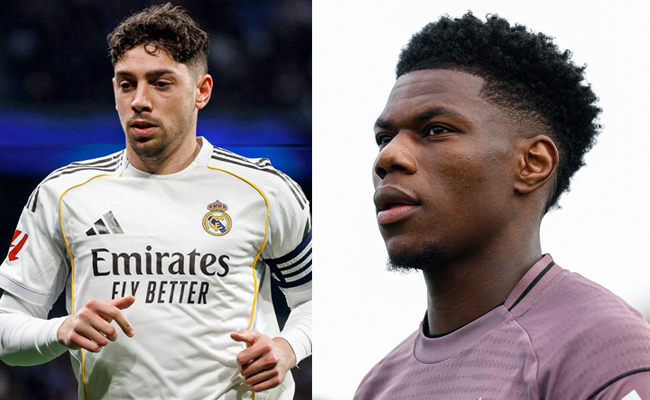
Barcelona (AP): Real Madrid slapped players Federico Valverde and Aurélien Tchouaméni with half-a-million-euro ($588,000) fines on Friday for their altercation during practice.
The massive fines came a day after the midfielders tussled when the team trained. Valverde said in a post on social media on Thursday that no punches were thrown. But Valverde knocked his head on a table and he suffered a small cut that required a brief hospital visit.
On social media, Valverde initially called it a “meaningless fight” with a teammate and said “everything has been blown out of proportion."
His employers, however, considered it a significant enough breach of team discipline to nail both Valverde and Tchouaméni with fines that bite even the bank account of a top soccer player. The half-a-million euro penalties reflect the reputational damage the club was enduring in a chaotic end to a disappointing season.
In a statement, the 15-time European champion said its disciplinary action was concluded after both players expressed to the club “their complete remorse for what happened and apologized to one another.”
Madrid added they also apologized to their teammates, the coaching staff and club supporters, as well as showing their willingness to accept whatever disciplinary action the club deemed “opportune.”
Tchouaméni was back training with Madrid on Friday, two days before they play at Barcelona in a clasico. Madrid has to win otherwise Barcelona will be crowned La Liga champion.
After being notified of the fine, he posted a public apology to the club and its fans on social media.
“What happened this week in training is unacceptable,” Tchouaméni wrote. "I say this while thinking about the example we are expected to set for young people, whether in football or at school.
“Above all, I am sorry for the image we projected of the club.”
Valverde was not at practice due to the head knock.
Both players are set to play in the World Cup next month, with Tchouaméni playing for France and Valverde for Uruguay.
Chaotic end to a poor season
===================
The run-in between the players, who for seasons have played side by side in Madrid's midfield, came after they argued this week in previous training sessions. But tempers boiled over on Thursday. Spanish media was rife with reports that the players previously disagreed over the club's decision to let coach Xabi Alonso go after just months on the job.
It was not the only altercation involving Madrid players during training this week. Álvaro Carreras confirmed he was in a “minor” incident with a teammate. Spanish media said he and fellow defender Antonio Rüdiger got into a scuffle.
Álvaro Arbeloa, the coach who was promoted from Madrid's reserve team when Alonso was fired in January, will face tough questions on what went wrong inside the changing room when he gives a press conference on Saturday ahead of the clasico at Camp Nou.
Madrid is facing a second consecutive campaign without a major trophy amid rumors in the Spanish media that club president Florentino Pérez is considering bringing back Jose Mourinho to straighten out his underperforming team.