It’s freedom to police lathis
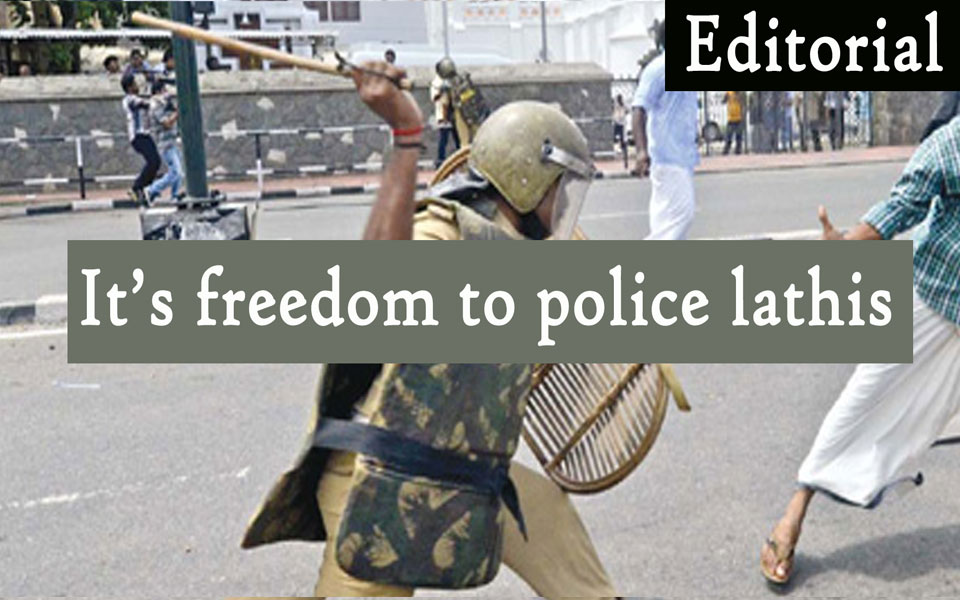
Courts has been issuing directions time and again to bring in reforms into police department. But common people have been losing trust in the system with every passing day. Custody deaths would turn into questions of efficiency of the police, and the media would report police brutality as and when they happened. But now, the police have adopted a soft approach towards Sangh Parivar goondas and other rowdies, in some ways encouraging them to carry out their activities.
There are charges against the police that they entrust their difficult jobs into the hands of rowdies. Finest example of this can be seen in instances of mob lynching cases that occur with the aid of police. With this, the reforms initiated by the government have reached another level altogether. And this has created fear in people’s minds that the entire police department is going through a phase that will leave it incorrigible.
India has a very dark history of custody deaths and the incidents that lead to that. And how many culprits have been held in such cases is something that needs to be studied with great interest. There are proper policies that indicate how the police should treat the accused and the crime. They are accountable at every step. The Supreme Court suggested reforms that need to be made in 2006. But the state and central governments have ignored it. As a result, the police department is setting out to be an alternative to courts, and the government itself.
The reforms suggested by the SC reflects the reports submitted by the National Police Commissions and many benches and committees headed by judges and high profile police officers. With this suggestion of reforms, it was assumed that the lackadaisical approach the system has about police department was about to change. But that seems to have met with a disappointment now. Central and State governments implemented it the way they deemed fit, or completely ignored it.
Since the steps suggested by the Supreme Court could reduce the control of state governments on the department, none of them are interested in implementing it. If the court had ordered for the monitored implementation of the directions issued, the situation would have been much better.
Many committee reports have placed their recommendations before the Supreme Court. There is a suggestion to bring a new law in place of the police act of 1861. There are also suggestions to reduce interference by state government on transfers and promotions, and appointments. Investigation department has to be left independent. Along with this, there is also a recommendation to separate implementation section, another unit to hear the grievances against the police and other things.
There is a need to bring in good and positive change into the system to ensure people’s faith on police increases with time and every positive step. A report on the status of police department in the country, brought out in 2018 had thrown light on aspects of increase in crime rate, cases that were resolved through intervention of courts and police, and the presence of people from diverse backgrounds in the police force, basic infrastructure, data relating to prisons, rate of resolution of cases relating to SC/ST women and children etc.
The report says there is a lot left to be done as far as case resolution of other minority communities are concerned. The bias exhibited by police is much dependent on the caste or background of the accused. Then there are also gender, caste and faith that aid to stereotypes as well. Muslims nurse fear against the whole system.
Hence the court has to take the responsibility of reforming the police department on its own shoulders and ensure the implementation of the suggestions made in 2006 report. The states that do not implement this have to be held accountable and penalized. These days the department is joining hands with anti-societal forces and has reached some secret pact with the perpetrators.
Politicians are using the police department as per their whims. Before the police department turns into a wing of Sangh Parivar, the court should ensure the reforms are brought in. Else, people would believe only the lathis and shoes of the police have achieved the freedom.
Let the Truth be known. If you read VB and like VB, please be a VB Supporter and Help us deliver the Truth to one and all.
PM arrives at Brigade Parade Grounds for swearing-in ceremony of BJP's first govt in Bengal
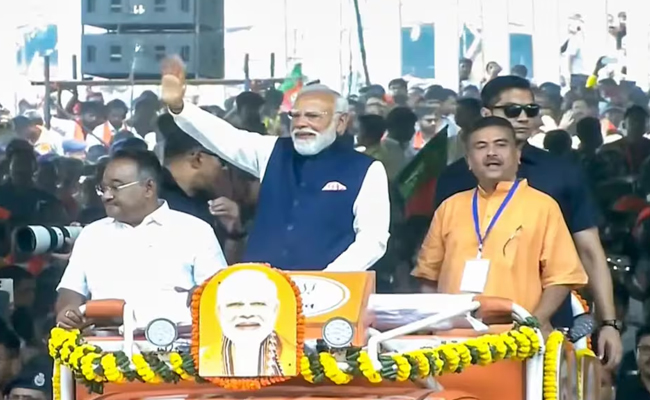
Kolkata (PTI): Prime Minister Narendra Modi arrived at the Brigade Parade Grounds here on Saturday to attend the swearing-in ceremony of the BJP's first government in West Bengal.
Accompanied by state BJP president Samik Bhattacharya and CM-elect Suvendu Adhikari, Modi was accorded a rousing welcome.
Amid the 'Jay Shri Ram' slogan, Modi entered the venue on an open vehicle and was seen waving at the crowd.
The Prime Minister landed at Netaji Subhas Chandra Bose International Airport here a little before 10 am and took a helicopter to reach the Race Course ground before proceeding by road to the venue.
Thousands of BJP supporters gathered at the Brigade Parade Grounds since early morning to witness the oath-taking ceremony.
The BJP secured 207 seats in the 294-member Assembly, ending the Trinamool Congress' 15-year rule in the state.