JNU incident: Chargesheet has questions that have no answers
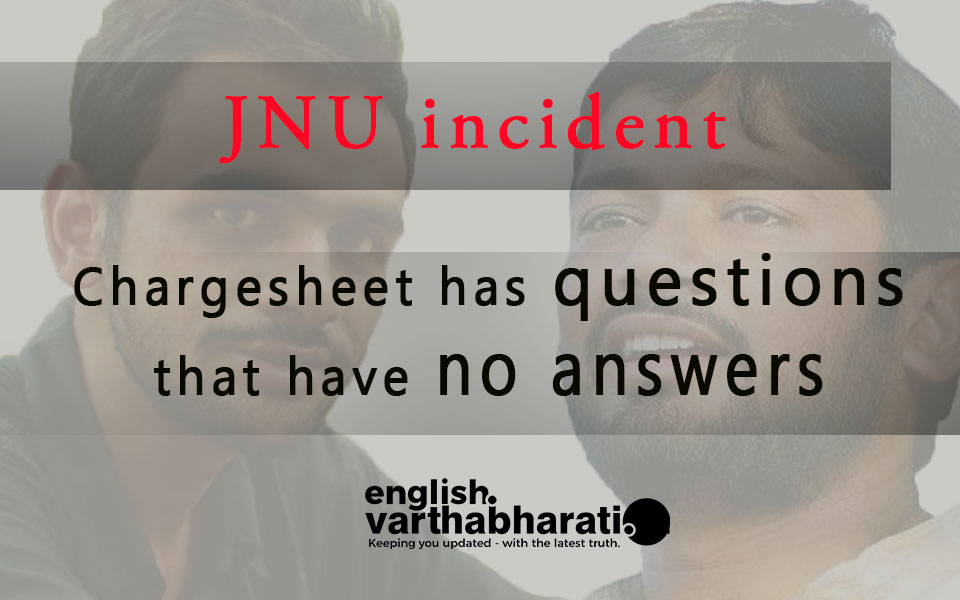
The incident of JNU student leaders Kanhaiya Kumar, Umar Khalid, Anirban Bhattacharya and seven others allegedly shouting anti-national slogans in the precincts of JNU campus in 2016 has again come to light with Delhi police drawing up the chargesheet against them on Monday.
Kanhaiya Kumar was the president of student union when the incident happened. Delhi police have stated they have visual, oral and documentary evidence to prove their charges. This means Delhi police is saying the visual evidence of Kanhaiya Kumar leading the sloganeering students is with the police as of now.
The chargesheet states after the permission to observe the anniversary of parliament attack mastermind Afzal Guru who was hanged eventually, was denied by the administration of the JNU, a text message was received by Umar Khalid and Kanhaiya Kumar to assemble at Sabarmati dhaba near the campus as per the charge sheet filed by Delhi police in the Patiala House Court a good three years after the incident.
But it is rather significant to note that the senior officers have said they do not possess direct documentary evidence to insinuate Kanhaiya Kumar shouting slogans, that can be termed as sedition . Though Zee news had aired the footage that showed someone shouting slogans, it was later said that this was not a genuine video. The channel now carries the reputation of having aired concocted footage to fix certain people.
Some parts of the video footages were obtained by those who were present at the venue. Officers have said some of the persons who were present when the incident occurred, had also testified to prove the charges against the accused. The court has noted the witnesses and their statements along with those of the police under relevant sections under CrPC.
Just as the Lok Sabha elections draw close, this filing of chargesheet against Kanhaiya Kumar and his friends has given rise to many doubts regarding the motive behind this act. How does a message from Khalid to Kanhaiya amount to sedition? Does the video footage possessed by the police show Kanhaiya Kumar shouting slogans against the country. Was he seen encouraging the students who were shouting anti national slogans? None of these questions can get clear answers from the Delhi police.
The chargesheet does not have clear details of calls made and received by Kanhaiya Kumar. The chargesheet does not explain where the phone was after and before the incident of shouting of anti national slogans or the subsequent clashes that broke out.
On the other hand, the police has not provided any incriminating evidence to prove Kanhaiya Kumar's role or crime in the whole incident. His name has not been recorded as the organiser of the event after the administration denied the permission to hold the event on the campus.
The police has decided to take action against Kanhaiya and his accomplices only after doctored videos by some channels were aired that showed him shouting slogans. But there has been no mention of doctored videos making rounds after the incident.
The case seems to be hanging on a lot of loose ends that may be difficult to be proven. Now despite knowing that this case may not hold water, if the police have still gone ahead and taken it to the court only to stop Kanhaiya and his friends from participating in the Lok Sabha elections, this must surely be a case of necessity of someone.
The name is pretty much know and is highly predictable by now. Narendra Modi has been rattled by the CBI and other investigating agencies.
Whatever be the case, this decision will turn to be favourable for Kanhaiya. With this, Modi has laid bare his fears and insecurities before the whole country.
Let the Truth be known. If you read VB and like VB, please be a VB Supporter and Help us deliver the Truth to one and all.
Rickelton's ton in vain as SRH beat MI by 6 wickets
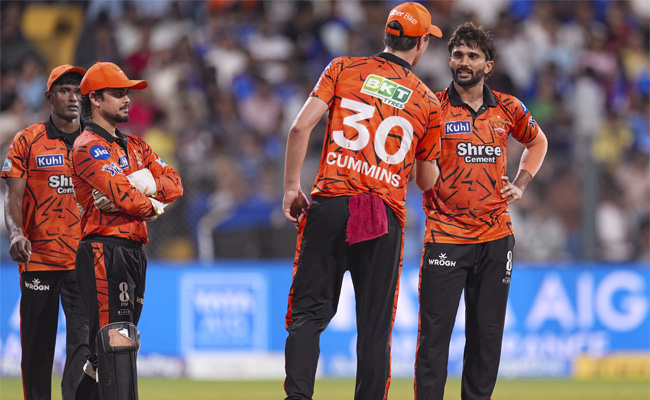
Mumbai (PTI): Ryan Rickelton's whirlwind unbeaten ton was overshadowed by Heinrich Klaasen's unbeaten 65 as Sunrisers Hyderabad defeated Mumbai Indians by six wickets in an IPL match here on Wednesday.
Chasing an imposing 244-run target, Travis Head (76 off 30) and Abhishek Sharma (45 off 24) shared 129 runs for the opening wicket to set the platform for SRH.
Klaasen (65 not out off 30 balls) then displayed his all-round hitting abilities to guide SRH home with the help of Nitish Kumar Reddy (21) and Salil Arora (30 not out off 10) in 18.4 overs.
Earlier, Rickelton's knock powered MI to 243 for five.
MI rode on a 93-run stand between Rickelton (123 not out off 55 balls) and Will Jacks (46 off 22) in 7.1 overs for the opening stand to power the side.
MI skipper Hardik Pandya scored a valuable 31 off 15 balls before being dismissed.
Praful Hinge (2/54), Eshan Malinga (1/29), Sakib Hasan (1/39) and Nitish Kumar Reddy (1/31) were the wicket-takers for SRH.
Brief Scores:
Mumbai Indian: 243 for 5 in 20 overs (Ryan Rickelton 123 not out; Praful Hinge 2/54).
Sunrisers Hyderabad: 249 for 4 in 18.4 overs (Travis Head 76, Heinrich Klaasen 65 not out; AM Ghazanfar 2/51).