Kashmir: Cozy partnership snaps off
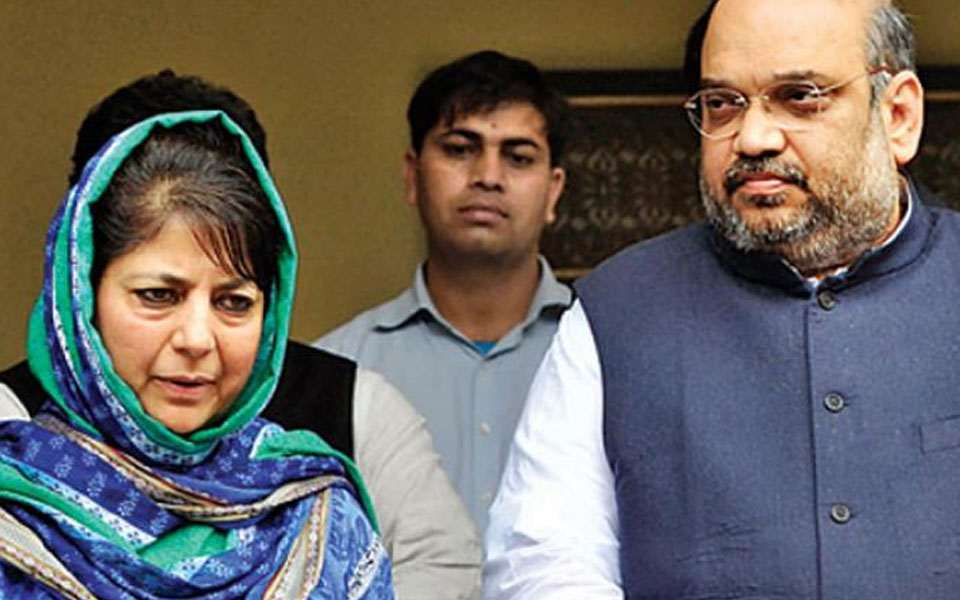
It hasn’t been too long since United Nations cautioned India against the violation of human rights in Jammu and Kashmir, stating India and Pakistan together were engaged in quashing the human rights of the people of the valley. UN had expressed inclination to probe these cases. Though India had refuted the charges against itself, the fact that India was cautioned by UN is a blot on the country’s image. This is the result of having tried to tame the tiger of a PDP and BJP coalition in Jammu and Kashmir.PDP has always assumed soft stance towards the separatists. That party declared Afzal Guru as a martyr, and have always been open about their preferences towards separatists. BJP entering into a coalition with this party itself was a bad precedence. This meant that BJP joined hands with separatists, by taking their side. More than anything else, RSS and Sangh Parivar began to interfere with people’s impressions about the valley and its politics. They began to scratch old wounds and blood began to ooze out.
Rightists spoke of ghettoization of Kashmiri Pandits, and banning cow slaughter and such emotionally manipulative things. This contributed greatly towards increasing the magnitude of fears and hurt Kashmir was already experiencing. More than anything else, citizens of Kashmir who came out to protest were deemed as extremists. The government tried to build a negative public opinion against everything that was happening here. The deployment of pellet guns against protesting civilians became a topic of discussion at international level. Killing of Burhan Wani, didn’t go down too well and sent tempers flaring in Kashmir. It was the first time that the massive support began to pour out in support of an extremist. Extremists used the fact that a civilian being tied as human shield to police jeep, much to their advantage and to build a public opinion against the ruling dispensation. The government failed to identify the difference between disobedient civilians and extremists.
BJP never tried to get to the pulse of Kashmir, instead the party tried to generalize the whole problem by making statements such as the stone-pelting civilians were doing so since they were paid for it by detractors. More than this, the party also tried defending demonetization saying the step had brought down stone-pelting incidents in Kashmir. This had an impact on local businesses too. People, mainly the youth lost jobs. Extremists and trouble makers began drawing the jobless youth towards them. But by the time the central government realized what fiasco it had created, things had gone so beyond control that the United Nations took cognizance of the matter and even addressed it in a meeting. By this time, BJP and PDP had realized they had to restrategise their coalition.
PDP didn’t want to speak against separatists, let along acting against them. The party couldn’t take a stance against police and army meting out assaults against civilians in the area. The Kathua incident laid bare the discontentment PDP nursed against BJP. The rape of a 9 year old child by members of Hindu organisations, to ‘teach a lesson to her community’ earned international shame for the nation and held mirror to inhumanity in Kashmir. In the meantime, Sangh Parivar members took out a rally in support of the culprits when they were arrested. PDP insisted that two of the BJP MLAs who were also ministers who supported this rally must be thrown out of the government. This caused great embarrassment to BJP. After this, PDP made no bones about its differences of opinion with its ally. BJP also felt peace won’t return to the valley with its force exerting tactics. This ceasefire was also one of strategies government adopted to bring some peace into the area.
Though BJP has differences of opinion on this matter, its attempt to engage with the extremists may send wrong signals. BJP fears the opposition backlash if it decides to hold talks with the separatists. Hence having known neither force, nor talks can ensure peace in Kashmir, BJP decided to withdraw the support unable to ride the tiger of coalition. This is also to ensure BJP goes to Lok Sabha polls cleaner than before. Now both partners have parted ways with Kathua case as the pretext. The divorce is through. But a bad precedence has been set about Kashmir at international level. United Nations has already trained its eyes on Kashmir over human rights violation. Unless people wholeheartedly accept India as home, it is impossible to ensure Kashmir’s unflinching integrity towards India. The political parties need to understand this simple truth.
Let the Truth be known. If you read VB and like VB, please be a VB Supporter and Help us deliver the Truth to one and all.
Axar shifts focus to next IPL after KKR all but end DC's campaign
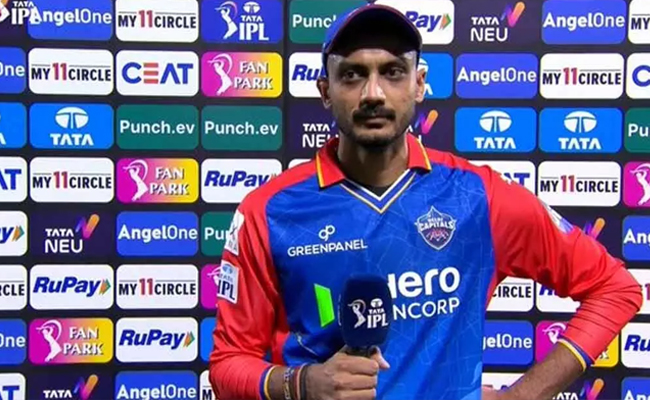
New Delhi (PTI): A beleaguered Axar Patel admitted that both his team's batters and bowlers let the side down after Delhi Capitals suffered a humiliating eight-wicket defeat to Kolkata Knight Riders, virtually ending their IPL 2026 playoff hopes, while indicating the team had already begun looking ahead to the next season.
DC endured a miserable outing at home, managing only 142/8, which Kolkata Knight Riders chased down in just 14.2 overs, powered by a blistering unbeaten 100 from Finn Allen and his destructive stand with Cameron Green (33 not out) as the visitors tore apart the bowling attack.
With just eight points from 11 matches, DC are eighth on the table, while KKR revived their playoff hopes with a resurgent run, moving to seventh with nine points from 10 outings, though their road to the knockouts still remains difficult.
"For now, we'll go back and think about the mistakes we made. After that, obviously there's still a long journey ahead and next year will come too. So we'll think about what plans we can make for next year and what approach we should take," said Axar after the match.
"Based on that, we can also look at the players sitting on the bench and decide who can be given opportunities and what changes we can make," he added, hinting at a possible major overhaul next season.
With 200-plus totals becoming the norm this season, 142 was always going to be inadequate, and Axar admitted the score was well below par while also pointing out at poor judgement shown by the spinners while defending the modest total.
"I think the runs were definitely below par and at the same time the spinners made quite a few mistakes. Looking at the way the pitch behaved, I feel the spinners did make errors.
"At the same time, we lost five wickets in two-three overs, and I think that's where the momentum slipped away from us. That's probably something we need to think about because the same thing happened against CSK...we started well, and then suddenly wickets kept falling," he added.
He admitted the solutions to the issues could be found but players need to show the right mindset and character.
"See, you can't solve it in a complicated way. So, I think it's more about applying the right mindset. Even if you lose one or two wickets, you can still spend time at the crease and play through it. I think that's what needs to be applied, when wickets are falling in clusters, you need to absorb the pressure for an over or two," opined Axar.
KKR skipper Ajinkya Rahane was pleased to see a struggling Finn Allen finally rediscover his touch with the bat.
"I'm really happy for Finn Allen. He was struggling first four or five games, working really hard, but the way he batted tonight was fantastic. But I want to praise our bowlers again.
"We did well because of them. And they've been doing it so well consistently, especially those middle overs and the death overs. Our spinners, Sunil Narine, Varun (Chakravarthy) and Anukul Roy, have been fantastic," he said.
"Fielding-wise, yes, we are working really hard. Our fielding coach has been really strict with us. And that's what has been helping us. The result which you've been seeing about the catches and the ground fielding, credit goes to our fielding coach as well," he added.