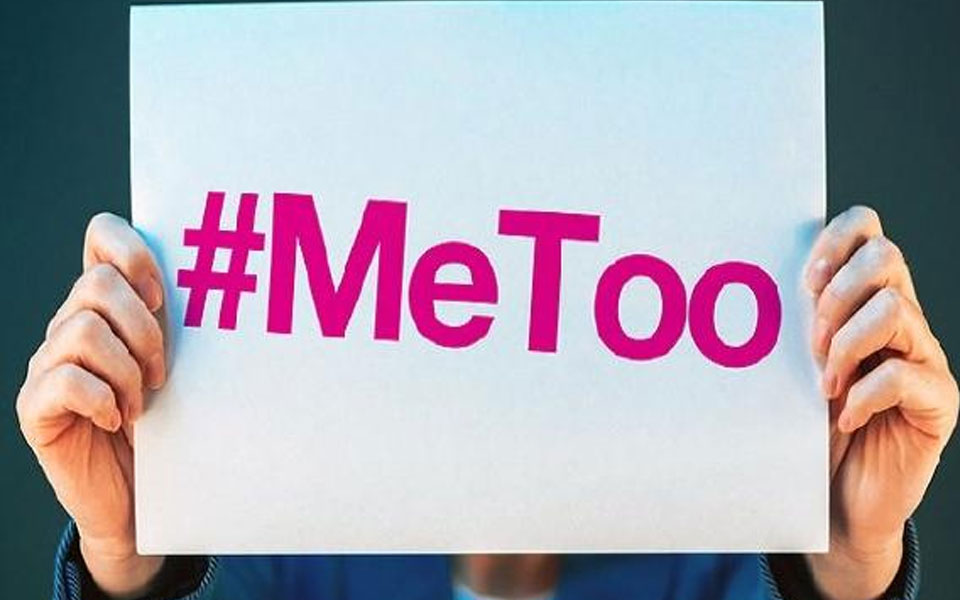
#MeToo strikes a chord despite limitations
There are certain parameters for news items like rape and harassments to be considered as newsworthy in the media. The incident should have happened in Delhi or some part of north India. Victims must be from upper middleclass and if they work in IT or BT it’d be even better. The news would get even more prominence if the survivors are working and belong to upper caste. That does not mean all other incidents are ignored. If media had paid equal or significant attention to all kinds of exploitations and harassments against women, things wouldn’t have come to this point. Media considers two kinds of news of exploitation of women, worthy of inside and cover pages. Because a certain group of people who are also journalists, believe women deserve bad treatment, the society has been viewing this social menace with dual standpoint.
If a Danamma has been raped and killed, police department would dismiss it as a result of ‘illicit relationship’. No hashtags appear in the social media. But if an upper middle class woman reveals the harassment she went through in her work place at the hands of a man, it becomes a cry of solidarity. And the result is there for all to see through MeToo movement. On one hand, while welcoming the success of MeToo, we also need to understand ways of extending it to be movement of all women in the country.
One thing we need to understand is, why has the media taken MeToo so seriously? It is because they are concerned about women and their rights or owing to the background of women who are part of this? If the women didn’t belong to upper middle class or rich people sharing details of the mental and physical harassment they underwent, MeToo wouldn’t have been this serious and such discussions wouldn’t have taken place on social media platforms.
In the world of celebrities and their occupations, discussions about casting couch has happened many a times. Many people have indicated if women want to progress in politics, or entertainment industry, they need to ‘cooperate’. It has also been part of social media discourse and discussion too. In the recent times, a senior politician had said this very candidly at a public event. Another politician had used this line of argument when Jayamala was made the lone minister in the current cabinet, asking what ‘favours’ she had offered to get this plum post. These ‘compromises’ are deemed pretty common in entertainment and political spaces. Even common people understand this well now. Hence when celebrities speak of the harassment they face, it is reported in the ‘entertainment’ section. Woman’s body is ‘entertainment’ (actor Silk Smita’s words) for the cinema industry and this cruely is so totally acceptable to us now.
A director will ask an actor such as Tanushree Dutta to strip and dance even if the script does not demand it. Thousands of people come together to watch it. How does one identify how she has been exploited even in the name of ‘performance’? The audience may not have touched her, but what about their animal instinct when they watch her dressed skimpily on the screen? Why is this not a basis for MeToo? Tanushree has spoken about the revolting touch she had to put up with Nana Patekar. The latter has denied all allegations. This does not absolve all the spectators from their guilt of having watched her on the screen though Tanushree has not complained against them. This problem exists on the very basis of cinema industry which thrives on a woman’s body. To restrict the argument very callously to Tanushree’s accusations would be doing injustice to a larger issue.
One thing has struck very clearly through MeToo. Woman’s suffering knows no bounds. Even if she exists in rich class, she remains a woman and has to perform all the duties as per the norms of that space. She has to face torture of being the woman. Since women of that space opened their voice, this issue has come to the mainstream. We have to appreciate all the celebrities who rendered their voice to MeToo. Through this, men who always took women for granted in media, police department, banks and courts have begun to fear the repercussions. This issue has turned into a middle class problem of working women. This is a good indication. Even if MeToo can give a small solace to working women, who face hell for being born women, this movement is successful. This movement started by Tarana Burke in 2008, should help empower women in working spaces and outside across all categories and classes in India beyond allegations and counter allegations.
Let the Truth be known. If you read VB and like VB, please be a VB Supporter and Help us deliver the Truth to one and all.
Sujit Nair raises concerns over speculation of DMK-AIADMK understanding to block TVK
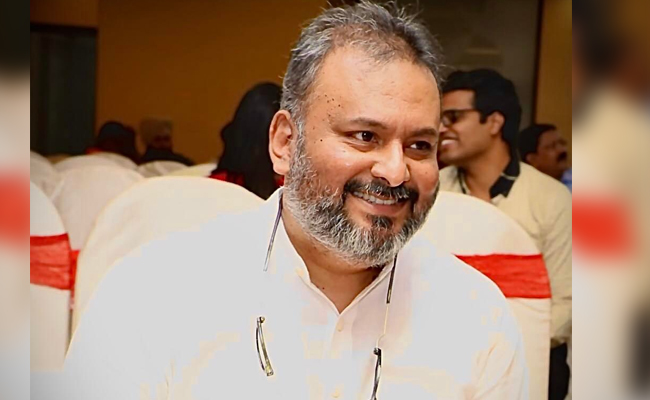
Chennai: Journalist and political commentator Sujit Nair has expressed concern over speculation that the Dravida Munnetra Kazhagam and the All India Anna Dravida Munnetra Kazhagam could explore a post-poll understanding to prevent Vijay-led Tamilaga Vettri Kazhagam from forming the government in Tamil Nadu.
In a social media post, Sujit Nair said the election verdict in Tamil Nadu reflected a clear public demand for political change and argued that the mandate should be respected irrespective of political preferences.
Referring to reports and political discussions surrounding a possible understanding between the DMK and AIADMK, he said he hoped such developments remained only speculative conversations and did not turn into reality.
Nair stated that if such an alliance were to take shape, it would raise serious questions about ideological politics in the country. He said TVK had emerged through a democratic electoral process and that the legitimacy to govern in a parliamentary democracy comes from the people’s verdict.
According to him, attempts to prevent an electoral winner from forming the government through unexpected political arrangements may be constitutionally valid, but many people could view them as politically opportunistic.
He further said that such a move could particularly affect the political image of the DMK, which has historically projected itself around ideology, social justice and opposition politics. Nair said that in ideological terms, the DMK appeared closer to TVK than to the AIADMK, and joining hands with its long-time political rival only to remain in power could weaken its broader political narrative.
He added that the same questions would apply to the AIADMK as well, as the party had spent decades positioning itself against the DMK and such an arrangement could create discomfort among its cadre and supporters.
Drawing a comparison with Maharashtra politics in 2019, Nair said he had expressed similar views when the Shiv Sena formed an alliance with the Indian National Congress and the Nationalist Congress Party after the Assembly elections.
He said post-poll alliances between long-standing political rivals often create a public perception that ideology and electoral mandates become secondary when political power equations come into play.
Nair also said such developments increase public cynicism towards politics and reinforce the belief among voters that ideology is often sidelined after elections.
He maintained that the Tamil Nadu verdict was emphatic and said respecting both the spirit and substance of the mandate was important for the credibility of democratic politics.