Most of Indian media no longer speaks truth to power: Karan Thapar

For nearly five decades, Karan Thapar has been one of the most recognisable and uncompromising faces of Indian journalism. From the late 1970s onwards, he has closely tracked Indian politics, interviewed almost every major political leader of the country, and built a reputation for asking questions others hesitated to ask. As a television anchor and columnist, his work has consistently focused on power, accountability and the role of institutions in a democracy. Over the years, his interviews, especially those that left powerful leaders visibly uncomfortable, have become part of public memory and debate.
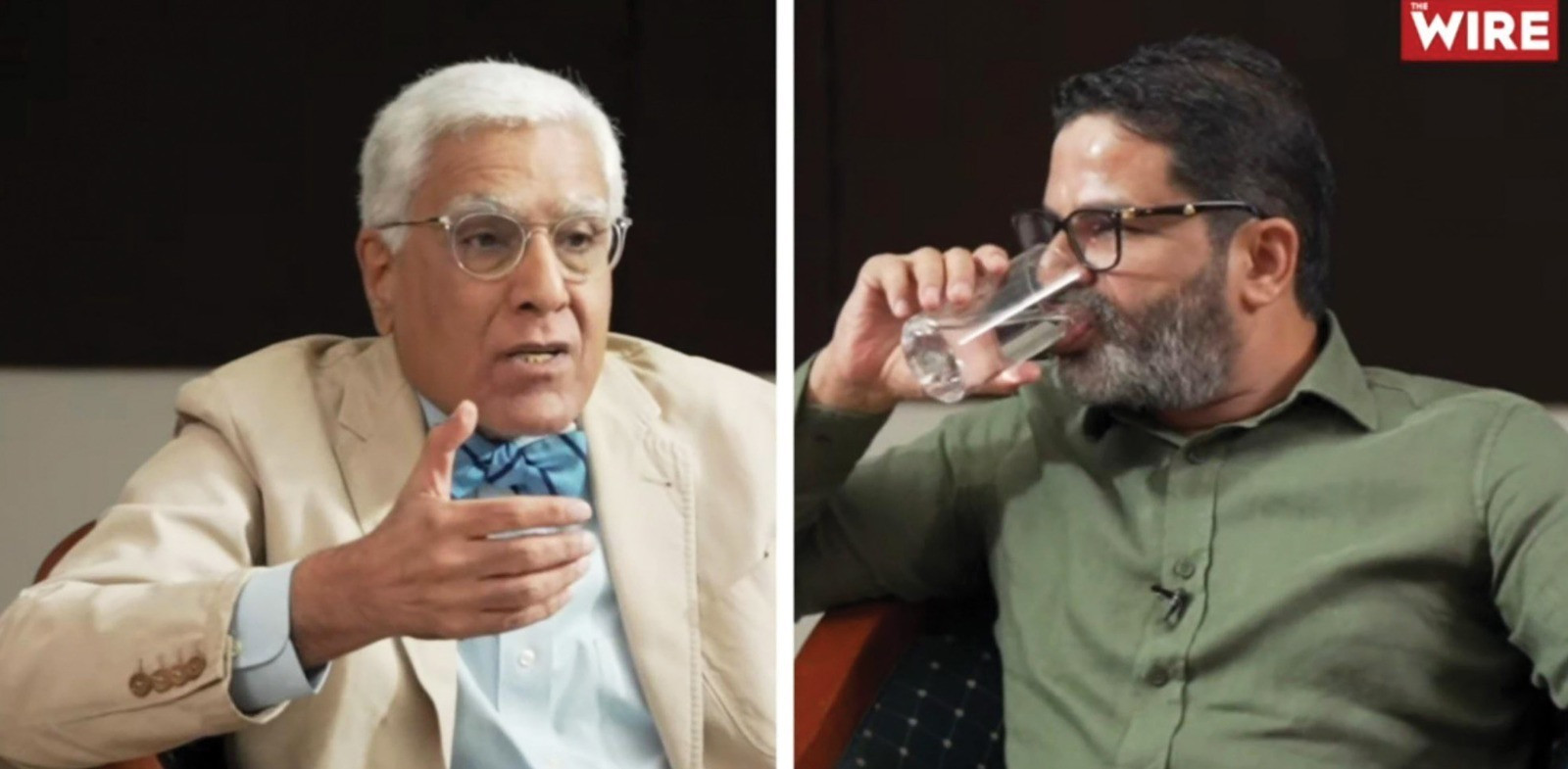
In this wide-ranging conversation with Vartha Bharati, Karan Thapar reflects on the long arc of his career and what he has witnessed as a political observer over the last fifty years. He speaks at length about the nature of leadership in India today, the growing majoritarian tone in public life, and the normalisation of language and policies that, in his view, marginalise minorities. Drawing comparisons with earlier phases of Indian politics, including the Emergency, Thapar argues that strong leaders leave deep imprints on society, for better or worse, and that the present moment is shaped heavily by the ideas and priorities of those at the helm.
The interview also turns a sharp lens on the state of the Indian media, a space Thapar has inhabited all his working life. He speaks candidly about self-censorship, pressure from proprietors and the government, and the steady decline of television news into what he describes as cheerleading for those in power. At the same time, he explains what drove him, throughout his career, to persist with uncomfortable questions, insisting that journalism’s first duty is to the audience, not to the guest in the studio. From elections and democracy to the future of young Indians navigating an uncertain world, Thapar’s responses are rooted in a lifelong belief that hope is never entirely lost, and that India’s resilience has repeatedly shown itself at moments of crisis.
The Kannada version of this interview was published in the 23rd annual editon of Vartha Bharati that was released on December 20, 2025 along with the official launch of Kalyana Karnataka Edition of Vartha Bharati from Kalaburagi.
Excerpts:
To begin with, you’ve worked as a journalist for almost 45-50 years since the late 1970s as a political journalist. Having seen the leadership over the last 50 years, what are your broadstroke observations on the political scenario currently, specifically the nature of leadership we have at the helm of affairs today?
I think it is beyond doubt that in PM Modi we have a strong determined leader. I don’t think even his critics would deny that. The question is the quality of the politics that we are practicing. We have a system whereby today we are becoming less and less secular, more majoritarian, sometimes outright communal. We have a system where often MPs and ministers have even on occasion taunted Muslims as ‘Go to Pakistan’. We have a system whereby Muslims are othered, accused of ‘love jihad’, God knows what love jihad is. They are accused of cow lynching. They are often assaulted, and they are frequently beaten up. That didn’t exist in the India I knew when I was younger. It’s now become prevalent and it’s increasing. And I find it very sad and depressing.
This kind of victimization or otherization of Muslims has existed for a long time now. Not just for the last 10 years. It has existed for the last 50 or even 75 years. But there was always strong pushback from opposition forces. Is that lacking right now? Has the opposition also been forced to toe the communal line every now and then? Is that something happening right now and why is it happening?
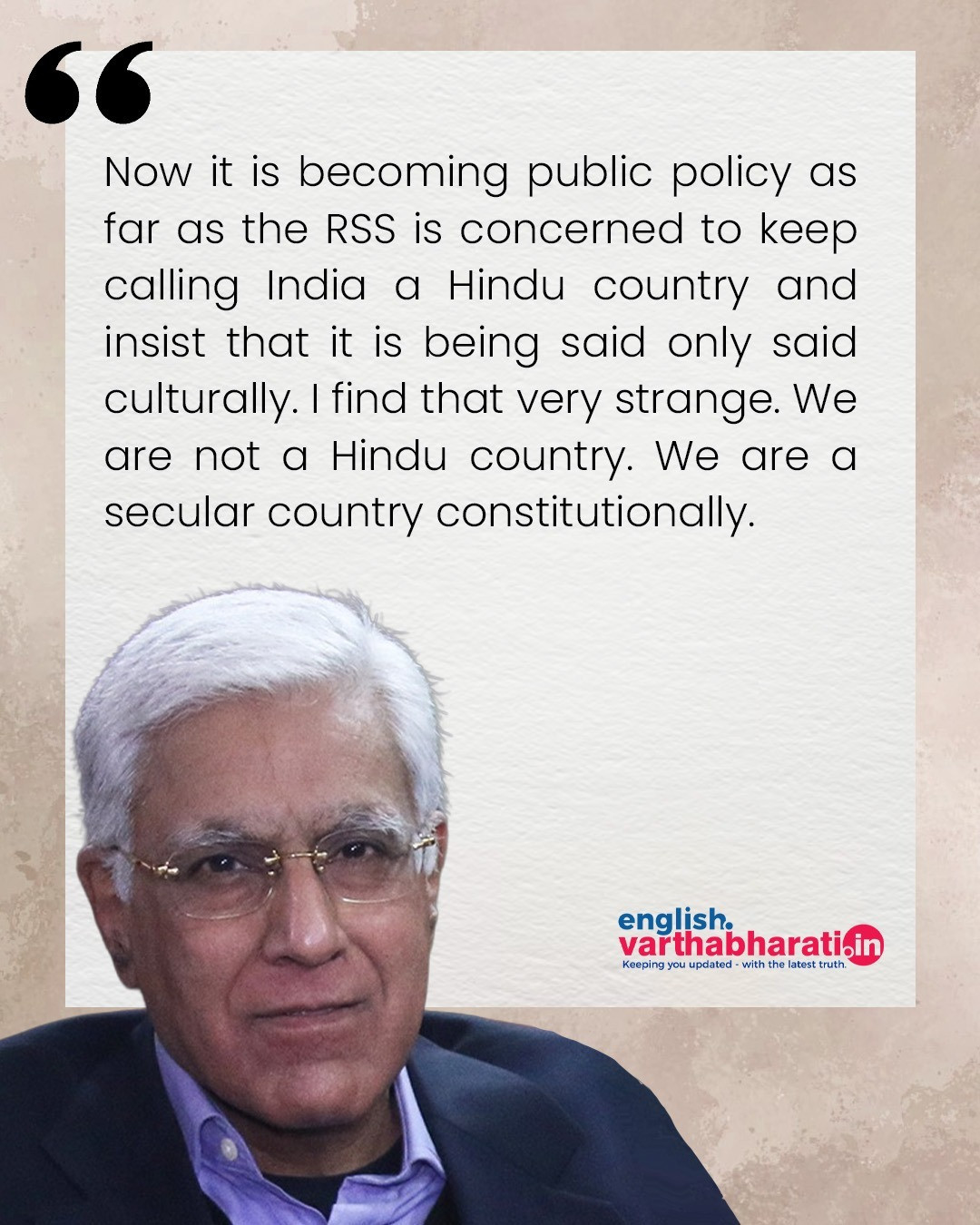
I think the opposition is pushing back and it often pushes back pretty effectively. Think of not just the Congress party and Rahul Gandhi. Think of Mamata Bannerjee. Think of the CPM, CPI. Think of Tamil Nadu parties like the DMK. Of course, they are pushing back. But we have a very strong BJP which dominates the centre. It may not have the majority it did upto 2024, it may have lost it. It depends upon allies who are very subordinate to the party, very pliant and compliant and willing to support it. And you have ministers now, and you have a ruling party and a system surrounding the RSS that trade on treating Muslims as others. Now it is becoming public policy as far as the RSS is concerned to keep calling India a Hindu country and insist that it is being said only said culturally. I find that very strange. We are not a Hindu country. We are a secular country constitutionally. To keep interpreting it as a Hindu country is to deny Christians, Jains, Buddhists and Muslims most of all the right to a separate identity.
Most worryingly, this kind of discourse has even entered educational institutions. A whole bunch of kids are learning this in schools and colleges and it has become the ‘new normal’. They are now going to take over India in the next decade or two. How then we can continue to maintain the nature of our secular republic?
By you and me and others like us insisting that we are Indian first, that our religion is a private matter, it is not part of our identity in any public sense. It may certainly be part of our private identity. But they don’t identify only in Hindu terms, just like Tamilians don’t identify only in Tamil terms. We are composite country with a composite identity, one strand of which is religion. But there are multiple other aspects to our identity and we must keep emphasizing on that multiplicity.
You think that will work even though there is great public support for taking on a very obvious Hindu identity in public and private life.
It’s because it is being presented to people as if their Hindu identity is in danger and under threat and that’s not the case. It is said that the Muslims threaten us, they are going to overwhelm us, India will in course become a Muslim country. That is complete poppycock and nonsense. The Muslims are, according to the 2011 Census, barely 14.8% of the population. Hindus are 79% percent of the population. Not even in a thousand years would that 14% dominate the 80%.
What I’m getting from you is that the leaders are leading in a certain direction and the people are being led there. So a leader who chooses to lead in a different direction can effectively change things. Am I right in thinking so?
Powerful leaders in our country in the past have dominated the picture so strongly that their impact and imprint on us have been enormous. Think of Nehru, the Nehruvian years, the Nehruvian thinking and the fact that right up until the mid-60s or 70s we idolized the man. Think of Indira Gandhi and the power and authority she held. Think of how she was considered even by Atal Bihari Vajpayee as ‘Durga’ after the Bangladesh War. Important powerful leaders can create an environment whereby they dominate and where they influence and where we are in a sense coloured by them.
So all hope is not lost yet therefore…
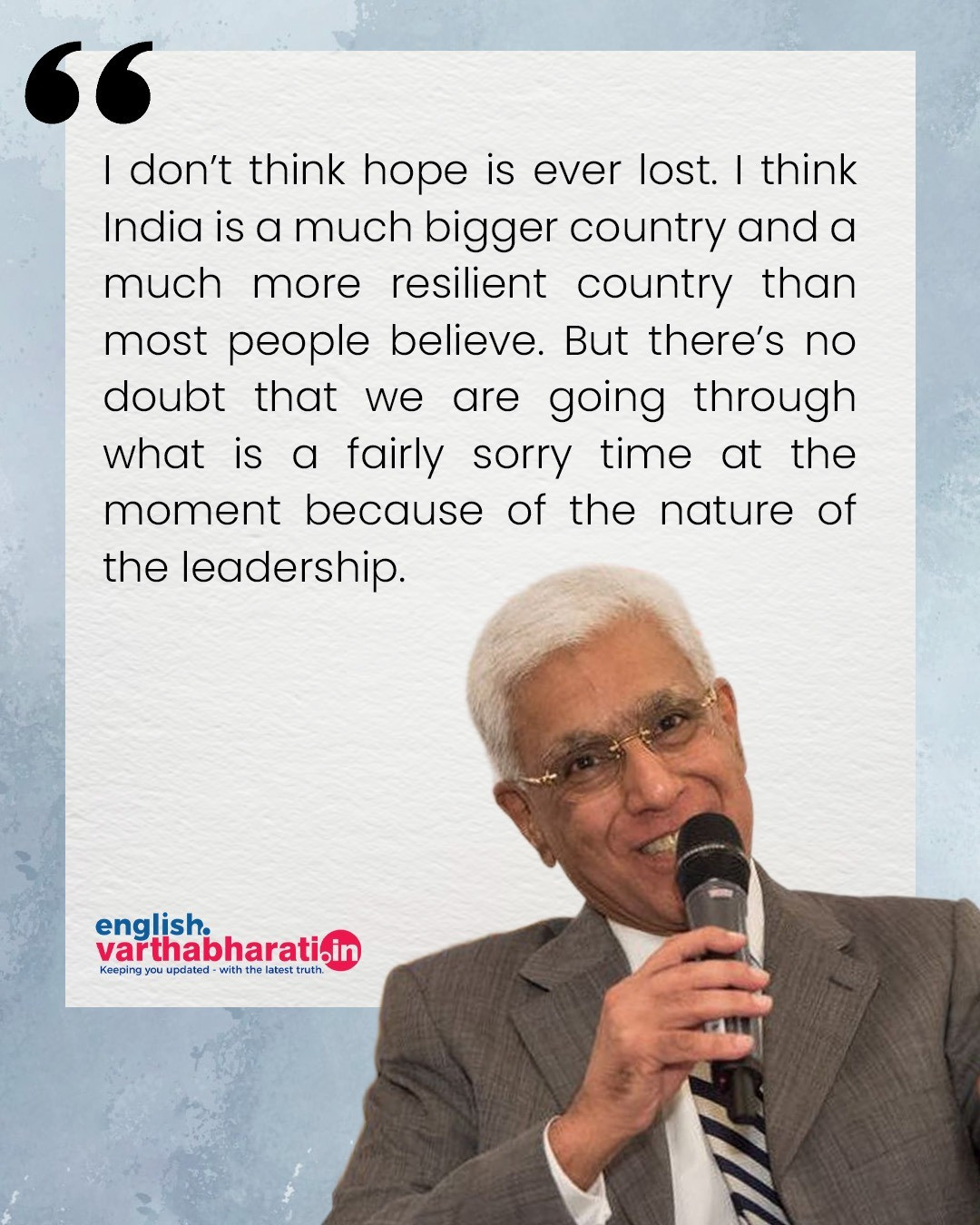
I don’t think hope is ever lost. I think India is a much bigger country and a much more resilient country than most people believe. But there’s no doubt that we are going through what is a fairly sorry time at the moment because of the nature of the leadership. This is enhanced by the fact that they are also strong leaders and their strength dominates just as their opinions irritate me.
It is reassuring to hear from you that all hope is definitely not lost and that things can definitely change for the better.
Yes, we’ve been through bad patches in the past. Don’t forget the Emergency from 1975 to 1977. There was a period during the Emergency in 1976 when people believed that we had lost democracy forever. But it returned and it was the Indian people who with the first opportunity that they got in 1977 who restored our democracy and our faith in freedom of expression, the right to institutions that are independent of the government, the right to think freely, the right to organize freely, the right to form parties as we want. All of that was given back to us by the Indian people in 1977. I am sure when the opportunity comes to them again (it may take a long time to happen), they will give back to India the rights, privileges and freedoms that we cherish.
You talked about elections and how the Indian people voted very decisively in 1977 and restored the democracy that had been taken away in 1975. But in the recent Bihar elections with the kind of skullduggery we have observed, the kind of benefits that have been given to voters, the SIR exercise that was carried out, elections seem to appear a lot dodgier than earlier. The question therefore is will free and fair elections continue to happen in India.
Free and fair elections with people voting as they want do happen in India. Free and fair elections with opposition occasionally defeating the government has happened. We have opposition governments in power in Himachal, in Karnataka, in Telangana, in Kerala, in Punjab. But what is unfortunate is that we have now established a record. It began perhaps in Madhya Pradesh, it happened in Maharashtra, it’s happened again in Bihar where governments choose to reach out to people by giving them the offer of material benefits literally on the eve of the election and that is a clear form of vote buying. I know that these welfare benefits do bring welfare to the people who get them but the fact that they are on offer only 5 weeks before the election is supposed to happen is a clear sign that you are luring people and if that continues, it will be almost impossible for oppositions to defeat incumbent governments because incumbent governments are in charge of the treasury and can roll out the benefits. These benefits have been given literally on the eve of the elections and are a way of saying, vote for us, this is what we can do, this is what we will do.
In a country like ours that is pretty much biasing the voters. Many people are hand to mouth on a monthly basis and you transfer this huge tranche of funds to them, you are in effect telling them vote for us and we will continue to do this. Absolutely. As I read in the papers, in Bihar where the average annual income is somewhere around Rs. 70,000, Rs. 10,000 is a huge amount of money to be given. According to some calculations which I read, the total number of women who got benefits amounts to 60,000 – 65,000 per constituency which means it is a very large number of people whom you are attempting to lure and did so successfully to vote for you.
I am going to switch tracks now and talk a little about the media which you’ve been part of, your entire working life. My question is that all along and even during the Emergency, we had a tradition of very robust media which was fearless, spoke truth to power. That has completely collapsed for the last decade or so. We have cheerleaders in the print and audio-visual media who seem to be doing the government’s bidding. They are not actually asking questions of the government. In such a situation, how is the normal, ordinary voter ever going to learn the truth. How is he going to understand what the government is doing wrong and therefore change his opinion about the government?
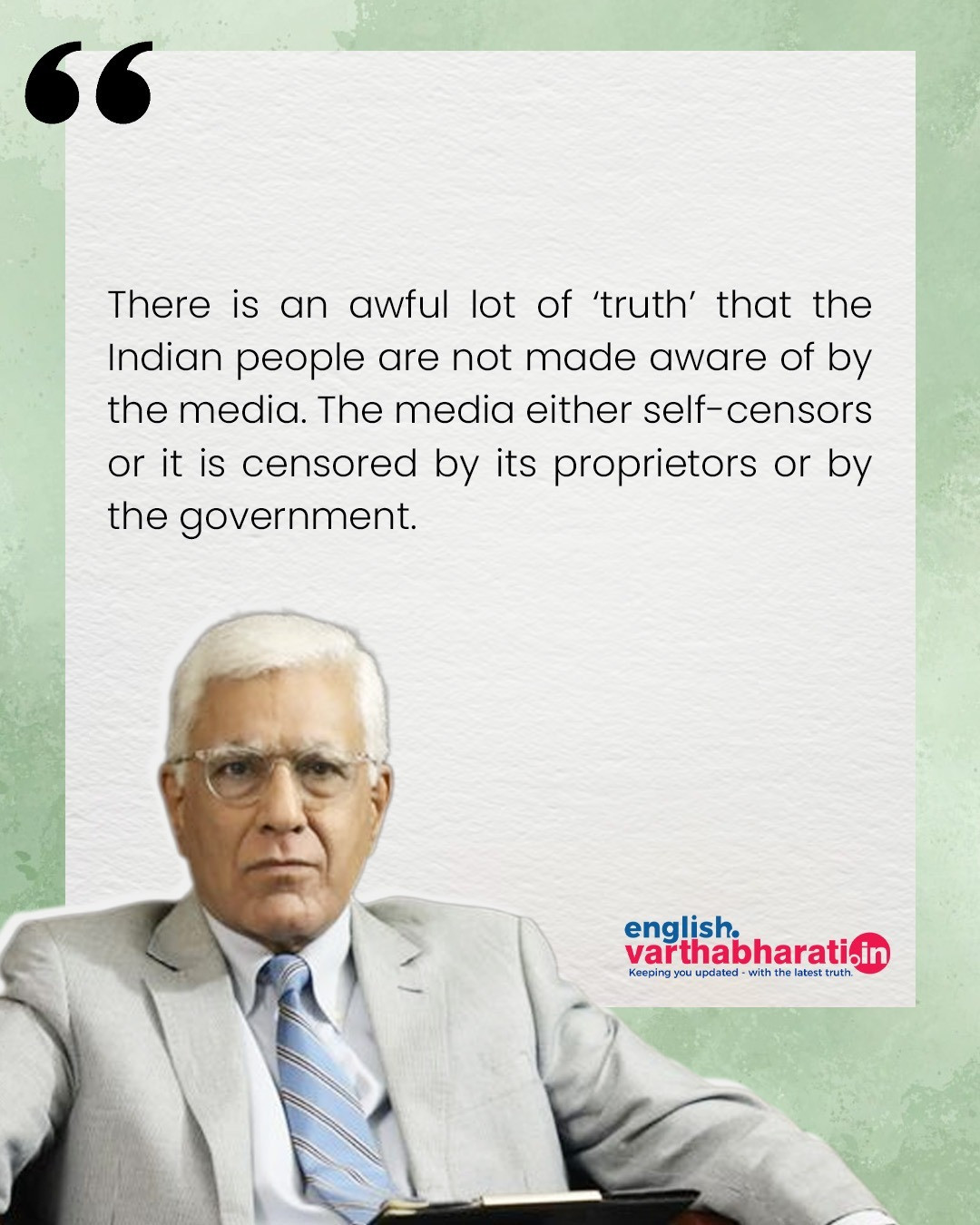
There is an awful lot of ‘truth’ that the Indian people are not made aware of by the media. The media either self-censors or it is censored by its proprietors or by the government. But that detail/analysis is never given. Therefore you find out through other means, you find out through social media, through WhatsApp, through YouTube because that is still freer, much more open. But there are some newspapers that do give you the truth to the extent they are capable of doing – the Telegraph in Kolkata, the Hindu in South India and the Indian Express. All three have strived very hard to uphold the highest standards. Sometimes they have fallen short of what they were attempting to do, I won’t deny that. But quite often, they have succeeded. I read Hindu and Indian Express and I rely on those papers. … But sadly, even those papers often have to give columns to government ministers as a way of balancing. So, you find people like Jagdeep Dhankar and Ram Madhav have become regular columnists. Before 2014, there was no sign of such people. Now they write regularly. But that may be the way the paper internally balances what it is doing and if that is a requirement, fine, but as long as we got good, credible, believable news, I am quite happy to read these people as columnists.
The government has gone after other independent media outlets like the Wire (which you are associated with) and many others. In such a situation, how long can the media continue to do this kind of reporting and investigative journalism when all the authorities are literally bearing down on them?
The answer to your question will have to be a depressing one. The media will not be able to carry on like this for very long. Which is why television in India has become what is called ‘Godi media’. Newspapers too. They’ve given in. They present the government line. … They don’t necessarily worry about analysis and good, honest reportage. They self-censor. There are many papers where regular columnists have been told to not write (certain things).
Therefore, then there is so cause for concern and worry. It’s not all that hopeful.
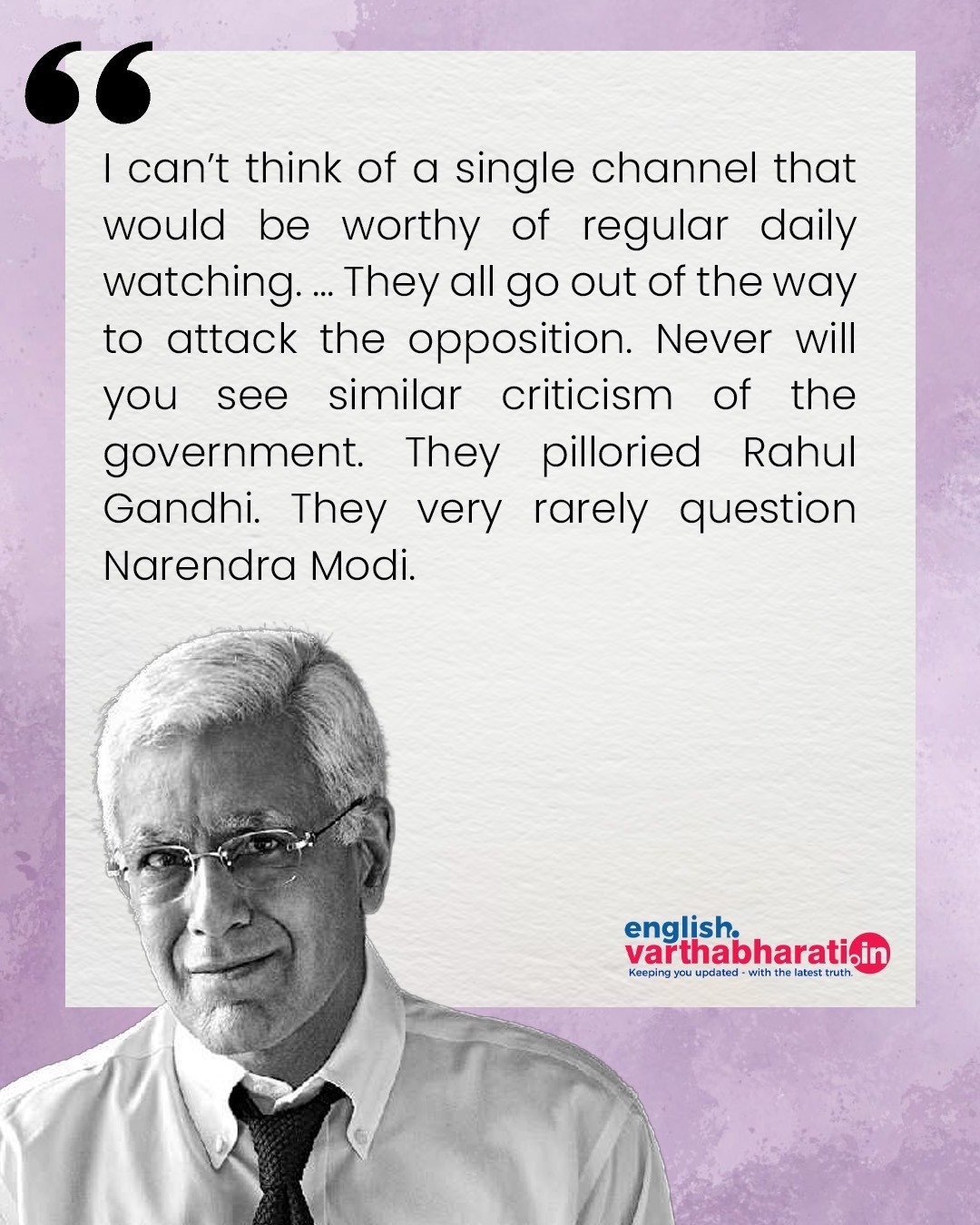
There’s great cause for concern. I don’t think the Indian media is a shining example of what a media can and should be. There are a few exceptions which I have identified. But the vast majority is depressing. That’s probably even more true of Indian news television. … I can’t think of a single channel that would be worthy of regular daily watching. … They all go out of the way to attack the opposition. Never will you see similar criticism of the government. They pilloried Rahul Gandhi. They very rarely question Narendra Modi. In fact during election time, Narendra Modi’s and Amit Shah’s rallies, regardless of the fact that there are other important happenings, are shown live. Channels are cutting to the PM’s rally or the Home Minister’s rally even though the channel may at that point of time be in the middle of a news bulletin which should be considered sacrosanct. They cut to the PM or the Home Minister and they ignore the fact that what they are hearing in the rally is something they have heard three-four times already.
As a journalist, you never shied away from asking tough questions of leaders. There is your famous interview with our PM, Narendra Modi, which is now almost an internet meme – the ‘dosti bane rahe’ statement. What gave you the courage to ask them tough questions?
It wasn’t a question of courage. It was simply my sense that I was doing the job that I was in a position to do. My job as a journalist is to ask questions. Sometimes those are tough questions. Sometimes they are questions that the guest I am talking to doesn’t want to answer. But when you have an audience watching and you have asked a question, I think courtesy to the audience demands that you persist till you get an answer. Otherwise, the audience will have wasted their time listening to your interview and they will say to themselves he asks questions, he doesn’t bother about the answer, he doesn’t persist, it’s a waste of time, why watch him. So, I think both my responsibility as a journalist as well as my responsibility to the audience means that if you ask a question, you must ensure you get an answer. If you don’t, even after great persistence, get an answer, then you need to make your failure to get an answer the next question. ‘Why aren’t you answering?’ ‘What is there about this question that you are embarrassed about or scared of or shy of?’ That I think is what you will find anchors doing on TV channels abroad or in the West. The BBC does it. CNN does it. Al-Jazeera does it. It’s our job to do it. So, I don’t think it is a question of courage. I wasn’t saying to myself, “I need to be bold. I need to strike out. I need to take a position. I was simply doing my job as it needed to be done.”
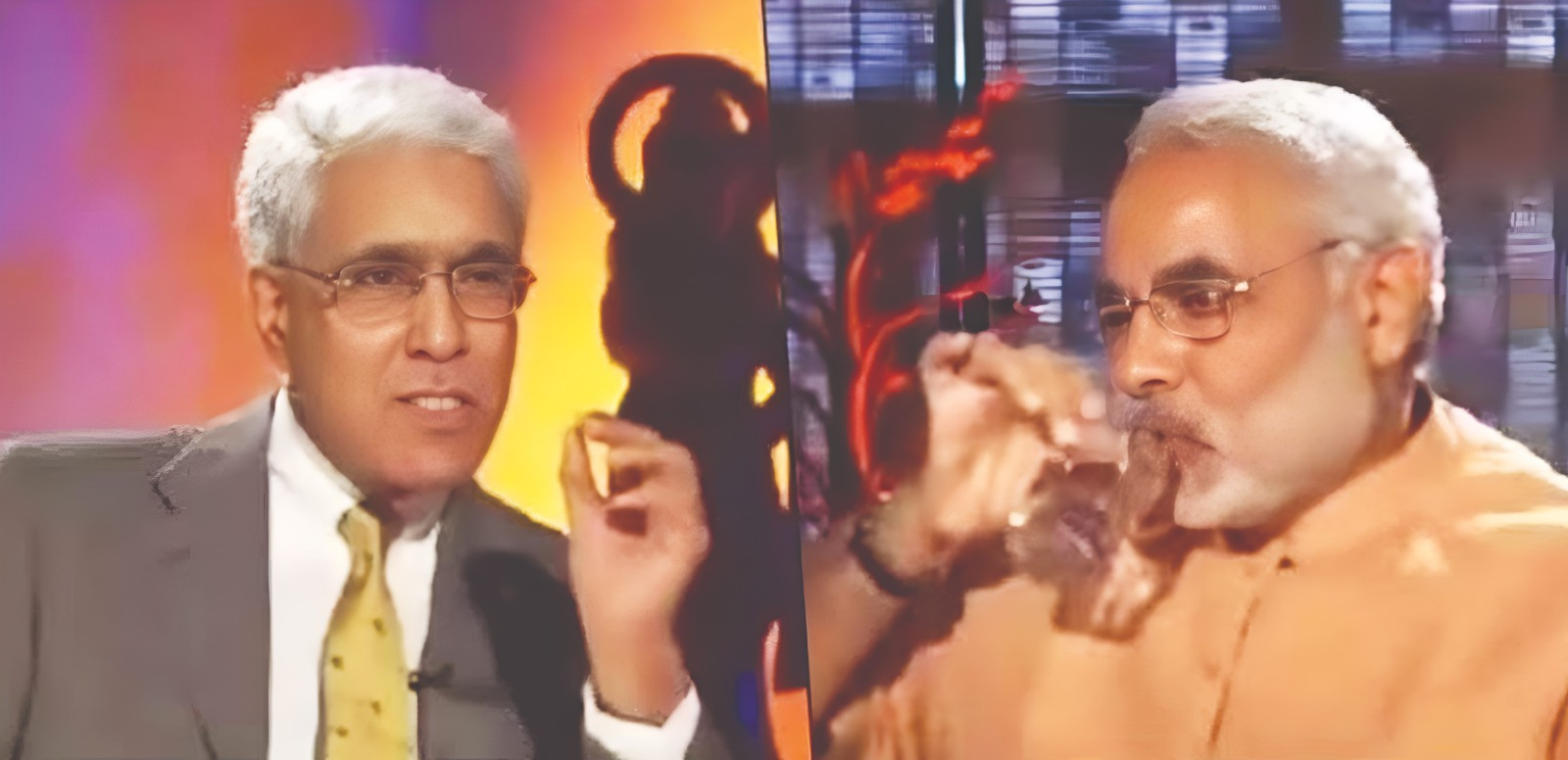
Jayalalitha actually told you that it wasn’t a pleasure talking to you, refused to shake your hand. Did it almost seem like a badge of honour that you were really tough with her and that is why she was so cold to you at the end of your interview.
I don’t want to exaggerate and say that it felt like a badge of honour. But certainly her behaviour made it clear to the audience that she was upset and that she hadn’t liked the interview and that convinced the audience that this was a tough and good interview. Therefore, in a sense, her behaviour helped me because it brought from the audience the response that any journalist, any anchor would want to get. But to say I thought of it as a badge of honour would be an exaggeration. It would be too much of a self-fulfilling pat on the back.
Your advice to young people today growing up in India. They are facing numerous challenges. The economy isn’t doing great. There are plenty of other challenges. Our cities are becoming difficult spaces to live in. Education has become extremely expensive because of privatization as has healthcare. Five years ago, escaping abroad was an option. But jingoism is now all over the world. We’ve seen racism in the US, UK, Australia etc. So, what then is your advice?
Let me limit myself to one particular aspect of your question. I think the most important thing for young people particularly when they are of an age when they are being bombarded by different ideas, different suggestions and they could get swept off their feet by the thoughts and ideas that are being shot at them is to say to yourself what do I want to do, what matters to me, what would reflect me to the extent I understand myself best and then stay true to that. It’s very difficult when you are younger and less self-reflective to ask yourself those questions. But I think that it’s very important that you should try to do so. There are moments in all our lives when we are young when we have to face those choices which are critical—when you decide what to study at university, when you ask yourself when you want to go to university, when you grow up and start finding a partner… Those are moments when you reach deep into yourself to try and understand yourself and I would say that reaching deep into your soul, so to speak, is a very important thing for people to do as often as they can. Try and understand yourself. Try and be true to yourself, Try and do things to the best of your ability as truthfully and honestly as you can and you will find that actually things will work out. It’s when we create false pretenses around us that we get trapped in image-making and then you become something you are not, but you try very hard to be different to yourself. That’s where you get into problems. Be true to yourself and try and understand yourself – what am I? What do I want? Why do I want it? Those are difficult questions when you are young. They are difficult questions at my age. But they are questions that we continually need to keep asking ourselves.
So can I summarize it by saying that you are telling young people to be authentic and be true to themselves?
Yes, absolutely.
Karthik Venkatesh is a freelance writer based in Bangalore. He has written the children's books, '10 Makers of the Constitution' and '10 Indian Languages and How They Came to Be'.
Let the Truth be known. If you read VB and like VB, please be a VB Supporter and Help us deliver the Truth to one and all.
Election results prove Modi best for national security: R Ashoka
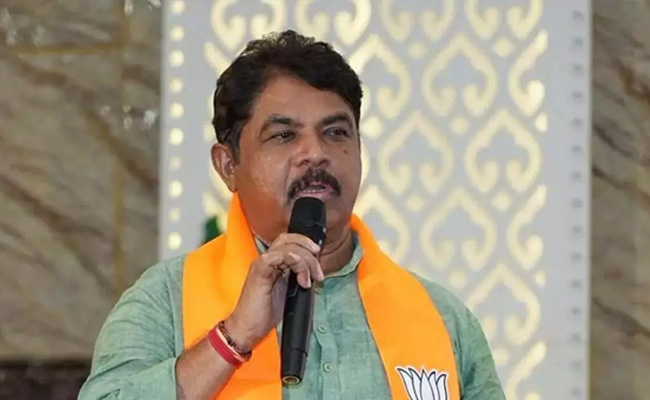
Bengaluru: Leader of Opposition in Karnataka Assembly R. Ashoka said the election results show that Narendra Modi is the most suitable leader for the country’s security.
Speaking to the media, he claimed that the political future of Mamata Banerjee and her government has come to an end. He alleged that around two crore people from Bangladesh were helped to enter the country with Aadhaar cards.
Ashoka said that even though elections were held in five states, the entire country’s attention was on West Bengal. He attributed this to what he described as misgovernance in the state.
He further said there were continuous political allegations and objections related to CBI matters, and added that such developments have now come to an end with the latest election outcome.