North Karnataka may find solace in Siddaramaiah’s candidature
Whether one person should contest from two constituencies is a question that’s more pragmatic than being a simple query. The fact remains that the candidate knows he cannot represent two constituencies simultaneously. And the voters are also aware that he/she will finally resign from one place, in case the person manages to win from both.
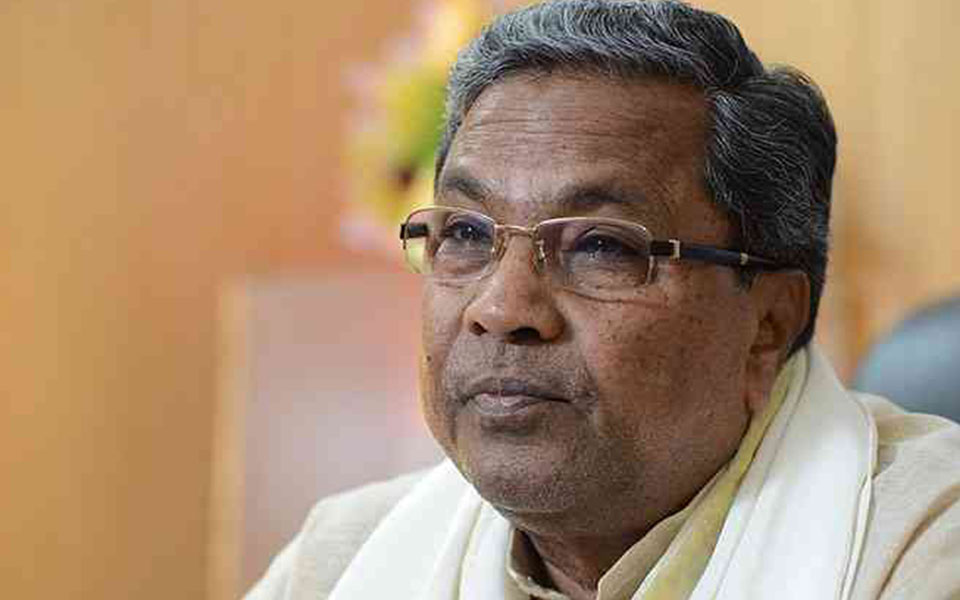
In case the candidate is known for his work, the voters vote for him with the hope that he would represent their constituency. But in the instance of a victory in both places, the candidate will have to give up one seat for sure by way of resigning. This action will impose another election on the constituency. In the recent past, PM Narendra Modi had contested from two places. Now Karnataka CM Siddaramaiah has also chosen to contest from two constituencies. In fact, he would be contesting from three constituencies! His son Dr Yatheendra is contesting from Varuna constituency. And he will have to seek votes in his father’s name since not too many people are familiar with Yatheendra.
When and if people choose Yatheendra, it would be a mandate favouring his more famous father. The need to contest from two seats is an inevitable challenge that Siddaramaiah has to face now. Both JD(S) and BJP have been planning strategies to create a rift between Siddaramaiah and his party, Congress. If he has to be weakened, Siddaramaiah has to be extricated from the party. This serves another purpose of weakening the Congress too by creating leadership chaos. This desire is not just that of BJP and JD(S), but there are scores of people even within Congress who wish for this. The opposition parties know very well that Siddaramaiah brought a fresh lease of life into Congress with his leadership and tenure of being the CM of the state. There are not too many leaders in Congress who can reach commoners the way Siddaramaiah does. Hence if Siddaramaiah loses the Chamundeshwari seat, the Congress high command will keep him at a distance owing to his failure. This would mark the end of his political career. Vishwanath, Srinivas Prasad and other defectors from Congress have a single point agenda – that is to end Siddaramaiah’s political career. But if you ask them which other leader would they present to the state in case they manage to close Siddaramaiah’s political career, they do not have any answer.
Initially, Siddaramaiah was to contest only from Chamundeshwari. Having said that, Congress retracted its statement within two days of announcing this. Siddaramaiah cleared all the roadblocks to seeking a second seat to ensure victory from his party high command.
As a statesman and politician Siddaramaiah should be actively involved in Karnataka politics for a long time to come. Some people may feel vicarious pleasure by hoping to defeat him. But in today’s situation, we can hardly find a leader of his stature and vision to tackle poverty, to ensure the poor are empowered in the process. His understanding of economics coupled with socialism is a terrific combination.
It is very tough to imagine the House without Siddaramaiah’s presence. He is known for his straight talk which may appear rude to some people. But he was not corrupt and will never be corrupt in the future either. He has retained his individuality beyond the culture of Congress party. Hence, to escape the trap laid by his political opponents and their wish to end his career, the need to contest from two seats is not only inevitable to Siddaramaiah, but it is also the need of the Vidhana Sabha too!
Hence instead of wasting his political career being turning a martyr to the plot hatched by his opponents, it would be strategically intelligent to create Plan B and save his career from ending at once. The ones who accuse Siddaramaiah of having trained his eyes on Badami, state he has done so with the fear of losing in Chamundeshwari. However, if one is to ask them to mention why Siddaramaiah fears a failure in Chamundeshwari, they are unable to articulate and mention even a handful of reasons to support their claims.
It could still be understood if one feels Siddaramaiah may be rejected in Chamundeshwari for not having done enough for the development of the constituency or for having given bad administration. But if the fear of losing Chamundeshwari is due to the nexus reached by JD(S), BJP and some Congress leaders clandestinely, it cannot be called Siddaramaiah’s failure.
In fact, it is commendable that the CM has chosen a prominent city in North Karnataka to his rescue. If he gets elected from here, it could be good for the region too. North Karnataka might as well prosper better than before with him as their MLA.
People in North Karnataka are pretty upset with Bangalore centric focus of development. By selecting Badami as his alternate plan, Siddaramaiah has created a bridge between North and South of Karnataka. As a politician, he may be able to pay heed and understand the challenges of North Karnataka from close quarters. There couldn’t be a better person than Siddaramaiah to solve the problems relating to drought, and farmers from the area. In case he wins from both constituencies, he should retain his Badami seat and continue his work. This is the respect a south Karnataka politician can give to north Karnataka region.
Whether Congress wins this election with majority or loses, Siddaramaiah should not lose this elections. There are many such people like Siddaramaiah in other parties too. All of them should win and enter the house this time. There was a time when a deserving candidate stood for elections, other parties would refuse to get their candidates into the fray. The most deserving candidate would win the election with ease. Every party would cooperate with that intention of bringing the best minds into the House. But today, in a rather ironic manner, the forces that have Dalit movement background seem to have come together against Siddaramaiah. This opportunistic politics ca never deliver good results to the society.
Let the Truth be known. If you read VB and like VB, please be a VB Supporter and Help us deliver the Truth to one and all.
Lt Gen NS Raja Subramani to be India's next Chief of Defence Staff
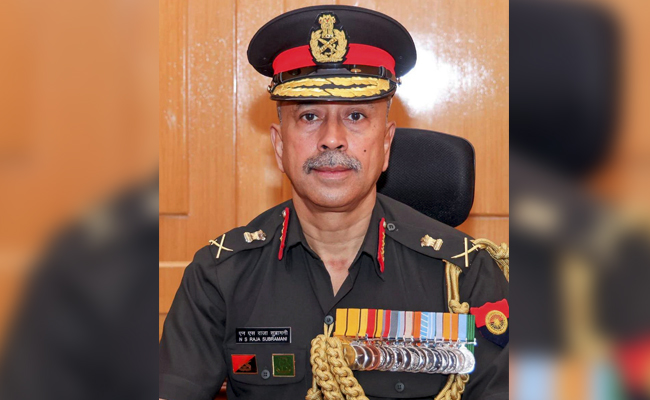
New Delhi (PTI): Lt Gen NS Raja Subramani will be India's new Chief of Defence Staff (CDS) and his key task is set to be to implement the ambitious theaterisation plan that seeks to ensure tri-services synergy.
He will succeed Gen Anil Chauhan whose tenure will come to an end on May 30.
Gen Chauhan, a former Eastern Army Commander, took charge as the country's senior-most military commander in September 2022, over nine months after the first CDS, General Bipin Rawat, died in a helicopter crash in Tamil Nadu.
The government has appointed Lt Gen NS Raja Subramani (Retd) as the Chief of Defence Staff, who will also function as the secretary of the Department of Military Affairs, the defence ministry said on Saturday.
Lt Gen Subramani is currently serving as the military adviser to the National Security Council Secretariat.
Prior to that, he was the Vice Chief of the Army Staff from July 1, 2024 to July 31, 2025, and was General Officer Commanding-in-Chief of the Central Command from March 2023 till June 2024.
As Chief of Defence Staff, Lt Gen Subramani's primary task will be to implement the theaterisation model to bring in tri-services synergy by rolling out integrated military commands.
The officer is a graduate of the National Defence Academy and the Indian Military Academy. He was commissioned into the eighth battalion of the Garhwal Rifles on December 14, 1985.
Lt Gen Subramani is an alumnus of Joint Services Command Staff College, Bracknell (UK), and the National Defence College, New Delhi. He holds a Master of Arts degree from King's College London and an MPhil in defence studies from Madras University.
In his illustrious career spanning over 40 years, Lt Gen Subramani has served across a wide spectrum of conflict and terrain profiles and tenanted a host of Command, Staff and Instructional appointments.
He commanded the 16 Garhwal Rifles in Counter-Insurgency operations in Assam as part of Operation Rhino, the 168 Infantry Brigade in Jammu and Kashmir, and the 17 Mountain Division in the Central Sector, all during a challenging operational environment.
He also has the distinction of commanding two Corps, including the Indian Army's premier strike Corps on the Western Front.