PM must break silence on note ban
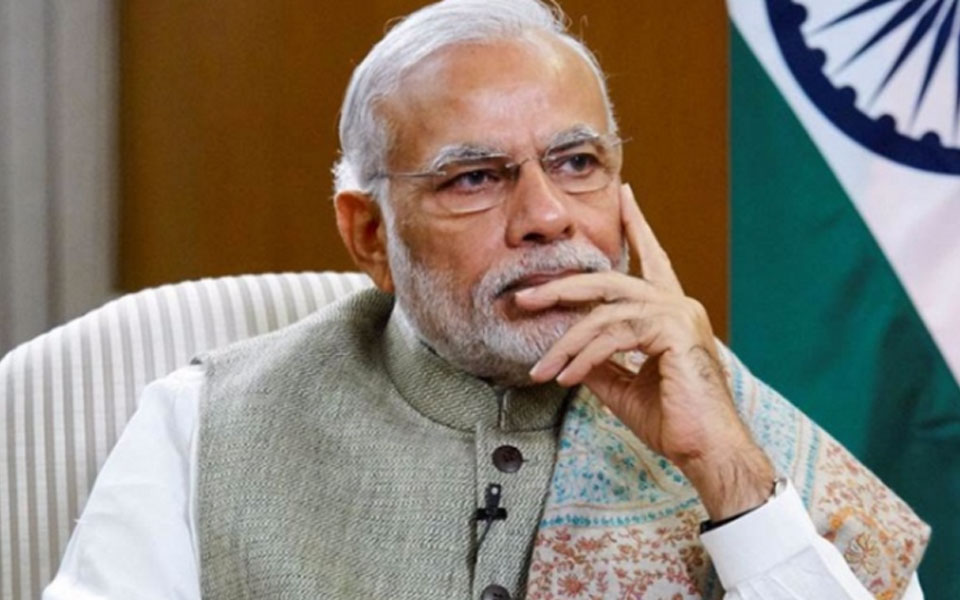
Just at the time when criticism is flowing in from all corners about the currency ban that gave a massive jolt to Indian economy, Finance minister Arun Jaitley is attempting to escape from the responsibility that he should own in this. Prime Minister Narendra Modi had clearly said the intention of note ban was to unearth the black money that the illegal hoarders had in their possession. But as per the report given by the RBI, black money has not been unearthed at all through this. More than 99% currency notes have been returned into banking system.
PM Modi who addressed the nation to announce the note ban in a rather melodramatic manner, will now have to come before the same people to explain the pros and cons of his decision. Instead of explaining this, Modi is escaping from his accountability to the public on this topic. Though the finance minister did give an explanation, his words do not answer the question that’s looming large. Jaitley has come up with a whole new reasoning to demonetization. He says it was done to make sure more people came under tax bracket making India a tax-adhering nation. Then does that mean there is no black money in the country? Where did the ‘assumed’ black money go? Can this failure not be attributed to the government? PM Modi had said terrorism in Kashmir would come down with note ban, but the situation is now totally contrary to this. Extremists are now assaulting the police and army more than ever before.
Modi then jumped another goal post that digitalization of cash was the main intention behind demonetization. The app ‘BHIM’ released by Modi for this purpose has fallen flat. Does increased ‘tax collection’ mean you tie the middle class down to cough up taxes? Banks are literally fleecing the middle class with various charges now to make good for their loss suffered through this phase. Banks are trying to stay afloat by making people pay for the losses the former have incurred through non-refundable loans. Those who robbed thousands of crores from banks are leading luxurious lives abroad. Banks are now running on the bulk of ‘penalty’ charges they have collected from the poor and middle class. Is this is progress, then why are taxes being collected? A nation is its people. If financial institutions play around with their hard earned money to show their ‘collections’ how can this even be seen as progress?
Note ban dealt a heavy blow to poor and middle class people. Small and medium industries could never recover from that assault. Agriculture sector suffered massive losses too. Economic health of the nation was damaged. People could never confidently spend money like they did before. Small traders were left without help. More than 60% of this country lives through small traders. Note ban literally stifled any possibility of business in small shops. Super bazaars reaped the benefits of this. This made the rich richer and the poor poorer. Ones who bought rice in small shops were forced to get a card and buy rice at big malls.
Note ban divided the country into two nations, between the haves and have nots. The ones that could reap the benefits of ‘digital india’ thrived and the ones that couldn’t cross over this divide, fell out of Modi’s dream of ‘development’. Those who possessed costly mobiles and had pan cards and other bank cards had their lives secured through this divide of note ban that was created. Those who didn’t know any of this, were left behind. The GDP of India fell owing to less participation from grassroots level. Rupee has been losing a battle against dollar at an alarming pace. There was an unprecedented increase in unemployment. Violence increased after note ban. Jobless youths donned the guise of Gau Rakshaks and moral police. Malnutrition and poverty increased in rural areas.
The image of India was lost at global level. India entered a very precarious phase after note ban. Having ignored all this, Jaitley is speaking about improved tax collection to indicate a finance minister could well be a dangerous cop who ensures people pay their taxes. More than anything else, Modi should have the courage to speak of consequences of note ban before people. Where did the black money, as claimed by them, go? Why were the officers not able to track it? People lost lives owing to note ban but mega corporate companies have reaped its benefits. What was the benefit that was passed on to common people? Why are the oil rates continuously increasing? What are the ways to boost the affected middle level and rural industries? How can general people improve their financial stability after this?
Modi owes the people of this nation an answer as to what losses they suffered owing to note ban. This cannot be dodged by arresting activists who question the government. A broken mirror turns into multiple mirrors. Modi should never forget this truth.
Let the Truth be known. If you read VB and like VB, please be a VB Supporter and Help us deliver the Truth to one and all.
Real Madrid fines Valverde and Tchouaméni half a million euros each for altercation
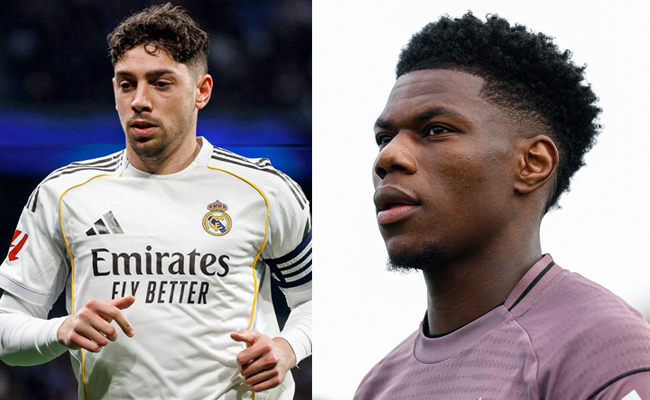
Barcelona (AP): Real Madrid slapped players Federico Valverde and Aurélien Tchouaméni with half-a-million-euro ($588,000) fines on Friday for their altercation during practice.
The massive fines came a day after the midfielders tussled when the team trained. Valverde said in a post on social media on Thursday that no punches were thrown. But Valverde knocked his head on a table and he suffered a small cut that required a brief hospital visit.
On social media, Valverde initially called it a “meaningless fight” with a teammate and said “everything has been blown out of proportion."
His employers, however, considered it a significant enough breach of team discipline to nail both Valverde and Tchouaméni with fines that bite even the bank account of a top soccer player. The half-a-million euro penalties reflect the reputational damage the club was enduring in a chaotic end to a disappointing season.
In a statement, the 15-time European champion said its disciplinary action was concluded after both players expressed to the club “their complete remorse for what happened and apologized to one another.”
Madrid added they also apologized to their teammates, the coaching staff and club supporters, as well as showing their willingness to accept whatever disciplinary action the club deemed “opportune.”
Tchouaméni was back training with Madrid on Friday, two days before they play at Barcelona in a clasico. Madrid has to win otherwise Barcelona will be crowned La Liga champion.
After being notified of the fine, he posted a public apology to the club and its fans on social media.
“What happened this week in training is unacceptable,” Tchouaméni wrote. "I say this while thinking about the example we are expected to set for young people, whether in football or at school.
“Above all, I am sorry for the image we projected of the club.”
Valverde was not at practice due to the head knock.
Both players are set to play in the World Cup next month, with Tchouaméni playing for France and Valverde for Uruguay.
Chaotic end to a poor season
===================
The run-in between the players, who for seasons have played side by side in Madrid's midfield, came after they argued this week in previous training sessions. But tempers boiled over on Thursday. Spanish media was rife with reports that the players previously disagreed over the club's decision to let coach Xabi Alonso go after just months on the job.
It was not the only altercation involving Madrid players during training this week. Álvaro Carreras confirmed he was in a “minor” incident with a teammate. Spanish media said he and fellow defender Antonio Rüdiger got into a scuffle.
Álvaro Arbeloa, the coach who was promoted from Madrid's reserve team when Alonso was fired in January, will face tough questions on what went wrong inside the changing room when he gives a press conference on Saturday ahead of the clasico at Camp Nou.
Madrid is facing a second consecutive campaign without a major trophy amid rumors in the Spanish media that club president Florentino Pérez is considering bringing back Jose Mourinho to straighten out his underperforming team.