PM reduced persona of Sardar Patel to mere 182 mts
Sardar Vallabh Bhai Patel, his role in pre and post-independent India is the most significant among all. He always remained close to Gandhiji and involved himself in the freedom struggle. He was a great support to the first prime minister of India, Jawaharlal Nehru. He was the first deputy PM of India and the home minister. He brought together the whole of India, under the leadership of Nehru. He coerced many provinces including the Mysore state, which hesitated to join the republic of India. At times of need, he even used Army to achieve the goal. He never thought just geography would bring a country together. He knew unless the states bond with each other on all fronts including emotional coming-together, it would be impossible to assume India would even exist in its form. Hence, even when provinces came together, he never interfered with the cultural identity of each segment. He allowed them to thrive as is. And the provinces could retain their local languages without being forced to speak a single language. Patel was the same man who wanted RSS banned for having plotted to disturb the integrity of the nation.
He always had ‘solidarity’ and ‘unity’ of the country. He was deeply disturbed by the celebrations that erupted in some parts of the country by RSS members, who distributed sweets over the assassination of Mahatma Gandhi. He had written to Golvalkar expressing anxiety over RSS and its effect on integrity of India. Eventually, RSS had to get the ban lifted after promising in writing, that the organization would never indulge in political activities and would function only as a cultural outfit. But the RSS broke their promise. Though Patel did not live for long after independence, his contribution to unified India is unmatched. For all this, Indians have to be indebted to this towering personality who was the visionary of unified India. He has to be remembered not just one day, but every day by all Indians.To remember his work is to preserve the unity of the country and oppose the divisive forces that are out to split the nation. Patel brought the country together despite differences in caste, religion, creed and class. But today, the some forces are out to divide the country on the same lines that Patel unified them on.
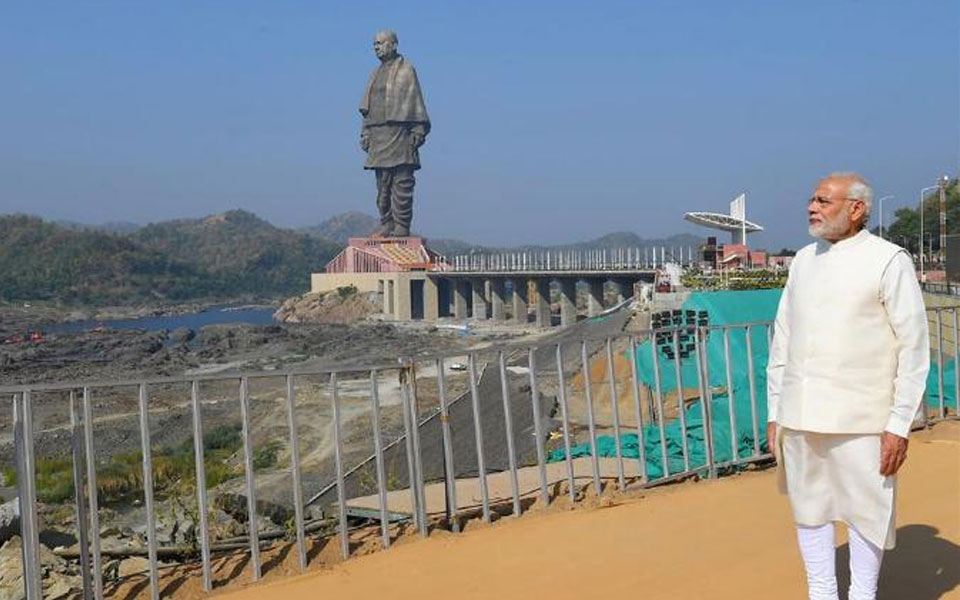
Today, the country is feeling the difference between North and South. There are instances of the North Indians are launching cultural assaults on the South. Hindi imposition has led to widespread anger among people. Along with this, RSS that was to be banned by Patel, is shining in its glory. It has succeeded in dividing the country based on faith. If Patel was alive today, he would not have tolerated this even for a moment and would have banned RSS for good. He would have hated Bajrang Dal, and Sangh Parivar factions taking to streets creating unrest. The same forces that he opposed today are reigning supreme in the country. At a time like this, PM Modi has spent Rs 3000 cr on erecting the world’s largest statue in India, of Sardar Vallabh Bhai Patel. He has called it the statue of unity. In his attempt to use this towering personality to his political benefit, he has reduced the persona of Sardar Patel to nothing but dust.
Nehru and Patel dreamt of an independent India with great vision. They wanted accomplished universities, organisations dedicated to science, and massive dams that could feed the hunger of India both metaphorically and knowledge-wise. If the country stands in a position of power today, it is the contribution of these two leaders that shaped the modern India. But as if to raze all their dreams, Modi has spent Rs 3000 crore at the cost of keeping most of the country hungry. He has been advertising about this feat as if it is the most significant aspect to the country as of now. Country’s economy is in doldrums post demonetization. Cottage industries have suffered a jolt. Rupee is losing its value with every progressive day. At a time like this, do we have the resources to spend Rs 3000 for a statue? Can the Modi government is rearing divisive forces in its own backyard, build a statue and create unity per se? Or, are Modi and Sangh Parivar out to mock the unity of Patel through this statue?
India could have set up two IITs or five IIMs with the money spent on the statue. ISRO could have undertaken five Mangalyans with this money. Karnataka has been requesting for farmer loan waiver since many years, only to hear the government’s refusal to do so. 4000 hectares of land could have been irrigated with this money. Or 162 small irrigation schemes could have been fixed, or modernized or even 425 check dams could have been built. All these schemes could have been named after Sardar Patel. The country would have commemorated his name along with providing food and occupation for people, this aiding development. Now, forget helping the farmers, they have been majorly inconvenienced by this statue. Is this not an insult to the personality of Patel? Would his soul not weep at the fact that farmers have been wronged here? This statue has caused major problems to tribals living in 72 villages. 32 villages have been deeply damaged. Rehabilitation is not complete in 19 villages. Amidst all their cries of protest, the statue has been inaugurated. The statue has divided people at its very base. Can this ever unite the country? Factories owe thousands of crores to sugarcane farmers in the area. Experts feel this money could have been used to help farmers on the banks of Narmada river valley.
The government claims the country will earn this money back with tourism. But how does that happen? Do people begin to visit the statue in hoards soon after? If this was the case, this would have been full of statues and countries could earn their money only through such ventures. China is home to the biggest Buddha statue. It is not even listed in the tourism charter of the country. Even if Sardar’s statue attracts people such as Taj Mahal does, it would take at least 150 years for the country to break even. The only country that made money from this statue is China since this contract gave some work to Chinese workers. This statue is a blot on the personality of Sardar Patel. With this, his towering personality has been reduced to a mere 182 meters by PM Narendra Modi.
Let the Truth be known. If you read VB and like VB, please be a VB Supporter and Help us deliver the Truth to one and all.
CM Siddaramaiah alleges ‘criminal conspiracy’ in Sringeri recount, vows legal action
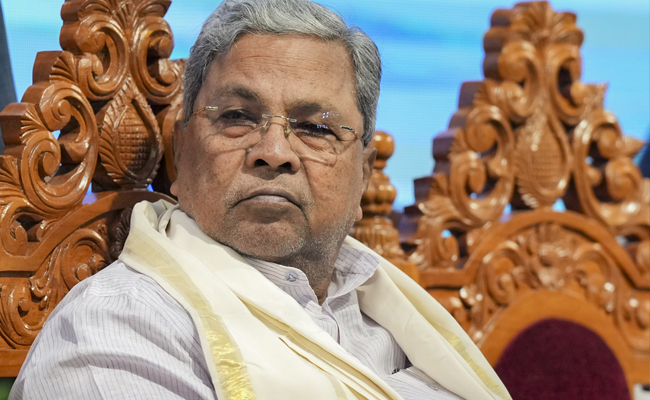
Bengaluru (PTI): Alleging a “criminal conspiracy” by BJP candidate D N Jeevaraj in the Sringeri Assembly poll recounting, Karnataka CM Siddaramaiah on Tuesday said the outcome was manipulated after valid postal ballot votes in favour of Congress leader T D Raje Gowda were tampered with during the recounting process.
Following a Karnataka High Court order on an election petition filed by Jeevaraj, challenging Raje Gowda’s election, the reverification and recounting were conducted on Saturday.
After the reverification and recount of postal ballots for the Sringeri Assembly constituency, votes polled in favour of Raje Gowda were reduced by 255, the returning officer said.
A report on the matter has been submitted to the Election Commission of India for further action, the officer added.
Congress leader Raje Gowda had won the 2023 Assembly polls from Sringeri by 201 votes, defeating his nearest rival Jeevaraj.
Addressing a press conference in Bengaluru, Siddaramaiah said the High Court had directed the recounting of postal ballots and that irregularities were noticed during the exercise conducted on May 2.
“This is a clear case of criminal conspiracy,” Siddaramaiah said, alleging that valid votes cast in favour of Raje Gowda were altered after being accepted by counting agents of all parties, including Congress, BJP, and JD(S).
He claimed that during the recounting of postal ballots, 255 votes were initially accepted as valid by all agents but were later tampered with by subordinate officials.
“There is a second mark on the votes polled in favour of Raje Gowda. They had accepted these as valid votes. Subsequently, another mark was made by officials. This is a clear case of criminal conspiracy,” he said.
When asked who was behind the alleged conspiracy, the CM replied, “It was hatched by Jeevaraj and others. It is planned.”
Siddaramaiah further alleged that the returning officer acted improperly by declaring the result despite the presence of an Election Commission observer during the recounting.
“Immediately after the counting, the returning officer announced the result. He should not have done so; this is against the law,” he said.
He pointed out that Raje Gowda had originally won by 201 votes, but after the recounting, the BJP candidate was declared the winner by 52 votes.
“The BJP has committed a criminal act of conspiracy. This is not vote chori but vote dacoity,” he alleged.
The CM said a police complaint had already been filed by Raje Gowda’s election agent, Sudhir Kumar, and emphasised the need for electoral integrity.
“We want transparency and free and fair elections. That is what our Constitution mandates,” he added.
Stating that the government would pursue legal remedies, Siddaramaiah said, “We are preparing an appeal challenging the returning officer’s announcement in a court of law.”
Responding to a separate query on elections in other states, the CM said there appeared to be an anti-incumbency factor in West Bengal, while results in Tamil Nadu were “surprising,” adding that Vijay’s party was emerging as the largest there.
Following the victory of party candidates in Bagalkote and Davanagere South, Siddaramaiah expressed confidence about future electoral prospects in Karnataka.
“Even in 2028, we will win the Assembly elections. We will come back,” the CM said.
Siddaramaiah added that he would order a forensic examination into the alleged tampering of postal ballots.