Siddaramaiah's announcement causes flutters in congress
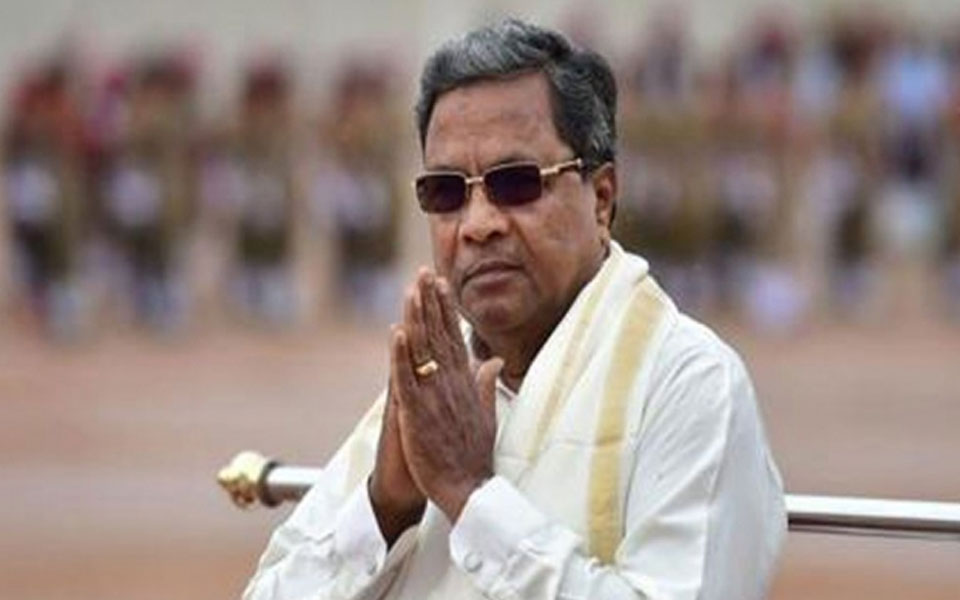
Former Chief Minister Siddaramaiah said he will not fight electoral elections anymore. He had said the same when he was the Chief Minister as well. At a time when Siddaramaiah seemed inevitable to Congress demand for dalit Chief Minister was created.
The demand was created to unseat Siddaramaiah and not to make a dalit Chief Minister of the state.
Native Congress when fired so long as Siddaramaiah was in the party they would never get a chance to become the chief minister. To dissuade the fears of native congressmen, siddaramaiah had then told he would not fight elections anymore.
With this, the Parmeshwar gang was happy that the he can become a chief minister next time.
Owing to his duty towards people he was forced to fight Vidhan Sabha elections last time.
If Congress had achieved majority, Siddaramaiah's becoming of the CM second time over was most certain. Hence in order to avoid working under him again, native Congressis ensured he lost the Chamundeshwari seat. More than his opponent's pluses, anti-Siddaramaiah gang worked to make sure he lost. However, he won with a small margin in Badami, his second seat. If he had lost that, Siddaramaiah would have been a closed chapter in Congress.
This time again, Siddaramaiah has said he won't contest elections anymore. This time the announcement has come after considering changing political scenario and realities. This is a message to most leaders in his party and also to his opponents. He has made his role clear in the coming days in a rather delicate manner. He still nurses some anger about leaders who ensured his failure in Congress during last polls.
He has even made his inevitability clear when his party and JDS came together to form coalition government.
By now, other leaders also know that Siddaramaiah's presence is inevitable to Congress. Looks like former CM Siddaramaiah has decided to quit full time politics after teaching a good lesson to people who worked to defeat him. So his announcement of not contesting elections also means he'd stay away from the fighting grounds for a while. He now wants to play the king maker. So DKS gang can rely on him without any hesitation now. Because now Siddaramaiah is in a mindset that if he doesn't become the CM, that's fine. But he will not let someone else, especially his opponent to become one.
He did not say he'd stay out of politics either. DKS recently said Cong lost because the party supported the Lingayat issue in a rather irresponsible manner. In a way, this statement has Siddaramaiah as target. This statement makes the Lingayat issue some kind of a political strategy. Congress had lost miserably many a times even when the party never went close to the Lingayat issue. Internal conflicts caused the failure of Congress this time over. Hindutva wave also caused enough damage. BJP spent money like water in the elections rendering Congress helpless. Leaders like D.K. Shivakumar who hardly know anything about Lingayat dharma or about Basavanna, cause more damage to Congress.
The party has already earned the wrath of Veerashaivas on Lingayat issue. Most of the Veerashaivas are followers of RSS or BJP. Now even Lingayats will probably look at Congress with suspicion over this. Lingayat leaders now understand that their fight has to be a separate one and this has to be fought outside the citadel of Congress. Siddaramaiah knows the history of this land.
Is political journey is free from money, muscle power and rowdyism. His space is secure in the history of Karnataka respective of his victory or loss.
He can give fresh lease of life to value based politics. Hence his decision to not contest electoral elections must give him more free space to work in the Congress.
He must now concentrate on creating new generation of leaders for the state. This would help both the party and the state as well. Congress high command must focus on using his experience and statesmanship for its growth and the future of the party in the state.
Let the Truth be known. If you read VB and like VB, please be a VB Supporter and Help us deliver the Truth to one and all.
Caste census will form basis for future policy decision, says CM Siddaramaiah
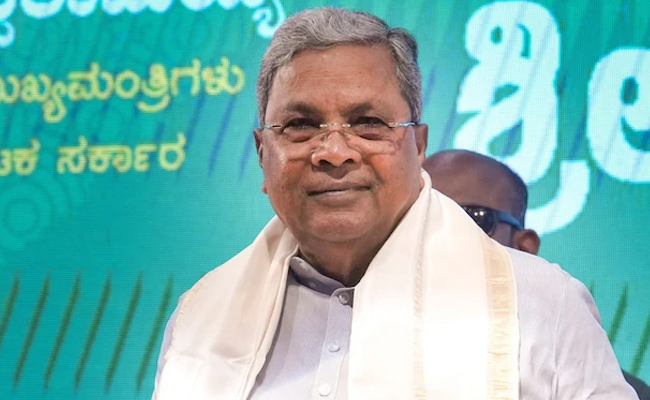
Mysuru (Karnataka) (PTI): Karnataka Chief Minister Siddaramaiah on Wednesday said that the ongoing caste census would form the basis for future policy decisions, asserting that the exercise was crucial to advancing social justice in the state.
Addressing a gathering at the Siddarameshwara Jayanti celebrations here, he said caste enumeration was being carried out for the first time since 1931 and would be followed by deliberations once the report is submitted.
"At present, a caste census (Jaati Sameekshe) is underway. After the report comes, we will discuss it and take necessary decisions," Siddaramaiah said.
He underlined the government’s commitment to equality, stating, "We are committed to social justice. No one should face injustice. Even if not 100 per cent, we will strive to ensure 99 per cent justice."
Referring to measures aimed at addressing intra-caste disparities, the chief minister said the government had already implemented internal reservation based on revised classifications.
"We have gone beyond the Nagamohan Das report and implemented internal reservation… now it has been revised to 5.25 per cent, 5.25 per cent, and 4.5 per cent. This has been approved by the Cabinet," he said.
Siddaramaiah said the broader objective was to ensure equitable distribution of resources and opportunities, while reiterating that policy interventions would be guided by constitutional principles.
"Our objective is equal share and equal life for all," he said.
He also emphasised the role of education in eliminating inequalities, particularly among marginalised communities, and said empowerment was essential to dismantle entrenched caste hierarchies.
"Only when people gain such empowerment can caste divisions be eradicated. Education is essential for this," he added.
The CM said the government would examine demands raised by various communities and take decisions based on feasibility, while ensuring that benefits reached all sections without discrimination.